
My Sister Changed Dad’s Will Appointment Without Telling Me
I found out my sister had changed Dad’s appointment with the estate lawyer because I called to confirm the time.
It was supposed to be Friday at two.
I had taken the afternoon off.
Claire had said she would meet us there.
Dad had even complained that two o’clock was “an hour designed by people who enjoy ruining a whole day.”
On Thursday morning, the receptionist said, “Mr. Turner already came in yesterday.”
I thought she had the wrong client.
“No. His appointment is tomorrow.”
There was a pause.
Then she said, “It was moved to Wednesday at eleven.”
“By who?”
“I’m sorry, I can’t discuss scheduling details beyond confirming the appointment.”
I already knew.
I called Claire before I called Dad.
“You moved the appointment.”
Silence.
“Claire?”
“Yes.”
“And you didn’t tell me.”
“Dad asked me not to.”
That answer was so perfectly constructed to make me angrier that for a second I could not speak.
“What did he change?”
“I don’t know.”
“Were you there?”
Another pause.
“I drove him.”
My hand tightened around the phone.
“So you were there.”
“I was in the waiting room.”
“That is not better.”
“It’s true.”
I hung up before I said something I would have to defend later.
Our father was seventy-eight, healthy enough to drive during the day, stubborn enough to drive at night, and completely capable of making his own decisions.
I knew that.
I also knew he had begun calling Claire first for practical things.
She lived fifteen minutes away.
I lived an hour away.
That difference had slowly turned into a difference in access.
Claire knew when Dad’s furnace made a noise.
She knew when he skipped physical therapy.
She knew which neighbor borrowed his ladder and which prescription he complained about refilling.
I knew the bigger things because Dad told me later.
That had never bothered me until inheritance entered the room.
Then every small advantage looked suspicious.

Dad had first mentioned updating his will three weeks earlier.
He said the old one was twelve years out of date and still named our mother, who had died four years ago, as executor.
“Nothing dramatic,” he said. “I just need to clean things up.”
I asked whether Claire and I should come.
He said, “If you want.”
Claire said she would.
I said I would too.
At the time, it felt responsible.
Now I wondered whether Dad had regretted inviting us.
I drove to his house that afternoon.
Claire’s car was not there.
Dad was in the garage cleaning a paintbrush.
“You went to the lawyer without me.”
He did not look surprised.
“Claire told you?”
“The receptionist told me. Then Claire admitted it.”
Dad rinsed the brush.
“You sound like someone was arrested.”
“Why did you change the appointment?”
“Because Wednesday worked better.”
“For who?”
“For me.”
“And why was I not supposed to know?”
He set the brush down.
“Because I wanted one conversation in my life that did not become a committee meeting.”
I stared at him.
“This is your will.”
“Exactly.”
“It affects us.”
“After I’m dead.”
That shut me up for about three seconds.
“What did you change?”
“That is between me and my lawyer.”
I felt something cold move through me.
Dad and I had always talked openly about money.
Not exact balances, but enough.
We knew the house was paid off.
We knew there was retirement money.
We knew he wanted things split evenly.
Now he was closing a door.
“Did Claire ask you to change anything?”
Dad’s face changed.
Not anger at first.
Disappointment.
“No.”
“She took you there.”
“Because I asked her to drive.”
“And she didn’t tell me.”
“Because I asked her not to.”
“Why?”
Dad folded the towel in his hands.
“Because the last time we talked about this, you and Claire spent forty minutes arguing about what I should do with the house while I was sitting at the table.”
I remembered.
Claire thought selling would be simplest.
I thought one of us should keep it in the family.
Dad had barely spoken.
At the time, I thought he was listening.
Apparently he had been waiting for us to stop planning his death.
“You two started dividing my life before I was finished living it.”
He said it quietly.
That made it worse.
I sat down on the old stool beside the workbench.
Dad told me he had invited us originally because he thought transparency would prevent arguments later.
Instead, every conversation became predictive.
What would happen to the house?
Who would be executor?
What if one of us wanted to buy the other out?
What if he needed long-term care?
What if he remarried?
He began to feel as if every practical question was really a question about ownership.
“So you cut me out.”
“I cut both of you out.”
“Claire knew the appointment changed.”
“Because I needed a ride.”
“That still put her inside the circle.”
Dad shook his head.
“This is not a circle.”
I asked whether Claire had been in the meeting.
“No.”
“Did she ask what you changed?”
“Yes.”
“And?”
“I told her the same thing I told you.”
That helped less than I wanted it to.
Still, it mattered.
Dad went inside to make coffee.
I stayed in the garage and looked at the shelves he had built himself.
Every object in the room seemed to belong to a future argument if I looked at it long enough.
The table saw.
The fishing rods.
The red toolbox our grandfather had owned.
I understood, suddenly, how exhausting that must feel from Dad’s side.
To own things people already imagined inheriting.
To have your children discuss efficiency while you were still using the coffee mugs.
Claire arrived twenty minutes later.
I assumed Dad had called her.
He had not.
She came because she knew I would be there.
“Can we not do this in front of him?” she asked.
Dad, from the kitchen, said, “Please do it in front of me. Apparently that is the new family policy.”
We sat at the table.
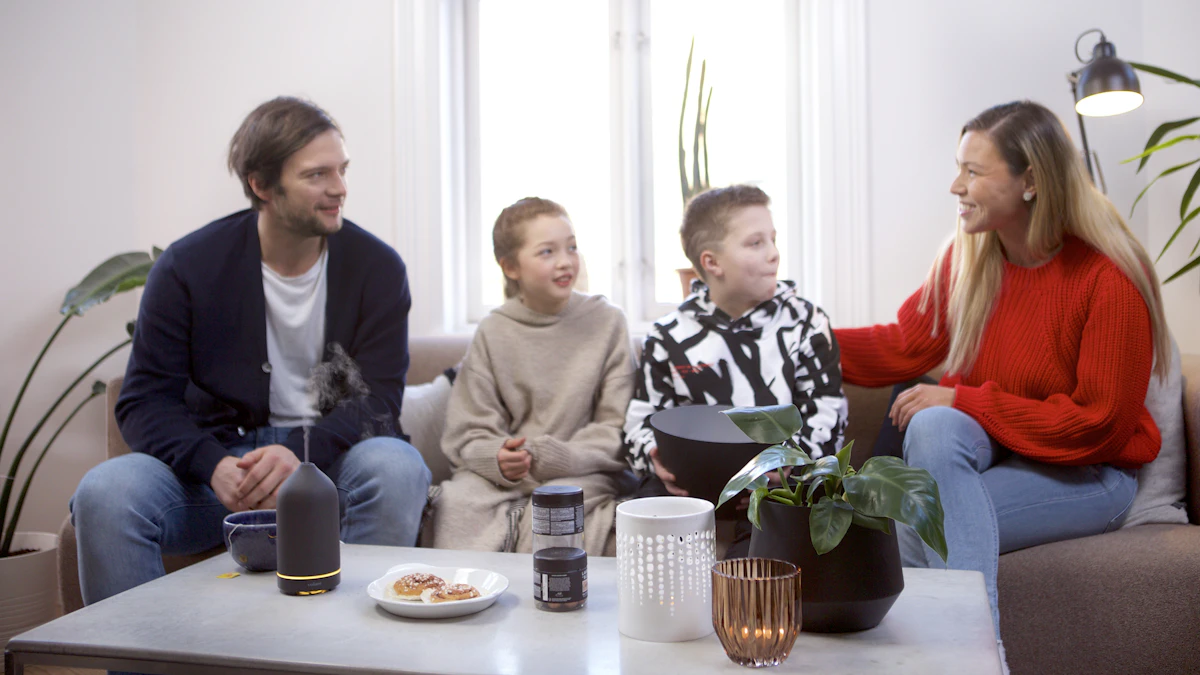
I asked Claire why she had agreed to keep the appointment secret.
“Because he asked me to.”
“You could have told him that was unfair.”
“I did.”
I looked at Dad.
He shrugged.
“She did.”
Claire said she had spent the entire drive to the lawyer uncomfortable.
She worried I would think exactly what I thought.
She also worried that refusing would turn Dad’s attempt at privacy into another negotiation.
“I didn’t know which boundary was the right one,” she said.
That sentence made it harder to keep her in the role of villain.
I wanted a cleaner betrayal.
A sister manipulating a will.
A father being pressured.
A secret clause.
Something I could confront and resolve.
Instead, the betrayal was diffuse.
Claire had withheld something important.
Dad had engineered the secrecy.
And I had helped create the conditions that made secrecy feel necessary.
“Did you change the split?” I asked Dad finally.
He gave me a long look.
“Do you really want me to answer that because you need reassurance?”
I started to say no.
Then I stopped.
“Yes.”
He nodded.
“Fair answer.”
He told us he had not changed the equal division.
What he had changed was the executor.
Neither of us would be executor anymore.
He appointed a professional fiduciary recommended by the attorney.
Claire looked as surprised as I felt.
“Why?” she asked.
“Because I love you both.”
“That sounds ominous,” I said.
“It’s practical. You already turn ordinary decisions into evidence about who is more trusted.”
He was not wrong.
Dad also added written instructions that the house should not be discussed as an inheritance while he was alive.
Not legally binding in the dramatic sense.
More like a statement for us.
“You put that in writing?” Claire asked.
“Apparently I needed to.”
We both laughed, unwillingly.
That broke the pressure in the room.
Dad did not tell us everything in the documents.
This time, neither of us asked.
That was new.
Over the next few weeks, Claire and I repaired our part separately.
I told her I still believed she should have warned me somehow.
She agreed.
She told me I often treated being informed as the same thing as being entitled to participate.
I did not agree immediately.
Then I thought about the Friday appointment.
I had never asked Dad whether he wanted me there.
I had asked whether I should come.
When he said, “If you want,” I heard an invitation.
Maybe he had meant permission.
Those are not the same thing.
Months later, Dad called both of us over to help move a heavy cabinet.
Claire arrived first.
I arrived second.
Neither of us asked what was inside it.
Dad noticed.
“Growth,” he said.
“Don’t ruin it,” Claire replied.
We moved the cabinet.
Then Dad made sandwiches.
The house was still his.
The toolbox was still his.
The fishing rods were still his.
And for the first time in months, they looked like possessions instead of future evidence.
Read more family betrayal stories or browse drama and betrayal stories.
This is an original fictional story from Dastan.
Featured photo: Wright Brand Bacon / Unsplash. Inline photos: Wright Brand Bacon and volant / Unsplash.