
The Janitor Left a Note on My Desk Every Friday
The first note said:
You leave after everyone else.
It was written on a yellow square of paper and stuck to the lower corner of my monitor.
No name.
No explanation.
I found it on a Friday morning.
I assumed one of my coworkers was joking.
I had been staying late for weeks because our team was behind on a software migration, and apparently that had become visible enough to deserve commentary.
I took the note down, folded it twice, and threw it away.
The next Friday, there was another.
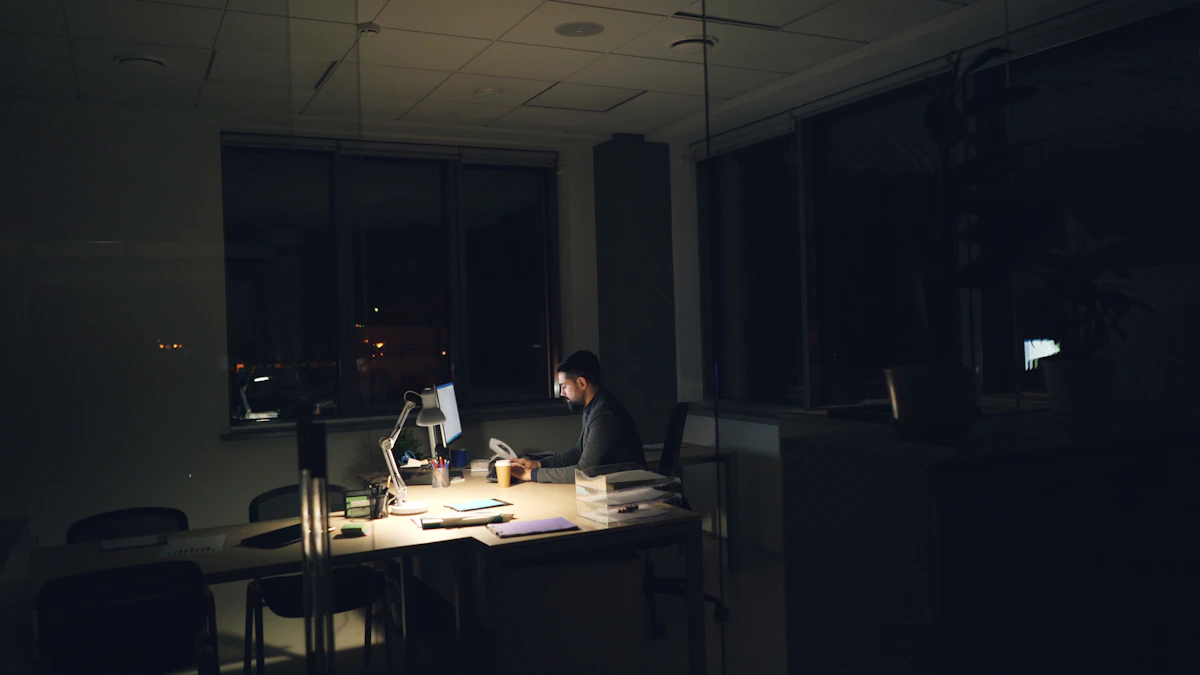
Your desk lamp is still on at 9:40.
That one bothered me.
Not because it was threatening.
Because it was accurate.
I had left at 9:43 the night before.
I asked the two people who sat nearest me if they had written it.
Both said no.
“Maybe you have an admirer,” Jordan said.
“A deeply boring admirer,” I said.
On the third Friday, the note said:
You never eat the apple you bring.
I looked at the apple beside my keyboard.
It had been there since Monday.
That was when the notes stopped being funny.
I started leaving the office earlier.
Not because I wanted to.
Because I wanted to see whether the notes changed.
The next Friday:
Better.
I should have reported it.
Instead, I kept the note.
By then I was curious.
My office occupied the sixth floor of a building that became nearly empty after seven. The cleaning staff arrived around six-thirty. Security changed shifts at eight.
Most nights, I knew the janitor by sight before I knew his name.
He was tall, gray-haired, and moved through the office with the efficient quiet of someone who understood that people preferred not to notice cleaning happening around them.
We nodded at each other.
That was all.
One Thursday evening, I stayed late deliberately.
At 8:15, he came through pushing a cart.
“Long night?” he asked.
It was the first full sentence we had exchanged.
“Looks like it.”
He pointed at the apple on my desk.
“You going to eat that one?”
I stared at him.
He smiled.
“Finally figured it out?”

His name was Samuel.
He had worked in the building for eleven years.
“Why were you leaving notes on my desk?” I asked.
He picked up my wastebasket.
“You looked tired.”
“Lots of people look tired.”
“You looked tired in the same way every night.”
I did not know what that meant.
Samuel emptied the bin.
“Most people stay late because something happened. Deadline. Meeting. Problem. You stay late like it’s your normal schedule.”
I felt defensive.
“We have a migration project.”
“Since January?”
It was April.
I laughed despite myself.
“You keep records?”
“No. I clean the same floor every day.”
That was the first thing Samuel taught me without meaning to.
Patterns are obvious to people who see the whole routine.
They are much harder to see from inside it.
I told him the extra hours were temporary.
He said, “That’s what you said in February.”
I had no memory of telling him anything in February.
Apparently, we had talked more than I realized.
A complaint about a meeting.
A joke about dinner from the vending machine.
A comment about being almost done.
Small sentences I had forgotten.
Samuel had not.
“So you decided to monitor me?”
“No.”
“The notes are literally monitoring.”
He leaned on the cleaning cart.
“I decided to see if you noticed yourself.”
“I decided to see if you noticed yourself.”
I wanted that sentence to annoy me.
Instead, it landed too accurately.
At thirty-six, I had a respectable title, decent salary, and a calendar full of meetings that made me feel important enough to ignore how unhappy I was.
I had spent six years becoming indispensable.
The problem was I had become indispensable mostly to problems I did not want to keep solving.
My job had changed slowly.
I was hired to analyze operations.
Then I became the person who fixed broken reports.
Then broken handoffs.
Then broken schedules.
Then anything complicated enough that people could say, “Ask Rachel.”
Being useful felt good.
Until usefulness became the only thing I was known for.
Samuel finished wiping the empty desk beside mine.
“What did you want to do when you started here?” he asked.
“Work.”
“That is not a job.”
I laughed.
“Process design. Systems improvement.”
“You still do that?”
“Sometimes.”
“How often?”
I looked at my screen.
The answer was not often.
I asked Samuel what he had wanted to do when he was younger.
He surprised me.
“Teach history.”
He had studied for two years, then left college when his father got sick.
Later came a mortgage, children, bills.
He did not tell the story with regret.
That was what made it difficult to romanticize.
“Do you wish you had gone back?” I asked.
“Sometimes.”
“Why didn’t you?”
“For a long time, because I couldn’t.”
He paused.
“Later, because I got used to saying I couldn’t.”
I understood that immediately.
Samuel had started taking evening classes the previous year.
One course at a time.
Not because he planned a dramatic career change at sixty-one.
Because he wanted to finish something that had remained unfinished in his mind.
“So the notes were your version of career counseling?” I asked.
“No.”
He smiled.
“The notes were because you kept throwing away perfectly good apples.”
The next Friday, there was no note.
I was disappointed.
That embarrassed me.
Then I found a folded piece of paper under my keyboard.
What are you doing that only you can do?
I read it several times.
At first, I interpreted it as another productivity question.
Which tasks should I delegate?
Which projects required my expertise?
Then I realized that was exactly how my office had trained me to think.
I made a different list.
Work I was good at.
Work I tolerated.
Work other people expected.
Work I actually wanted.
The lists did not overlap as much as I expected.
I did not quit.
That would make a cleaner story.
Instead, I scheduled a meeting with my manager.
I showed her how much of my week had shifted into emergency support.
I proposed a rotating escalation schedule so I was not the default answer for everything.
I asked to lead a process redesign project I had been avoiding because I was “too busy.”
She agreed to most of it.
Not because she had secretly been waiting for me to advocate for myself.
Because the system was obviously fragile once I described it.
That irritated me too.
I had spent months resenting a problem I had never clearly named.
The changes were slow.
Some weeks I still stayed late.
Some people still messaged me first.
But by June, I was leaving before seven most nights.
I ate the apples.
Samuel noticed.
Of course he did.
One Friday, I left a note on his cleaning cart.
How is the history class?
Monday morning, there was a reply on my desk.
B+. Professor talks too much.
I laughed so loudly Jordan looked over the partition.
The notes continued for months, but they changed.
Big presentation today?
Yes. Went well.
Finished the paper.
Congratulations.
They were no longer warnings.
They were evidence that two people who worked in the same building had started seeing each other as more than background.
Samuel finished his certificate the following spring.
I attended the small ceremony at the community college.
His daughter took a photo of us.
He was wearing a borrowed gown and complaining that the sleeves were designed to catch on door handles.
“You happy?” I asked.
“Ask me when I take this thing off.”
Then he smiled.
“Yeah.”
A year after the first note, I changed roles inside the company.
Not a promotion.
A lateral move into process design.
The title was slightly less impressive.
The work fit me better.
On my final Friday on the sixth floor, Samuel left one last note.
Your desk lamp is off.
Underneath, he had drawn a small apple.
I still have that note.
Read more inspiring stories or browse short stories for adults.
This is an original fictional story from Dastan.
Featured photo: Volodymyr Hryshchenko / Unsplash. Inline photos: Petr and Vitaly Gariev / Unsplash.