
I Failed the Interview—Then the Receptionist Called Me Back
I knew I had failed the interview before the hiring manager stopped asking questions.
There is a particular kind of silence that happens when someone has already decided against you but still has seven minutes left on the calendar.
I heard it halfway through my answer about conflict resolution.
The manager, Melissa, smiled politely and wrote something on her notepad.
The man beside her stopped making eye contact.
I kept talking anyway.
That made it worse.
By the time I left the conference room, I had managed to repeat myself twice, forget the name of the software I had used for four years, and answer “What would you improve about our customer onboarding?” with an idea that sounded better in my head than it did in a room with glass walls.
The role was operations coordinator at a midsize architecture firm.
I needed the job.
Not in the dramatic, eviction-next-week sense.
In the quieter way where you begin moving money between accounts and telling yourself it is budgeting.
I had been unemployed for three months.
That morning, I had ironed my shirt twice.
I had arrived twenty-five minutes early.
I had practiced answers in the parking garage until my voice sounded artificial even to me.
And still, I had failed.
I knew it.
Melissa knew it.
Probably the chair knew it.
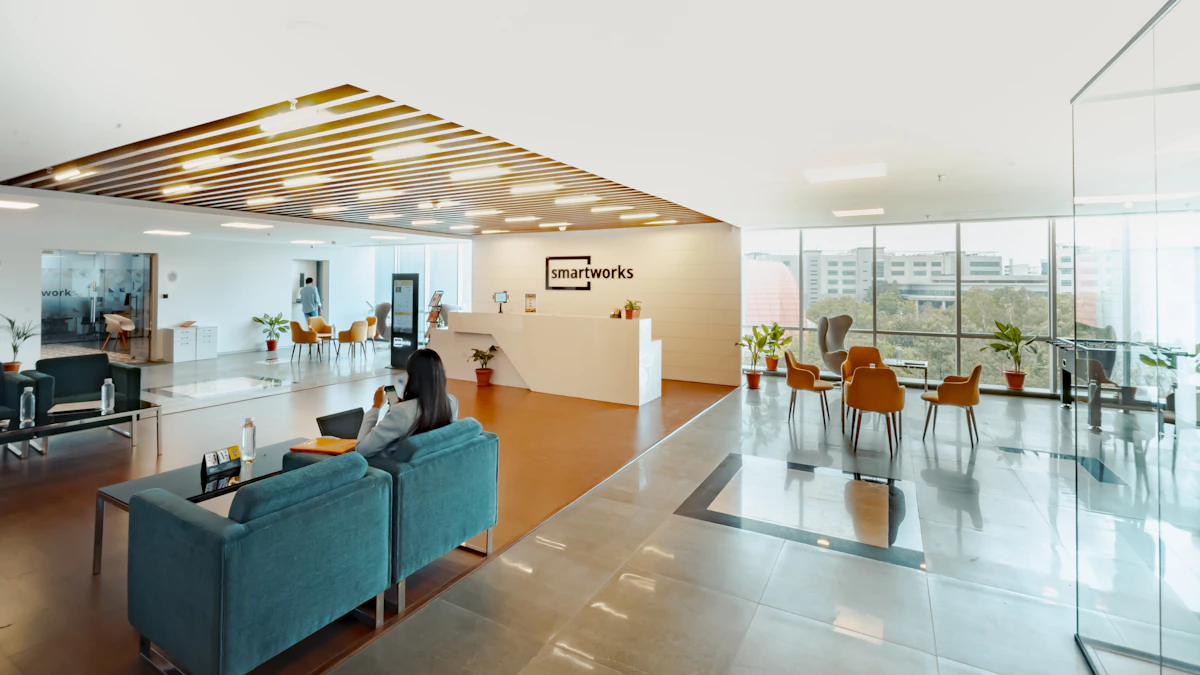
The receptionist looked up when I walked past her desk.
“All done?” she asked.
“Mercifully.”
She laughed.
Her name was Rosa. I knew because she had introduced herself when I arrived.
“That bad?”
“I forgot what software I use.”
“Impressive.”
“Thank you.”
For the first time all morning, I relaxed.
I had to wait for the parking validation, so I stood near Rosa’s desk while she searched through a drawer.
A delivery driver came in carrying three large boxes.
“Suite 800?” he asked.
Rosa looked at the labels.
“These belong to materials.”
“Where do you want them?”
She pointed toward a hallway, then stopped.
“Actually, don’t take them back there. There’s a client presentation happening.”
The driver shifted the boxes.
“I can’t leave them in the lobby.”
Rosa looked around.
The lobby was small.
The boxes were not.
Without thinking, I said, “What’s in them?”
Both of them looked at me.
“Tile samples,” Rosa said.
I glanced at the office map mounted beside the elevators.
There was a storage room on the opposite side of the floor.
“Could he leave them in storage and someone from materials move them after the presentation?”
Rosa looked at the map.
“That would work.”
She called someone, confirmed it, and pointed the driver toward the other hallway.
“You should have been in the interview,” I said.
“I prefer people who can solve problems without a panel watching.”
I thought she was joking.
She stamped my parking ticket.
I thanked her and left.
Two hours later, the rejection email arrived.
It was polite and fast.
That almost made it worse.
We have decided to move forward with candidates whose experience more closely aligns with the role.
I closed my laptop.
Then opened it again.
I read the email three more times looking for information that was not there.
At five thirty, my phone rang.
The number was unfamiliar.
I almost ignored it.
“Hello?”
“Hi, is this Erin?”
I recognized the voice.
“Rosa?”
“Yes. From Halpern Design.”
My stomach tightened.
I thought maybe the rejection had been sent accidentally.
It had not.
“I know this is unusual,” Rosa said. “Do you have a minute?”
“Sure.”
“You didn’t get the coordinator role.”
“I noticed.”
She laughed softly.
“There’s another position that hasn’t been posted yet.”
I sat up.
“What kind of position?”
“Process support. Internal operations. Less client-facing. More workflow cleanup.”
That sounded suspiciously like the part of every job I had actually enjoyed.
Rosa explained that the firm had grown quickly and its internal systems had not grown with it.
Requests disappeared into email.
Deliveries arrived with no ownership.
Teams built their own spreadsheets.
Everyone had a workaround.
No one had a system.
“Why are you calling me?” I asked.
“Because you saw the delivery problem in thirty seconds.”
“That was a box.”
“It was a process problem wearing a box costume.”
I laughed.
Then I became cautious.
“Are you the hiring manager?”
“No.”
“Then can you actually refer me?”
“I already did.”
That surprised me.
Rosa told me she had been at the firm for nine years.
Her title was receptionist.
Her actual job, according to her, was “knowing where everything breaks before leadership hears about it.”
When the operations director mentioned they were finally creating a process-support role, Rosa thought of me.
Not because I had interviewed well.
Because I had behaved normally when I thought the interview no longer mattered.
“You stopped performing after the interview. That’s when I could actually see how you think.”
The sentence embarrassed me.
It also relieved me.
For three months, I had treated every interview as theater.
Perfect examples.
Perfect posture.
Perfect answers to questions no one asks in ordinary work.
The harder I tried to sound capable, the less like myself I became.
“Would you be willing to talk to the operations director tomorrow?” Rosa asked.
I hesitated.
“Is it another interview?”
“Technically.”
“That is not encouraging.”
“Then don’t treat it like one.”
The next afternoon, I returned to the same office.
Rosa waved when I walked in.
“No tie?”
“I’m trying something radical.”
“What?”
“Looking like a person.”
She approved.
The operations director, Malik, did not take me to a conference room.
He walked me through the office.
He showed me the supply closet.
Three different request forms were taped to the wall.
“Which one is current?” he asked.
“I assume none of them.”
“Correct.”
We passed the materials library.
Boxes lined one wall.
“Those are yesterday’s,” he said.
I recognized the delivery.
“Still here?”
“Exactly.”
For an hour, we talked about what happened between departments.
Not abstract leadership.
Not where I saw myself in five years.
Real things.
Who requested samples?
Who tracked them?
Who knew when a client changed a decision?
What happened when someone was out?
I forgot I was interviewing.
That was probably why it went well.

At the end, Malik said, “Rosa was right.”
“About what?”
“You ask operational questions.”
I looked toward reception.
“She should be running this department.”
“She has refused three promotions.”
That surprised me.
Later, I asked Rosa why.
“I like my job,” she said.
“But you’re doing more than reception.”
“I know.”
“Does the company know?”
“Malik knows.”
“And you’re okay with that?”
She looked at me carefully.
“Do not make my career into a problem just because it doesn’t look like yours.”
I apologized.
That became my second useful lesson from Rosa.
The first was that titles can hide skills.
The second was that ambition does not have one shape.
I got the process-support job.
Not because the firm reconsidered the role I failed to win.
Because the failure made a mismatch visible.
Three months later, I was documenting the firm’s intake process when a candidate arrived for an interview.
He sat in reception staring at a printed résumé.
His leg bounced constantly.
When Rosa asked if he wanted water, he said no too quickly.
I recognized the whole performance.
On my way past, I said, “If it helps, I completely failed my first interview here.”
He looked horrified.
Rosa laughed.
“That is not helpful.”
“I got a job.”
“A different job.”
“Exactly.”
The candidate smiled despite himself.
I went back to my desk.
Later that day, I learned he did not get the job.
I also learned that was not the end of his career.
That sounds obvious now.
It did not feel obvious when the rejection was mine.
I used to think interviews produced verdicts about whether I was good enough.
Now I think the useful ones produce information.
Sometimes the information is painful.
Sometimes you are not ready.
Sometimes the job is wrong.
Sometimes you perform so hard that no one gets to see the thing you actually do well.
And occasionally, someone at the front desk notices the difference.
Read more inspiring stories or browse short stories for adults.
This is an original fictional story from Dastan.
Featured photo: Vitaly Gariev / Unsplash. Inline photos: Smartworks Coworking and Christina / Unsplash.