The Woman Who Returned to the Classroom After Thirty Years
The first time I walked into Classroom 214, I was twenty-two and trying not to look scared.
The second time, I was fifty-two and failed completely.
I stood in the doorway holding a laptop bag, a notebook, and a printed campus map I had already checked six times.
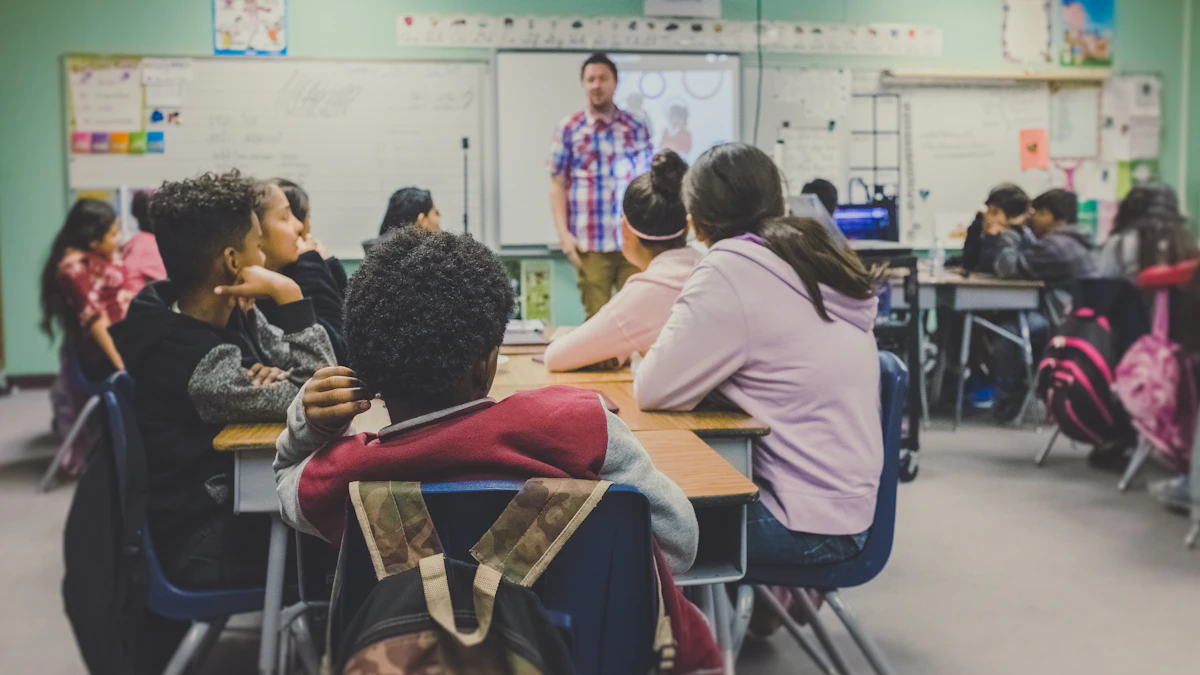
The room was brighter than I remembered.
Rows of tables instead of individual desks.
Outlets in the floor.
A screen where the chalkboard used to be.
Students looked up when I entered.
One of them smiled and said, “Professor?”
“No.”
I held up my notebook.
“Student.”
She looked embarrassed.
I was not offended.
I had spent the entire morning wondering whether I looked ridiculous.
At twenty-two, I had left community college after failing Statistics 101 for the second time.
At fifty-two, I had enrolled in the same course again.
Not the same section.
Not the same professor.
Probably not even the same textbook.
But in my head, it was the same room.
The place where I had decided I was not a school person.
That sentence followed me for thirty years.
I used it whenever someone suggested college.
I’m not a school person.
Whenever a job posting preferred a degree.
I’m not a school person.
Whenever my daughter complained about homework.
Some people are good at school. Some aren’t.
I said it so often it became biography.
Then my daughter asked one question.
“Mom, did you hate college?”
“No.”
“Then why do you talk like college rejected you?”
I did not have an answer.
I was not returning because I suddenly needed a degree.
I had built a good life without one.
I managed inventory and purchasing for a regional hardware company.
I supervised twelve people.
I negotiated contracts, tracked margins, and built monthly forecasts.
Numbers did not scare me at work.
Only numbers in textbooks did.
That contradiction became harder to ignore.
So I registered for Statistics 101.
One class.
Two evenings a week.
No dramatic five-year plan.
I told almost nobody.
The professor, Dr. Kim, was younger than me by at least fifteen years.
That bothered me for approximately four minutes.
Then she began explaining distributions and I became too busy being confused.
The students around me typed quickly.
I wrote everything by hand.
They opened the course app without instructions.
I needed three attempts to find the assignment page.
During the break, the student who had mistaken me for the professor introduced herself.
Her name was Maya.
She was nineteen.
“I’m sorry about before,” she said.
“If you want, you can call me Professor when I’m right.”
She laughed.
We became lab partners.
The first two weeks went well enough.
Then came probability.
I hated probability in 1996.
Apparently we had both aged without improving our relationship.
I watched videos.
Read the chapter.
Did practice problems.
At work, I could explain the chance of a supplier delay using six years of purchase data.
In class, a bag containing red and blue marbles turned me into an idiot.
The first quiz came back with a 58.
I stared at the grade.
My body remembered thirty years faster than my mind did.
Heat in my face.
Tightness in my chest.
The immediate certainty that everyone else understood something permanently unavailable to me.
At twenty-two, this was the point where I stopped attending office hours.
Then stopped sitting near the front.
Then missed one class.
Then two.
Eventually, I withdrew.
The second time I took statistics, I repeated almost the exact pattern.
No one pushed me out.
I disappeared before anyone could watch me fail.
Thirty years later, I closed the quiz page and opened the withdrawal form.
I filled in my name.
Student ID.
Course number.
Then my phone buzzed.
Maya.
Did you understand question 7? I got destroyed.
I laughed despite myself.
I had assumed everyone else was fine.
Maya had scored a 64.
We compared mistakes.
Different ones.
Then she wrote:
Kim has office hours tomorrow. Want to go?
My first reaction was no.
My second reaction was exactly why I had come back.
Thirty years earlier, I left because failing embarrassed me. This time, I decided embarrassment was not a reason to disappear.
We went to office hours.
Dr. Kim did not look disappointed.
She did not say I lacked mathematical ability.
She looked at my quiz and said, “You’re using formulas before deciding what the problem is asking.”
That sounded fixable.
She drew a small table.
“Before calculating anything, tell me what you know.”
I did.
Then what the question wanted.
Then which information mattered.
The problem became familiar.
It looked like work.
At my job, I never began with a formula.
I began with a question.
How many units?
What period?
Which supplier?
What risk?
Somewhere along the way, I had convinced myself classroom math required becoming a different kind of thinker.
It did not.
I deleted the withdrawal form.
That did not make the course easy.
The next quiz was a 71.
I was ridiculously proud of it.
The exam after that was an 82.
Then a 76.
Progress was not linear enough to become inspirational on command.
Some nights I came home after work and hated every symbol on the page.
Sometimes Maya explained software to me.
Sometimes I explained why a percentage change in an inventory example was misleading.
Our study group eventually included four people.
Maya, nineteen.
Chris, twenty-seven and changing careers.
Devon, thirty-four and finishing prerequisites for nursing.
Me.
No one cared about the age spread after the first month.
We cared who understood regression.

Near the end of the semester, Dr. Kim assigned a small project using a real dataset.
Most students chose sports, social media, or public health.
I used inventory data from work after removing confidential information.
I analyzed whether emergency orders were actually associated with longer supplier delays or whether our team only remembered the worst cases.
The answer surprised me.
Our fastest supplier caused the most emergency orders.
Not because it was unreliable.
Because everyone trusted it enough to order later.
I presented the result to the class.
For ten minutes, I forgot I was a fifty-two-year-old returning student.
I was just explaining a problem I understood.
After class, Dr. Kim said, “You should show that to your company.”
I did.
We changed one ordering threshold.
Nothing dramatic.
But useful.
On the final exam, I earned an 84.
My course grade was a B.
Thirty years earlier, I would have imagined returning only if the ending could be an A.
At fifty-two, the B felt more honest.
I had not discovered hidden genius.
I had learned the material.
Slowly.
With help.
That was enough.
After grades posted, I drove to campus even though there was no class.
I walked to Classroom 214.
The door was locked.
I stood outside it anyway.
I thought about the woman who had left thirty years earlier.
For most of my life, I had treated her like evidence.
Evidence that I was not academic.
Evidence that I quit when things became technical.
Evidence that some doors belonged to other kinds of people.
Now I saw her differently.
She was twenty-two.
She was embarrassed.
She did not know how to ask for help.
That was a moment.
Not a personality.
I did not need to forgive her.
I needed to stop using her worst semester as my permanent definition.
The next fall, I registered for one more class.
Not because I had decided to collect degrees.
Because there was another subject I wanted to understand.
That reason felt better.
Read more inspiring stories or browse short stories for adults.
This is an original fictional story from Dastan.
Featured photo: Vitaly Gariev / Unsplash. Inline photos: Quilia and Vitaly Gariev / Unsplash.