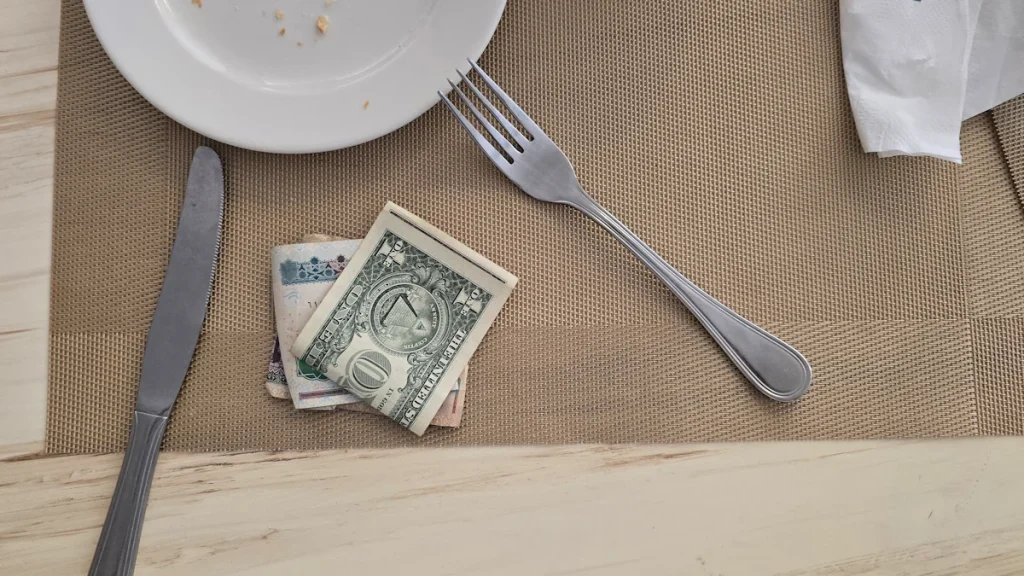
Our Tip Envelopes Kept Coming Up Short
The first missing twelve dollars looked like a counting mistake.
The second missing twenty-eight looked like carelessness.
By the fourth Saturday, I was watching Maribel’s hands every time she closed the register.
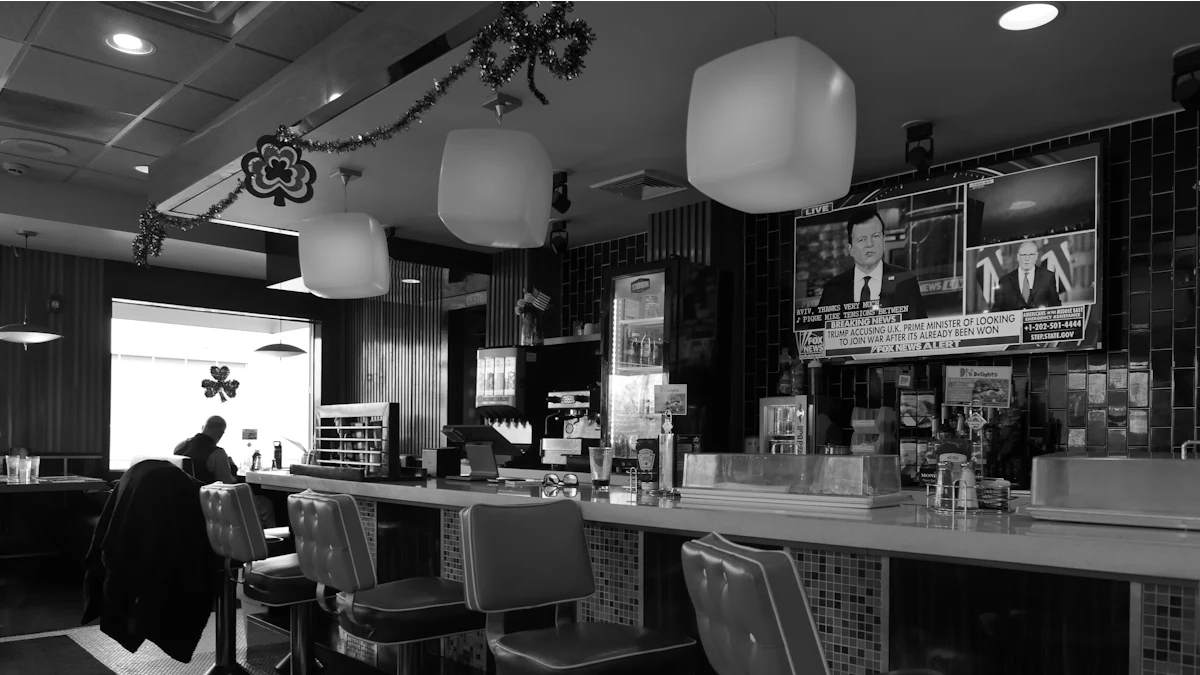
I worked mornings at Sunny’s Diner, the kind of place where coffee cups were refilled before people asked and three customers had eaten the same breakfast in the same booth for more than a decade.
Our tip system was simple in theory. Servers tipped out a percentage to bussers and the counter staff. At the end of each shift, the closer counted the shared cash and divided it into envelopes.
For years, the envelopes matched the shift sheet almost perfectly.
Then they didn’t.
Maribel had recently started closing more often after our assistant manager left. She was good at the work: fast, calm, impossible to fluster during a rush. She also had access to the cash drawer after everyone else clocked out.
I hated how quickly suspicion arranged the facts.
“You notice the tip-outs?” I asked Jonah, one of the bussers.
“Mine was short nine bucks last week.”
“Did you say anything?”
“Nine bucks?”
That was another problem. Each loss was small enough to feel petty alone.
Together, over six weeks, they added up to more than three hundred dollars.
I started photographing the shift sheet before leaving.
We had a rule against talking about other people’s tips. Frank said it caused arguments, and mostly he was right. But the missing money had changed how we looked at one another. At the counter, I caught myself wondering why Jonah suddenly bought lunch instead of bringing it. Then I hated myself for treating a sandwich as evidence.
Jonah was twenty-three and saving for a deposit on an apartment closer to his daughter’s school. He took the early bus and never complained about carrying the heaviest bus tubs. When I told him I was comparing the sheets, he said, “I don’t want to accuse anyone. I just want to know whether I’m getting paid what I earned.”
That sounded reasonable until I tried to imagine saying it to Maribel’s face. She had covered my shifts when my father needed surgery. She knew which customers wanted decaf and which ones pretended they did. The woman I trusted with a slammed dining room was becoming the woman I didn’t trust with an envelope.
One Sunday I compared my picture with the final close log the next morning.
The tip total had changed.
The register shortage had changed too.
On my photo, the cash drawer was short $34.
On the final log, the drawer balanced.
The shared tip amount was $34 lower.
I felt sick.
At the end of Monday’s shift, I asked Maribel to sit in the back booth.
“Are you moving tip money into the register?”
Her face answered before she spoke.
“Sometimes.”
“Sometimes?”
“When the drawer is short.”
“That’s our money.”
“I know.”
“Then why are you taking it?”
She looked toward the kitchen.
“Because Frank says the closer is responsible if the drawer doesn’t balance.”
Frank was the owner.
“Responsible doesn’t mean you pay it from our tips.”
“I was replacing it.”
“Were you?”
She looked down.
Not always.
The explanation came out in pieces.
She told me about a Friday when three servers had been using the same register while the card terminal kept freezing. A customer changed an order after paying cash. The void slip disappeared under a tray of clean mugs. By the time the lunch crowd thinned, nobody could say whether the twenty-dollar bill in the drawer belonged to that order or the next one.
“Why didn’t you stop and ask someone to check it?” I said.
“Who? Frank was out picking up supplies. You were carrying six plates. Jonah was alone in the dining room.”
“Then you could have left the drawer short and written down why.”
“I know that now.”
She rubbed a thumb along the seam of her apron. She had always been the person who fixed small problems before anyone noticed. The diner rewarded that habit with extra shifts and grateful smiles. She had started treating an unexplained shortage as another mess she could quietly clean up. Except this mess belonged to everyone, and the money she used was not hers.
Sunny’s used one shared cash drawer during the morning rush. Several servers entered cash orders under the same register. Voids were sometimes written on paper and corrected later. When the drawer came up short, nobody could reliably identify where the mistake happened.
Frank had told Maribel after one bad close, “I can’t keep eating shortages.”
She interpreted that as a warning.
She had recently asked for more hours and was afraid being associated with cash discrepancies would cost her the closing shifts.
The first time the drawer was short, she moved money from the tip pool and replaced it two days later from her own cash.
The next time, she did the same.
Then shortages came faster than she could replace them.
“I kept thinking I’d catch up,” she said.
“With whose money?”
She flinched.
I was angry enough to enjoy that for a moment.
Then I remembered every time I had closed and handed the drawer to a manager without knowing whether it balanced.
“We have to tell Frank.”
“Tessa, please.”
“There isn’t another option.”
“He’ll fire me.”
“Maybe.”
“You know what my rent is.”
“And Jonah knows what nine dollars buys him. This isn’t mine to forgive for everyone.”
That ended the argument.
Frank did not fire Maribel immediately.
We spread the closing sheets across two booths after the lunch rush. Frank brought a calculator that had been missing its battery cover for years. Jonah asked to stay, not because he wanted to watch Maribel suffer, but because the tip pool belonged to the bussers too. The newest server, Priya, kept asking us to slow down whenever someone jumped from a date to a total.
“If we get the amount wrong,” she said, “we’ll have done another unfair thing while trying to fix the first one.”
Maribel sat beside the coffee station, answering each question. She had kept a list of the days she borrowed from the pool and the days she paid it back. It was incomplete but better than anyone expected. She did not ask us to call it a loan. I noticed that and respected her for it, though I was not ready to say so.
He was furious. Then, as we reconstructed six weeks of logs, he became quieter.
The total taken from tips was $327.
Maribel had replaced $140.
She owed the pool $187.
But the logs showed something else too: cash shortages occurred on days Maribel did not close. The problem was not her counting. It was a shared drawer with weak tracking.
Frank had known the process was messy. What he had not known was how his sentence about “eating shortages” had been heard.
“I meant we need to reduce mistakes,” he said.
Maribel looked at him. “You said I was responsible.”
“For closing correctly.”
“You didn’t say that part.”
His ambiguity did not excuse her choice. Her fear did not transfer responsibility to him.
That mattered.
Maribel was removed from cash-closing duties while the situation was reviewed. She agreed to repay the remaining tip money on a schedule that the affected staff accepted. Frank documented the incident and made clear that taking pooled tips could not happen again.
Several coworkers wanted her gone.
Several felt sorry for her.
I was annoyingly stuck in the middle.
I could understand exactly why she had started doing it and still believe she had crossed a line.
The diner changed its closing process the following week.

Cash orders were assigned to individual server numbers instead of a single shared identity. Two people counted the final drawer. Voids had to be entered before the shift ended. The tip pool was counted and sealed before register reconciliation so it could not quietly become a backup cash source.
The process added seven minutes to closing.
Frank complained about the seven minutes for two days, then stopped.
Maribel stayed at Sunny’s, but trust returned unevenly.
The first repayment came on a Tuesday in a plain envelope. Frank logged it, and Jonah counted it with me. Nobody made a ceremony of it. By the end of the agreed schedule, every dollar had gone back into the pool, but there was no moment when all the hurt suddenly disappeared. Priya asked to be assigned fewer shifts with Maribel. Frank honored that for a while. Maribel accepted the arrangement without insisting that her repayment had purchased forgiveness.
I found myself talking to her about the weather and the broken milk-steamer before I could talk to her about anything that mattered. Once, when she offered to switch shifts so I could go to a school concert with my niece, I almost said no out of principle. Then I realized I was making ordinary cooperation into a test she could never pass. I accepted the switch and thanked her. It was not reconciliation. It was the beginning of being coworkers again.
Jonah checked his envelope in front of her for months. She never complained.
I stopped photographing every shift sheet after a while, though not because I believed systems should depend on trust again. We now had a process where nobody needed private evidence to know what had happened.
One Saturday, almost a year later, Maribel and I closed together for the first time since the incident.
She was on dining-room close. I was on cash.
We counted the tip pool first.
“One hundred eighty-six,” she said.
I counted again.
“One eighty-six.”
We sealed the envelopes.
Then we counted the drawer.
It was short four dollars.
For one second we both stared at the number.
Maribel laughed first.
“Don’t look at me.”
“I’m literally the closer.”
We reviewed the tickets and found a cash sale I had entered incorrectly.
I fixed the record. The drawer balanced.
The tip envelopes remained sealed on the counter.
That was the difference between the old system and the new one.
Not that mistakes stopped happening.
They just stopped needing somebody else’s money to disappear.
Featured image: illustrative photograph by حامد طه / Unsplash. This is an original fictional story; people and events are invented.