A Stranger Returned My Mother’s Cookbook With Notes in the Margins
The woman at my door was holding my mother’s cookbook.
I knew it before she said anything.
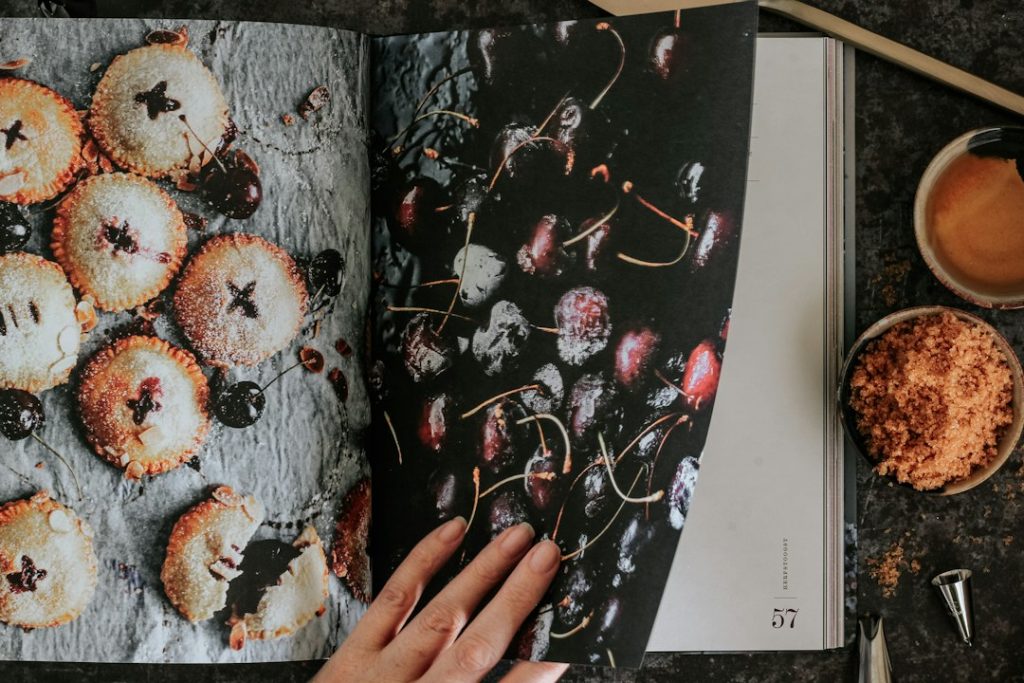
The cover had once been red but had faded to brown around the edges. A strip of clear tape held the spine together. On the front, in black marker, my mother had written: DO NOT THROW AWAY.
She wrote that on many things.
In this case, we had failed.
After my mother died, my brothers and I spent two months emptying her house. We donated clothes, sold furniture, divided photographs, and accidentally gave away several objects someone later wanted.
The cookbook disappeared during that process.
For three years, I assumed it was gone.
Now a stranger stood on my porch holding it against her chest.
“Are you Laura Bennett?” she asked.
“Yes.”
“My name is Helen Park. I think this belonged to your mother.”
I stared at the book.
“Where did you get it?”
“Estate sale.”
“My mother didn’t have an estate sale.”
Helen looked uncomfortable.
“Not hers.”
That was how the mystery began.
I invited Helen inside.
She placed the cookbook on my kitchen table carefully, as though it might break.
Inside the cover was my mother’s name, Evelyn Bennett, and an old phone number.
Below it was another name written in blue ink.
Rosa M.
I had never seen it before.
Helen explained that she bought the book six months earlier at the estate sale of a woman named Rosa Martinez.
“I collect old cookbooks,” she said. “Mostly for the handwriting.”
That sounded strange until she opened the book.
Almost every page contained notes.
Some were my mother’s.
Less sugar.
David hates olives.
Christmas 1987—double this.
But mixed among them was another handwriting.
Evelyn, try cumin here.
Too dry. Add broth.
Tomás liked this one.
There were conversations in the margins.
One person wrote a note.
The other answered.
I turned pages faster.
“Who was Rosa?” Helen asked.
“I have no idea.”
That answer bothered me.
My mother had lived in the same city for fifty years. She taught elementary school, attended the same church, and maintained friendships long enough to remember people’s childhood addresses.
I knew her friends.
At least I thought I did.
Helen showed me why she tracked me down.
Near the back was a recipe for chicken soup.
Under it, Rosa had written: For Laura after surgery—no pepper.
I had my appendix removed when I was fourteen.
I remembered my mother bringing soup to the hospital.
I did not remember anyone named Rosa.
“How did you find me?” I asked.
“Your mother wrote your full name next to a graduation menu.”
Helen searched online, found an old alumni page, then found my current address through a public directory.
“I hope that isn’t creepy.”
“Today, it’s useful.”
After she left, I called my older brother, David.
“Do you remember anyone named Rosa Martinez?”
He thought for a while.
“From Mom’s school?”
“I don’t know.”
I sent him photographs of the cookbook notes.
Five minutes later, he called back.
“Wait,” he said. “Rosa from the laundromat?”
That unlocked something faint.
When we were children, my mother sometimes took us to a laundromat on Maple Avenue even though we had a washing machine at home.
I remembered plastic chairs.
A vending machine.
A woman who gave us cinnamon candy.
“Why were we there?” I asked.
“No idea.”
Our younger brother, Kevin, remembered more.
“Mom helped someone there with English paperwork,” he said.
“Rosa?”
“Maybe.”
The three of us constructed fragments over the phone.
None formed a full story.
So I went looking.
The laundromat was now a phone repair shop.
The church my mother attended had old directories in storage. A volunteer found a Rosa Martinez listed in 1994, then nothing.
I searched obituaries and found one that matched the estate sale address Helen had mentioned.
Rosa Martinez had died at eighty-one.
She had a daughter named Teresa.
I hesitated for two days before contacting her.
When I finally did, I wrote a short message explaining the cookbook.
Teresa replied within an hour.
I have been wondering where that went.
We met at a coffee shop the following weekend.
Teresa was in her fifties and had my same nervous habit of tearing paper napkins into strips.
She smiled when she saw the cookbook.
“My mother loved your mother,” she said.
I did not know what to say.
“How did they know each other?”
“Laundry.”
It turned out both of our memories were correct and incomplete.
In the early 1980s, before my parents could afford a new washing machine, my mother used the Maple Avenue laundromat every Saturday.
Rosa worked there.
She had recently moved to the United States and spoke limited English. My mother helped her read school notices for Teresa and fill out forms.
Rosa taught my mother how to cook several dishes.
They became friends.
Not dramatic, inseparable friends.
The kind of friendship built inside routine.
Saturday laundry.
Shared coffee.
Recipes.
Childcare emergencies.
When our washing machine was replaced, my mother kept visiting.
Eventually the visits became less frequent.
Then life moved everyone in different directions.
“Why did Rosa have the cookbook?” I asked.
Teresa laughed.
“They passed it back and forth for years.”
“Why?”
“Because they refused to copy the recipes properly.”
That sounded exactly like my mother.
Some friendships do not leave photographs. They leave handwriting in practical places.
Teresa told me the book stayed at her mother’s house after my mother lent it to her sometime around 2002.
My mother apparently forgot.
Rosa apparently intended to return it.
Then both women became older, less mobile, and more occupied by health and family.
The cookbook simply remained.
“Mom talked about Evelyn even near the end,” Teresa said.
“My mother never mentioned Rosa.”
I heard the accusation in my own voice and regretted it.
Teresa did not take offense.
“People remember different parts of their lives at different times.”
She turned to a page with a rice recipe.
“This is my mother’s handwriting.”
I pointed to a note underneath.
“And that is mine.”
I had written it at sixteen: Needs cheese.
Teresa laughed so hard she covered her mouth.
“Your mother wrote below it.”
I looked.
Ignore Laura.
For the first time since Helen appeared at my door, the book felt less mysterious and more alive.
Teresa and I spent two hours going page by page.
She identified her mother’s notes.
I identified mine, my brothers’, and my mother’s.
There were references to events neither of us remembered.
A school fundraiser.
A bad winter storm.
A birthday cake that collapsed.
One note said simply: Never make this when Evelyn is angry.
We had no explanation.
That made it better.
Before we left, I asked Teresa whether she wanted the cookbook back.
“It was your mother’s,” she said.
“It was in your mother’s kitchen for more than twenty years.”
We compromised.
I scanned every page.
Then I had two printed copies made, preserving the stains, handwriting, crossed-out measurements, and all.
Teresa kept one.
My brothers and I kept one.
The original sits in my kitchen now.
I do not cook from it often.
The pages are fragile and several recipes would horrify a modern nutritionist.
But sometimes I open it for no reason.
Not because I need instructions.
Because the margins remind me of something I had not understood about my mother.
A life is larger than the version children witness.
Parents have friendships we barely notice, fears they do not explain, routines that vanish before we learn their significance.
We think we know them because we know where they kept the sugar and how they answered the phone.
Then one day a stranger arrives holding an old cookbook, and a whole room in their life opens that you never knew was there.
Looking for another quick read? Browse our 5 minute short stories for adults.