The Library Book Had My Address Written Inside
I noticed the address because it was mine.
Not the street. Not the building.
The whole thing.
41 Bell Street, Apt. 5C.
It was written in pencil on the inside back cover of a library book I had checked out that afternoon.
Underneath, in smaller handwriting, someone had added:
Thursday, 6:30.
Leave with Mrs. Vale.
I read it three times before I looked toward my apartment door.
I had lived at 41 Bell Street, Apartment 5C, for eight months.
No one named Vale lived there.
At least, not anymore.
The book was an old hardcover mystery called The Winter Orchard, the kind of novel with a faded cloth spine and pages that smelled faintly of dust. I had picked it from a shelf near the back of the neighborhood branch because I wanted something that did not involve a screen.
The note changed that.
I took a photo with my phone.
Then I checked the front hallway.
Empty.
I checked the lock.
Still locked.
I told myself the most reasonable explanation was that the address belonged to a previous tenant.
That explanation lasted about four minutes.
Then I remembered something else.
Two Thursdays in a row, someone had knocked on my door shortly after six.
Both times, I had been working.
The first time, I ignored it.
The second, I opened the door and found no one in the hallway.
I had assumed it was a child, a delivery driver, or a neighbor at the wrong apartment.
Now I looked at the note again.
Thursday, 6:30.
My skin tightened.

I went downstairs to see Mateo, the evening superintendent.
“Do you know if someone named Vale used to live in 5C?”
Mateo shook his head.
“I’ve been here nine years. Before you it was a couple named Foster. Before them, I don’t remember.”
“Is there any way to find out?”
He gave me the cautious look people give when they are deciding whether your problem will become their problem.
“Management might have old lease records.”
I emailed the office that night.
Then I moved a chair under the doorknob even though I knew that was ridiculous.
The next morning, I brought the book back to the library.
A librarian named Helen listened while I explained.
When I showed her the note, she did not look alarmed.
She looked curious.
“That handwriting is old,” she said.
“You can tell?”
“I can tell the pencil has been there a while.”
She turned the book over and checked the barcode.
The current sticker was new, but underneath it was the faint outline of an older label.
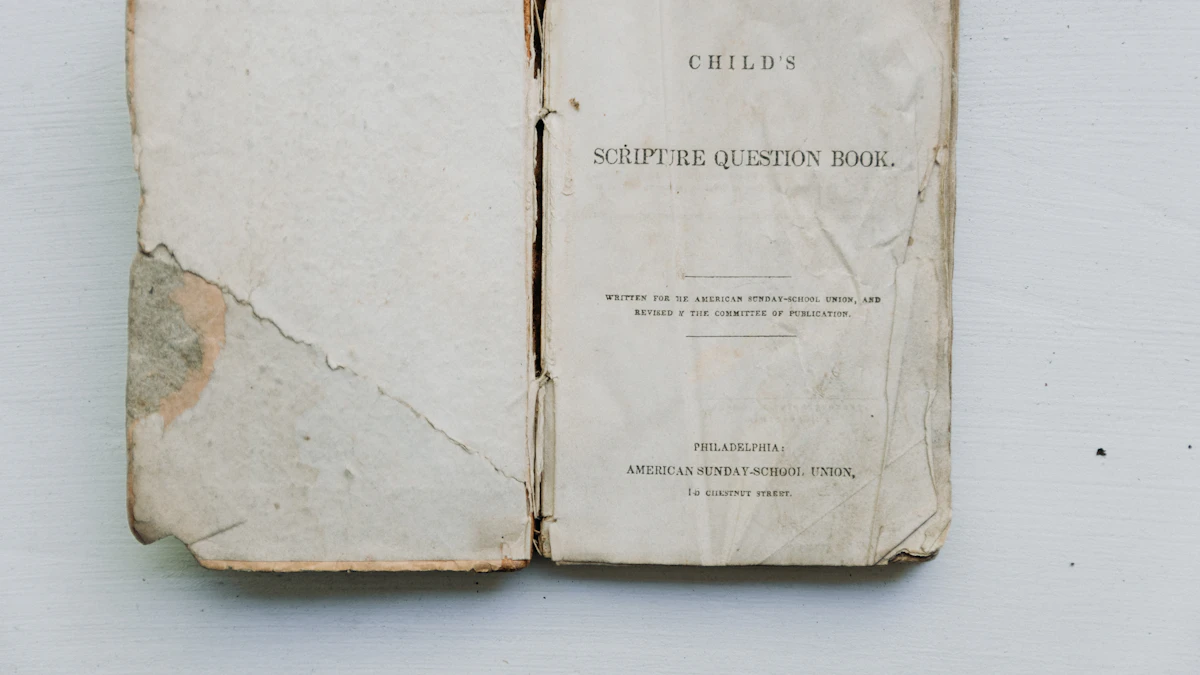
Helen looked at the title page.
Near the bottom was a purple stamp:
EAST BELL BRANCH
HOMEBOUND SERVICE
I had never heard of the East Bell Branch.
“It closed in 2008,” Helen said. “A lot of its collection came here.”
“What was Homebound Service?”
“Delivery for patrons who couldn’t come to the library. Staff and volunteers brought books to homes, nursing facilities, places like that.”
I pointed to the address.
“So a librarian wrote this?”
“Possibly. Or a volunteer.”
“What about the Thursday?”
“That looks like a delivery note.”
The explanation should have made me feel better.
Instead, it created a second question.
If the note was old, why had someone knocked on my door on two recent Thursdays at almost exactly the same time?
Helen could not give me old borrower records. Even if they still existed, she said, library privacy rules would prevent that.
But she did take me downstairs to a small local-history room where city directories and neighborhood newspapers were kept.
“Try the address,” she said. “Old directories sometimes list residents by building.”
That sounded like detective work.
I liked it less than I expected.
The first directory I checked was from 2007.
Apartment 5C was listed under a man named Harold Foster.
The next was 2003.
No Vale.
1999.
Still no Vale.
I started to think Helen had been wrong.
Then I checked 1996.
Eleanor Vale.
41 Bell Street, Apt. 5C.
I stared at the line.
A name in a directory should not have felt like a person stepping into the room.
But it did.
I copied the listing and kept looking.
Eleanor Vale appeared at the same address in 1995, 1994, and 1993.
Then she disappeared.
I found nothing dramatic.
No crime reports.
No missing-person notice.
No mysterious death in the apartment.
Just a small obituary from 2001.
Eleanor Vale, seventy-eight, retired music teacher, survived by one son in Oregon.
The obituary mentioned that she had been visually impaired during the last decade of her life.
That fit the Homebound Service.
It also made the note less frightening.
Almost.
I asked Helen if the book could have been delivered to Eleanor.
“Very likely,” she said.
“Then what about the knocking?”
She had no answer.
Neither did building management.
Their archived lease records only went back to 2009.
For the next week, nothing happened.
I kept the book on my kitchen table.
I did not read it.
Every time I walked past, I saw the pencil note.
Thursday came.
At six twenty-five, I turned off the television.
At six thirty-one, someone knocked.
Two short knocks.
I froze.
Then I opened the door immediately.
An elderly man stood in the hallway holding a canvas grocery bag.
He looked more surprised to see me than I was to see him.
“Sorry,” he said. “Wrong door.”
“Who are you looking for?”
He pointed across the hall.
“Mrs. Patel. Five B.”
I stared at him.
“You’ve knocked here before.”
He frowned.
“Maybe. These numbers are impossible to see.”
He was right.
The brass 5C on my door was small and dark. From the elevator, 5B and 5C looked almost identical.
“What happens on Thursdays?” I asked.
He lifted the grocery bag.
“I bring her groceries.”
The fear left so quickly that I almost laughed.
The knocks had nothing to do with the book.
They had only made the note feel current.
That should have ended the mystery.
But something still bothered me.
The note did not say “Deliver to Mrs. Vale.”
It said “Leave with Mrs. Vale.”
That sounded like she was receiving something for someone else.
I took the book back to Helen the next day.
She studied the wording.
“You’re right,” she said.
Then she flipped through the pages more carefully.
Near the middle, she stopped.
There was another pencil mark in the margin.
Three initials.
M.R.
J.C.
A.P.
Each had a check beside it.
Helen went quiet.
“What?”
“I’ve seen this before.”
She brought me to the local-history shelves again and pulled out a thin binder labeled EAST BELL OUTREACH, 1992–1998.
Inside were photocopies of old newsletters from the closed branch.
One page described a volunteer program called Books Between Neighbors.
Homebound patrons sometimes acted as pickup points for other readers in buildings where elevator outages, mobility issues, or work schedules made library visits difficult.
Books were delivered to one apartment.
Neighbors collected them later.
Mrs. Vale had not been a passive recipient.
She had been the hub.
The note was not about leaving a book with a lonely woman who could not get to the library.
It was an instruction to leave several books with the person who quietly made sure other people in the building received theirs.
The initials in the margin were likely the readers who had borrowed that copy through her.
“Your apartment was a tiny branch library.”
Helen smiled when she said it.
That changed the shape of the whole thing.
The address inside the book had frightened me because I thought it meant someone knew where I lived.
Instead, it meant the apartment had once been a place where people came because someone there helped them read.
I finally opened The Winter Orchard that night.
For the first time, the note on the back cover did not feel like a warning.
It felt like evidence.
A week later, I asked Mateo if he knew anything about Eleanor Vale.
He did not.
But Mrs. Patel across the hall did.
She had moved into the building as a young nurse in 1997.
“Mrs. Vale,” she said immediately. “Of course.”
I asked if people really collected books from her apartment.
Mrs. Patel laughed.
“Books, newspapers, sometimes crossword puzzles. She knew what everyone liked.”
“Why didn’t the library just deliver to each apartment?”
“Sometimes they did. But she enjoyed organizing things.”
Mrs. Patel pointed at my door.
“She kept a little table right inside there.”
I looked back at Apartment 5C.
For eight months, it had been mine.
Before that, it had belonged to people whose names I barely knew.
Before them, for a while, it had been a place where a woman with poor eyesight made sure her neighbors had something to read.
The apartment had not been marked by a secret.
It had been marked by a habit.
I returned the book on its due date.
Before I did, I almost erased the address.
It seemed wrong to leave someone’s old home written inside a public book.
Then I stopped.
The address was no longer current in the way I had feared.
And the note had survived thirty years without harming anyone.
I asked Helen what she thought.
She smiled.
“Leave it.”
So I did.
A month later, I checked the book out again.
This time, I actually read it.
The pencil note was still there.
41 Bell Street, Apt. 5C.
Thursday, 6:30.
Leave with Mrs. Vale.
Below it were the old initials.
Nothing new had appeared, and I was glad.
The note no longer needed another clue or a final message. I knew what it was now: a practical instruction from a small system of people who had learned how to get books to one another.
I turned the page and kept reading.
Browse more short mystery stories or read our collection of short stories with a twist.
This is an original fictional story from Dastan.
Featured photo: Declan Sun / Unsplash. Inline photos: runnyrem and Kelly Sikkema / Unsplash.