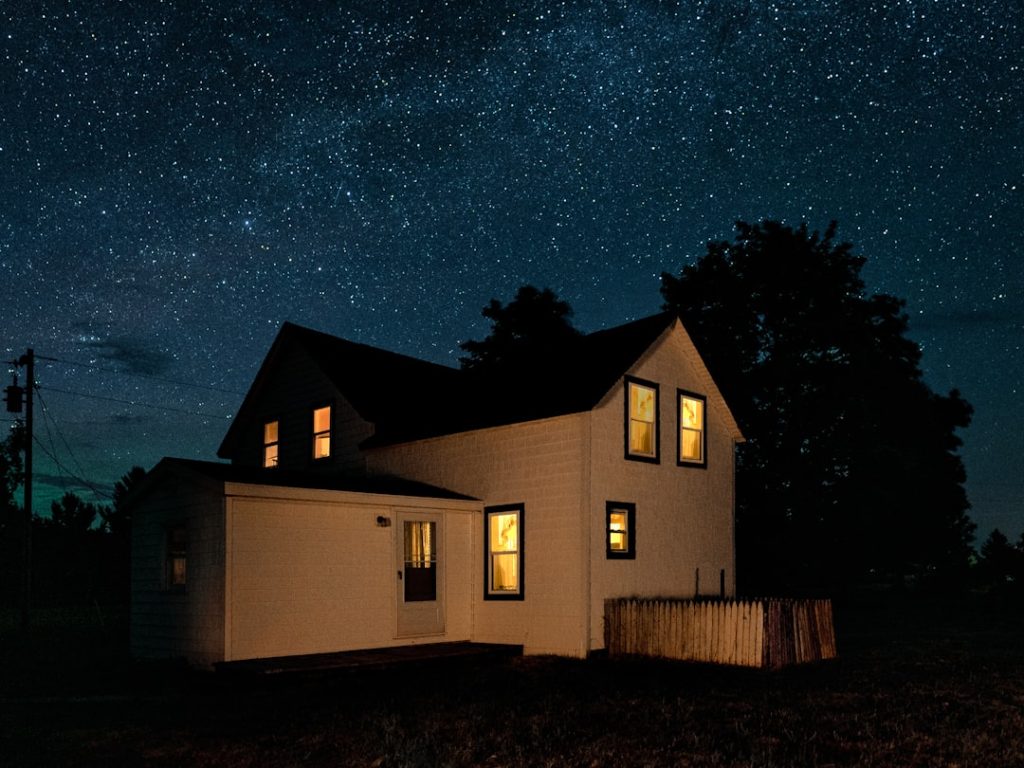
My Neighbor’s Porch Light Blinked Every Night at 2 A.M.—Then I Learned Why
The porch light blinked three times every night at 2:00 a.m.
On.
Off.
On.
Off.
On.
Then darkness.
I noticed because insomnia had turned me into an expert on my street after midnight.
I knew which neighbor’s sprinkler started at 1:15.
I knew the newspaper truck arrived around 3:40.
I knew the raccoon behind our garages had no respect for property boundaries.
And now I knew that Mr. Bennett’s porch light blinked exactly three times at 2:00.
The first night, I assumed an electrical problem.
The second night, coincidence.
By the seventh night, it was a pattern.
Mr. Bennett lived across the street alone.
He was seventy-eight, retired from the postal service, and famously private.
He waved.
He accepted packages for people when they were away.
He attended exactly one neighborhood barbecue every summer and left before dessert.
No one knew much more.
I mentioned the light to my husband.
“Maybe it’s on a timer,” he said.
“Why blink three times?”
“Bad timer?”
“At exactly two?”
He looked at me.
“You need sleep.”
That was true.
It did not explain the light.
I began watching.
Not every night.
I told myself that.
Most nights.
At 1:59, Mr. Bennett’s house was dark.
At 2:00, three blinks.
Then nothing.
One night, a car was parked two houses down.
The light blinked.
The car drove away five minutes later.
That was enough for my imagination.
A signal.
To whom, I had no idea.
I considered drugs, which was absurd.
I considered some kind of security arrangement.
I considered a family member checking on him remotely.
That last possibility sounded reasonable.
Then I noticed something else.
On mornings after the light blinked, Mr. Bennett sometimes placed a small white envelope inside his mailbox before sunrise.
At least twice, the envelope was gone by 7:00.
Now I had a light signal and mysterious envelopes.
This is how a person with insomnia becomes a neighborhood detective no one hired.
I asked our neighbor, Tasha, whether she had noticed anything.
“Noticed what?”
“Mr. Bennett’s porch light.”
“It’s a porch light.”
“It blinks at two every morning.”
Tasha stared at me.
“You are awake at two every morning?”
“That is not the point.”
“It feels like a point.”
She had not noticed.
Neither had anyone else.
That should have ended it.
Instead, it made the mystery feel like mine.
A week later, I saw Mr. Bennett at his mailbox in the afternoon.
I walked over.
“Can I ask you something weird?”
He looked amused.
“That depends how weird.”
“Does your porch light have a timer?”
The amusement disappeared.
“Why?”
“It blinks at night.”
“Does it?”
He said it too quickly.
“Three times at two.”
Mr. Bennett closed the mailbox.
“Probably the smart bulb acting up.”
“Every night at exactly the same time?”
He looked at me for a long second.
“You should sleep more.”
Then he walked back inside.
That response did not help.
I spent the next day embarrassed by my own curiosity and more curious than before.
At 1:58 that night, I sat by the window.
At 2:00, the light blinked.
Three times.
Then I saw Mr. Bennett step onto the porch.
He was wearing a robe and slippers.
He stood there for less than a minute.
Then he went back inside.
No car.
No visitor.
No envelope.
The next morning, I finally did the sensible thing.
I stopped watching.
For four days.
On the fifth day, Tasha knocked on my door.
“Your porch-light mystery is in my kitchen.”
I stared at her.
“What?”
Mr. Bennett had slipped on his front steps while carrying groceries.
He was not seriously hurt, but Tasha had seen him and helped him inside.
His daughter was driving over from another city.
“He needs someone to sit with him for an hour,” she said. “I have to pick up my kids.”
I went.
Mr. Bennett looked deeply annoyed to need help.
His ankle was swollen.
I brought him ice and tried not to mention the light.
He mentioned it first.
“You’re the one monitoring my porch.”
“I am not monitoring.”
He raised an eyebrow.
“Fine. I noticed.”
He adjusted the ice pack.
“It’s for my sister.”
That was not an explanation I expected.
His sister, Elaine, lived in an assisted-living facility three states away.
She had advanced hearing loss and mild cognitive impairment.
For years, the two of them spoke by phone every evening.
As Elaine’s memory became less reliable, she began waking in the middle of the night convinced no one knew where she was.
Her facility had staff, alarms, and emergency systems.
She was safe.
But reassurance from staff did not always reach her.
What did reach her was routine.
Mr. Bennett’s daughter had installed smart-home devices in both houses.
At 2:00 a.m. his time, which was midnight where Elaine lived, an automation blinked his porch light three times and a small lamp in Elaine’s room three times.
It was their signal.
“Three means what?” I asked.
“I’m here.”
I stopped moving.
“Does she see it every night?”
“Not always.”
“Then why keep doing it?”
“Because some nights she does.”
Rituals do not have to work every time to matter. Sometimes their purpose is simply to remain available when memory can still reach them.
The envelopes were another part of the routine.
Mr. Bennett wrote his sister short letters three times a week.
A caregiver at her facility scanned them and printed them in large type.
The white envelopes in his mailbox were outgoing mail.
The timing was coincidence: he often wrote them late at night and put them out before dawn.
“And the car?” I asked.
“What car?”
I told him about the parked car that left after the light blinked.
He laughed so hard he had to hold his ankle.
“You built a whole operation, didn’t you?”
“Apparently.”
“Drugs?”
“Briefly.”
He shook his head.
“I’m seventy-eight.”
“There is no age limit on poor decisions.”
That made him laugh again.
His daughter arrived an hour later.
She thanked me for staying.
Then Mr. Bennett told her I had been investigating the porch light.
She found that far too funny.
Mr. Bennett’s ankle healed in two weeks.
During that time, I brought groceries twice.
Tasha took out his trash.
Another neighbor drove him to a follow-up appointment.
He disliked all of it.
He also accepted it.
One evening, he told me more about Elaine.
They had grown up sharing a bedroom until he was eleven.
She taught him to read before school.
He taught her to ride a bicycle.
They fought constantly as teenagers.
After their spouses died, they became close again.
“She remembers old things better than yesterday,” he said.
“Does she remember the light?”
“Sometimes she tells the nurse, ‘My brother said goodnight.’”
That was enough.
My insomnia did not disappear.
But the 2:00 a.m. light changed.
It stopped being a puzzle.
It became part of the street’s nighttime landscape.
Three blinks.
I’m here.
Once, months later, it did not blink.
I noticed immediately.
I waited five minutes.
Nothing.
I almost called Mr. Bennett.
Then I stopped myself.
The next morning, I saw him outside.
“Your light didn’t blink last night,” I said.
He sighed.
“Internet went out.”
“Everything okay?”
He nodded.
“Elaine called the facility phone this morning and complained that I forgot her.”
“That sounds like she remembered.”
He smiled.
“Exactly.”
Now, when I wake at two, I sometimes watch the light.
I no longer feel like a detective.
I feel like a witness to something private enough that I try not to stare.
Three small flashes crossing a dark street.
No danger.
No secret visitor.
No mysterious exchange.
Just one person repeating the same message every night in case someone he loves is awake enough to receive it.