I Bought a Used Coat and Found a Wedding Photo Sewn Into the Lining
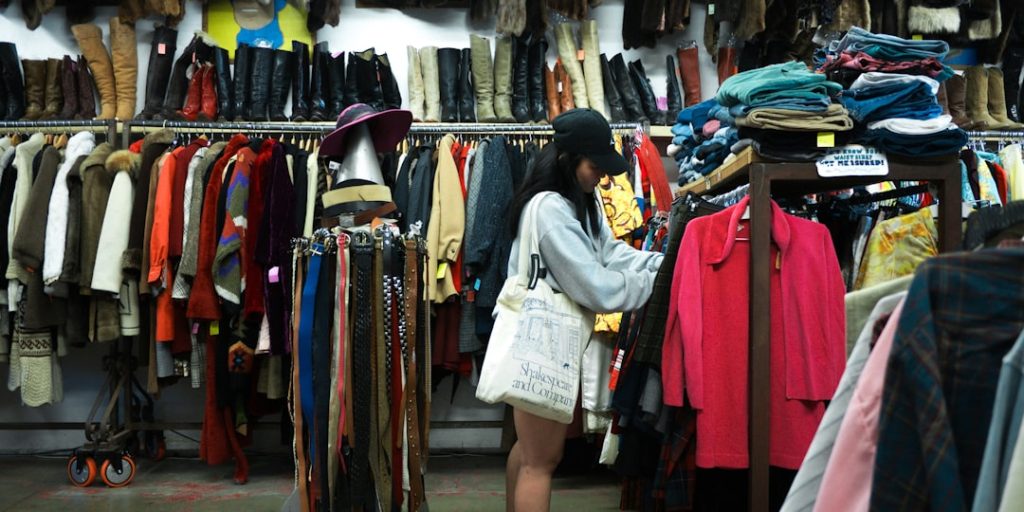
I bought the coat because it fit perfectly.
That almost never happens in thrift stores.
It was a dark green wool coat with a narrow collar, deep pockets, and a label from a department store that had closed decades ago.
The lining was torn near the left seam.
I did not care.
It cost twenty-four dollars.
Three days later, while repairing the tear, I felt something stiff between the lining and the wool.
I assumed it was an old receipt.
I widened the seam.
A photograph slid into my lap.
It showed a bride and groom standing outside a courthouse.
The image was square, faded, and probably from the 1960s.
The bride wore a simple knee-length dress and carried three flowers.
The groom wore a dark suit that looked slightly too large.
They were laughing.
Not posing.
Actually laughing.
On the back, in blue ink, someone had written:
June 4, 1966. Anna + Thomas. We did it anyway.
I stared at the sentence.
We did it anyway.
The photograph had not slipped accidentally into a pocket.
Someone had sewn it into the coat.
That made it feel like a secret.
I returned to the thrift shop the next day.
The manager remembered the coat vaguely.
“It came in with a big donation from an estate cleanout,” she said.
“Do you know whose?”
She shook her head.
Donations were processed through a warehouse. Individual items were not tracked to donors.
I showed her the photograph.
“That’s sweet,” she said.
“Do people ever come back looking for things accidentally donated?”
“All the time.”
“Could I leave my number?”
She let me.
No one called.
For a week, the photograph sat on my desk.
I told myself to stop thinking about it.
Then I searched the names.
Anna and Thomas, married June 4, 1966, in our county.
That was not much.
Marriage records narrowed it.
I found an index for a Thomas Ellison and Anna Morales licensed three days before that date.
The courthouse in the photograph matched ours.
I searched obituaries.
Thomas Ellison had died twelve years earlier.
Anna Ellison had died the previous winter at eighty-one.
Her obituary listed two daughters.
One still lived in town.
I hesitated before contacting her.
There is a line between returning an object and inserting yourself into someone else’s family history.
I wrote a short message anyway.
I recently bought a vintage coat locally and found a 1966 wedding photograph sewn into the lining. I believe it may show your parents. If so, I’d be happy to return it.
Her name was Rebecca.
She replied twenty minutes later.
Please call me.
Her voice shook when we spoke.
“Can you describe the coat?” she asked.
“Dark green wool.”
Silence.
“That was my mother’s.”
I felt suddenly guilty for owning it.
“I can return the coat too.”
“No. No, keep it. I donated it.”
“You did?”
“After she died.”
Rebecca asked if we could meet.
We chose a coffee shop the following Saturday.
I brought the photograph in an envelope.
She brought her older sister, Diane.
When I placed the photograph on the table, both women went quiet.
Diane touched the edge with one finger.
“I’ve never seen this,” she said.
Rebecca turned it over.
She read the message aloud.
“We did it anyway.”
The sisters looked at each other.
“That sounds like her,” Diane said.
“What does it mean?” I asked.
Rebecca gave a small laugh.
“Our grandparents did not want them to get married.”
The story came slowly.
Anna Morales was twenty-one in 1966.
Thomas Ellison was twenty-three.
Her parents disliked him because he came from a different religious background and because, in their opinion, he had no stable future.
His parents disliked her family because of class and ethnicity.
Both families expected the relationship to end.
Instead, Anna and Thomas went to the courthouse on a Saturday morning with two friends as witnesses.
“Did the families come around?” I asked.
“Eventually,” Diane said.
“Mostly,” Rebecca added.
They remained married for forty-six years until Thomas died.
That sounded like the ending.
It was not.
“Why sew the photograph into the coat?” I asked.
The sisters did not know.
They recognized the coat from childhood photographs.
Anna wore it for years.
She kept it even after it stopped fitting well.
But neither daughter had known anything was hidden inside.
Rebecca looked at me.
“Where exactly was it?”
I showed her the seam.
“Inside the lining. It was definitely placed there intentionally.”
Diane frowned.
“Mom had photo albums. She wasn’t hiding the marriage.”
That was the strange part.
Their wedding was not a secret.
The family history was known.
Why hide this one image?
Not every hidden object is evidence of a hidden life. Sometimes it marks a memory someone wanted to keep physically close.
Rebecca took a photograph of the photograph and texted it to an aunt.
Five minutes later, the phone rang.
The aunt was Anna’s younger sister, Teresa.
Rebecca put her on speaker.
“Where did you find that?” Teresa asked.
I explained.
She laughed and then started crying.
“I sewed it there.”
All three of us leaned toward the phone.
Teresa was sixteen when Anna married.
She had been the only sibling who knew the courthouse plan in advance.
Their parents had confiscated letters from Thomas once before.
Anna became afraid they might search her room if they suspected she still planned to marry him.
After the wedding, Teresa hid one photograph inside the lining of Anna’s coat so their mother would not find it.
“Why that coat?” Diane asked.
“Because your grandmother hated green and never touched it.”
We all laughed.
Anna moved out two weeks later.
There was no longer any need to hide the photograph.
But apparently no one remembered it was there.
“Did Mom know you sewed it in?” Rebecca asked.
“Of course. She told me where.”
“Then why leave it there for fifty years?”
Teresa paused.
“Maybe she forgot.”
Then she added, “Or maybe she liked knowing it was there.”
That answer felt right.
Anna had kept the coat through moves, pregnancies, changing fashion, and decades of marriage.
The photograph remained between fabric layers.
Not displayed.
Not erased.
Just carried.
Rebecca asked whether I wanted the coat back.
I laughed.
“I thought you wanted it.”
“No. I donated it for a reason.”
“It belonged to your mother.”
“And she would be delighted someone is wearing it instead of storing it.”
Diane nodded.
“She hated waste.”
We agreed that the photograph should stay with the family.
Rebecca scanned it professionally and made copies for her sister and aunt.
Then she did something I did not expect.
She gave me a copy too.
“You found it,” she said.
“That doesn’t make it mine.”
“No. But you’re part of the story now.”
I kept the copy.
Not in the lining.
In a small frame on my bookshelf.
The coat became my favorite winter coat.
I repaired the seam properly.
For a while, I felt strange wearing it.
Then Rebecca sent me a photograph of her mother wearing the same coat in 1972, holding a toddler and laughing into the wind.
Under the image, she wrote:
Mom would approve. She always said clothes should have a life.
That solved it.
The following winter, I wore the coat to the same thrift shop where I bought it.
The manager recognized me.
“Did you ever find the family?” she asked.
“I did.”
“Good ending?”
I thought about that.
Nothing dramatic had been uncovered.
No second family.
No betrayal.
No crime.
Just two young people who married despite objections, a teenage sister with a needle and thread, and one photograph that stayed hidden long after anyone needed to hide it.
“Yes,” I said. “A very good ending.”
Finding old objects makes us hungry for secrets.
We assume what is hidden must be scandalous.
Sometimes it is.
But sometimes a hidden photograph is simply what remains of a moment when someone needed courage more than permission.
And sometimes the most meaningful secret is not what happened.
It is the fact that someone chose to keep the evidence close, quietly, for the rest of their life.