The Cashier Kept a Drawer Full of Unclaimed Change
I found the drawer during my second week as assistant manager.
It was under Register Four.
Not the cash drawer.
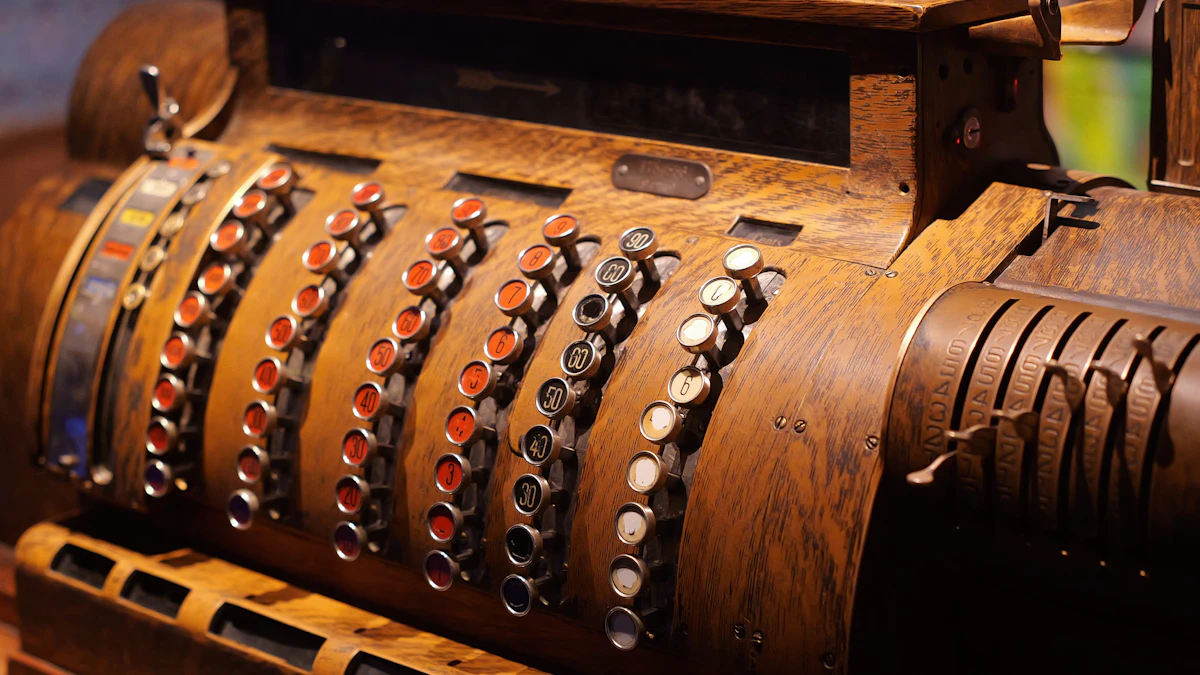
A smaller wooden drawer built into the old counter, the kind newer stores no longer have.
I opened it looking for receipt paper.
Instead, I found money.
Mostly coins.
Quarters, dimes, nickels, pennies.
A few one-dollar bills folded into squares.
Beside them was a yellow index card covered in handwriting.
9/3 — 37¢ left by customer, lane 4.
9/3 — used 12¢, customer short on milk.
9/4 — 81¢ left, “keep it.”
9/4 — used 6¢, tax difference.
I read the card twice.
Then I called Elena.
She had worked at the neighborhood grocery store for seventeen years.
Everyone knew her.
Children who came in with their parents called her Miss Elena.
Older customers chose her lane even when another was shorter.
She came over carrying a roll of register tape.
“What’s this?” I asked.
She looked at the drawer.
“Change.”
“I can see that.”
“Then we’re making progress.”
I did not smile.
Cash-handling policy was one of the few parts of my new job I understood completely.
Every till started at a fixed amount.
Every till closed against recorded transactions.
Cash could not float between registers without documentation.
Employees could not store personal money at the counter.
A drawer full of unrecorded change was exactly the kind of thing an audit turned into a meeting.
“Whose money is this?” I asked.
Elena shrugged.
“No one’s, mostly.”
That was not an accounting category.
I asked Elena to close her lane for ten minutes.
We counted the drawer in the office.
Sixty-eight dollars and forty-three cents.
More than I expected.
Less than enough to explain why I felt nervous.
“How long has this been happening?”
“Before me.”
“You’ve been here seventeen years.”
“Correct.”
“So nobody knows?”
“People know.”
“Management?”
She tilted her head.
“Management changes.”
I understood the implication.
The drawer stayed.
Managers came and went.
No one wanted to own the question.
Elena explained the system.
If a customer left loose change and said “keep it,” the cashier could not legally treat it as a tip.
The store did not have a tip policy.
If a coin was found on the floor near checkout and no one claimed it, it often went into the drawer.
When a customer was short by a few cents, Elena used the drawer.
Not dollars.
Usually pennies.
Sometimes a quarter.
“You’re giving store money to customers,” I said.
“It’s not store money.”
“Then whose is it?”
“That is your question.”
It was.
I told Elena we had to stop using it until I spoke with the store manager.
She did not argue.
That surprised me.
“You’re okay with that?”
“It’s your job to ask.”
“You think I’m overreacting.”
“I think if a system depends on nobody asking questions, it is not a very good system.”
That sounded more like something a compliance officer would say than a cashier defending an unofficial cash drawer.
The next day, I brought the issue to Marcus, the store manager.
He knew about the drawer.
Of course he did.
“I inherited it,” he said.
“That is not the same as approving it.”
“No.”
“Why didn’t you remove it?”
He sighed.
“Because then I’d have to decide what to do with sixty-eight dollars in abandoned pennies.”
“That is literally the manager’s job.”
He smiled.
“Welcome to management.”
I did not find that funny either.
We agreed to leave the money sealed in the office while we asked corporate accounting for guidance.
For three days, the drawer under Register Four stayed empty.
On the second day, a boy came through Elena’s lane with his mother.
They had bread, bananas, cereal, and a carton of milk.
The total was $18.07.
His mother handed over eighteen dollars in cash.
Then searched her purse.
“I thought I had change.”
She looked embarrassed.
“Take off the bananas.”
Elena looked at me.
Not accusingly.
Just looking.
The old drawer was empty.
I reached into my pocket.
Then stopped.
Employees were not supposed to mix personal cash into transactions either.
The woman found a dime at the bottom of her bag before I had to decide.
She paid.
Nothing terrible happened.
But I understood the function of seven cents differently after watching her remove food from a transaction over it.
The drawer had not solved poverty.
It had solved tiny moments where exactness became humiliation.
That still did not make the system sound.
“Kindness is easier to trust when nobody has to hide how it works.”
Corporate accounting replied on Friday.
The answer was predictable.
Stop the drawer.
Unclaimed cash had to follow lost-property rules above a certain amount.
Incidental coins could not be kept off-book indefinitely.
Any customer-assistance fund needed approval and reconciliation.
Marcus forwarded the email to me with one sentence:
You asked the question.
I read it as annoyance.
Maybe it was.
I also knew he was right.
I had opened the drawer.
Now I needed to finish the problem.
I asked Elena to help.
She looked suspicious.
“Help you remove it?”
“Help me replace it.”
We went through three months of her index cards.
The amounts were tiny.
Average customer shortfall: fourteen cents.
Largest amount used: eighty-nine cents.
Most weeks, more change went in than came out.
High-value found cash was not in the drawer at all.
Elena had always taken bills over five dollars to the office with the date and register number.
Her system was informal.
It was not careless.
That distinction mattered.
We proposed something simple.
A small approved “rounding assistance” balance at customer service.
Funded by the store, not abandoned money.
Maximum one dollar per transaction.
No employee discretion above that.
No names recorded.
No public announcement designed to make customers ask for charity.
Just a way to cover minor cash shortages without removing an item or making a scene.
Separately, we installed a sealed change container for coins customers intentionally wanted to leave behind.
At month-end, that money would go to the neighborhood food pantry with the amount posted publicly.
Accounting approved a three-month trial.

The first week, almost nothing changed at the register.
That was the point.
A man was eleven cents short.
Elena covered it from the approved balance.
No secret drawer.
No personal money.
No lecture.
He took his groceries and left.
At closing, the assistance balance reconciled exactly.
Elena showed me the report.
“Very exciting,” she said.
“You sound moved.”
“I prefer the wooden drawer.”
“I know.”
“It had character.”
“It had sixty-eight dollars in undocumented cash.”
“Also character.”
I finally laughed.
The old money created one last problem.
What should happen to the sixty-eight dollars and forty-three cents?
Corporate said it could be transferred to the food pantry if we documented the amount and treated it as abandoned incidental change accumulated before the new policy.
We did.
Elena insisted on counting it herself.
Then she signed the form.
Under “source,” she wrote:
Years of people saying, “Keep the change.”
I made her replace that with:
Accumulated unclaimed incidental cash.
She rolled her eyes.
We kept her version photocopied in the office.
Three months later, the trial became permanent.
The assistance balance rarely exceeded fifteen dollars of use in a week.
That was enough.
The point was never the amount.
It was preventing small shortages from becoming public embarrassments when a simple mechanism could solve them.
I had started the whole process because I distrusted a drawer.
I was right to distrust it.
I was wrong to assume that eliminating the drawer meant eliminating what it had been trying to do.
Sometimes an informal act of kindness survives because formal systems have left a gap.
The answer is not always to preserve the workaround.
Sometimes the better answer is to make the gap visible enough that kindness no longer has to hide inside it.
Read more kindness and humanity stories or browse short stories for adults.
This is an original fictional story from Dastan.
Featured photo: Simon Kadula / Unsplash. Inline photos: Dmitrii E. and Brittani Burns / Unsplash.