His Last Name Was Never About Me
My stepson’s surname bothered me for eleven years before I admitted it bothered me at all.
Owen Hart was nine when I married his mother. I never asked him to call me Dad. I never mentioned adoption. I understood, at least in principle, that loving a child did not require replacing anyone.
Still, when his mother took my surname and Owen kept Hart, some private part of me began keeping score.
It was a score I was ashamed of. The week Owen started middle school, a form came home asking for a parent or guardian’s signature. He gave it to me while his mother was working late. I signed it, and he checked the box beside my name marked stepfather. I laughed and called myself the family’s extra column. Owen took the form back without laughing. I told myself he hadn’t heard the joke. Of course he had.
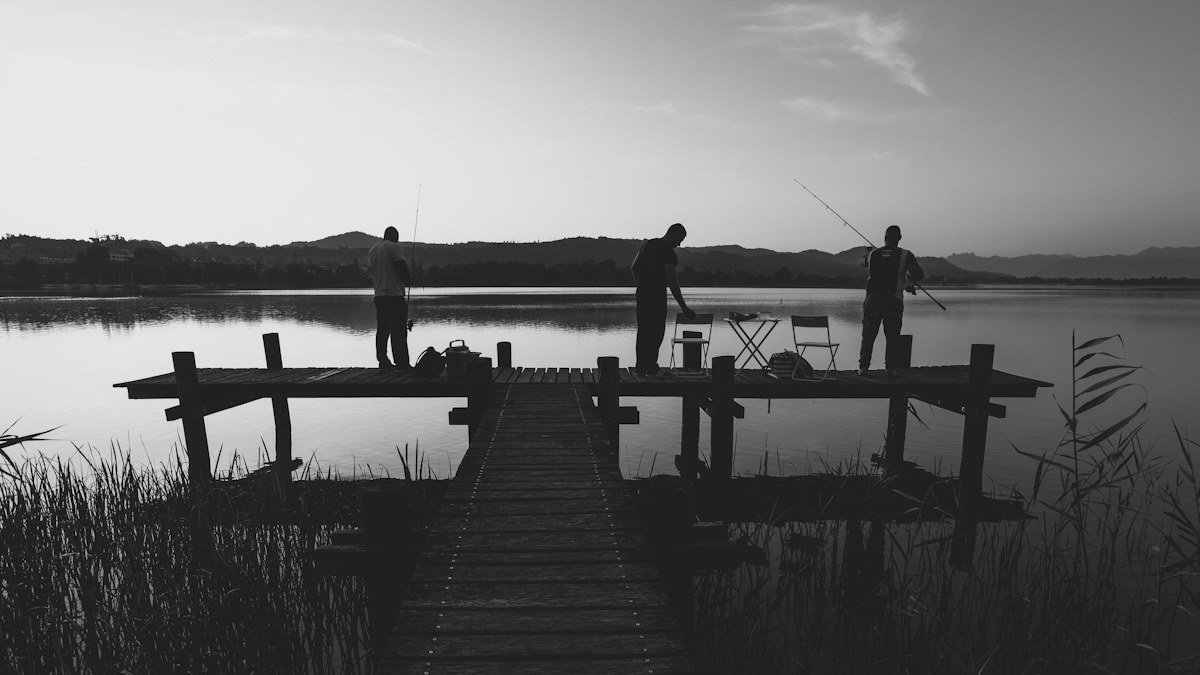
Owen’s biological father, Eric, had moved away when Owen was six and drifted in and out of contact after that. The person Owen remained close to on that side was Eric’s father, Walter Hart, a quiet retired machinist who picked Owen up from school on Fridays and taught him to fish badly.
Walter died when Owen was thirteen.
After that, the surname seemed to matter even more to him.
At sixteen, when his mother casually asked whether he had ever thought about changing it, Owen said, “No. Grandpa was a Hart.”
I was standing at the sink.
I remember drying the same plate for too long.
I knew the answer had not been about me.
It still felt like an answer about me.
The first time I saw Hart printed beside Miller was on a middle-school science-fair program. I had driven Owen across town with a cardboard model of a suspension bridge balanced between us. When the volunteer at the registration table asked whether she should correct the different surnames, I answered too quickly: “No, that’s right.” Owen glanced at me. On the drive home he asked if I had been embarrassed. I said I was embarrassed by the way I had parked, and he let the answer stand. Remembering that small silence years later, I realized he had been making room for me long before I knew how to return the favor.
Years passed.
I taught Owen to drive in a parking lot where he nearly removed a shopping-cart shelter. I sat through parent conferences, helped him build a desk, loaned him money for a used car, and once drove four hours because he called from college saying only, “I messed up.”
He had failed a class, not committed a crime.
“You drove all this way?” he asked.
“You sounded terrible.”
“I am terrible.”
“You failed statistics.”
“Exactly.”
We ate burgers and made a plan.
He called again six weeks later, this time to tell me he’d passed the resit. I was balancing the household accounts and nearly missed the call. Owen didn’t ask for praise. He wanted to know whether the old desk we had built could fit in a different apartment. We spent half an hour arguing about measurements neither of us had written down. I mailed him the right bracket and forgot about it until he sent a photograph of the desk against a new wall. What stayed with me was not the repair. It was that he had thought to tell me something ordinary after the crisis had passed.
None of these moments required a shared surname.
But milestones have a way of waking up old insecurities.
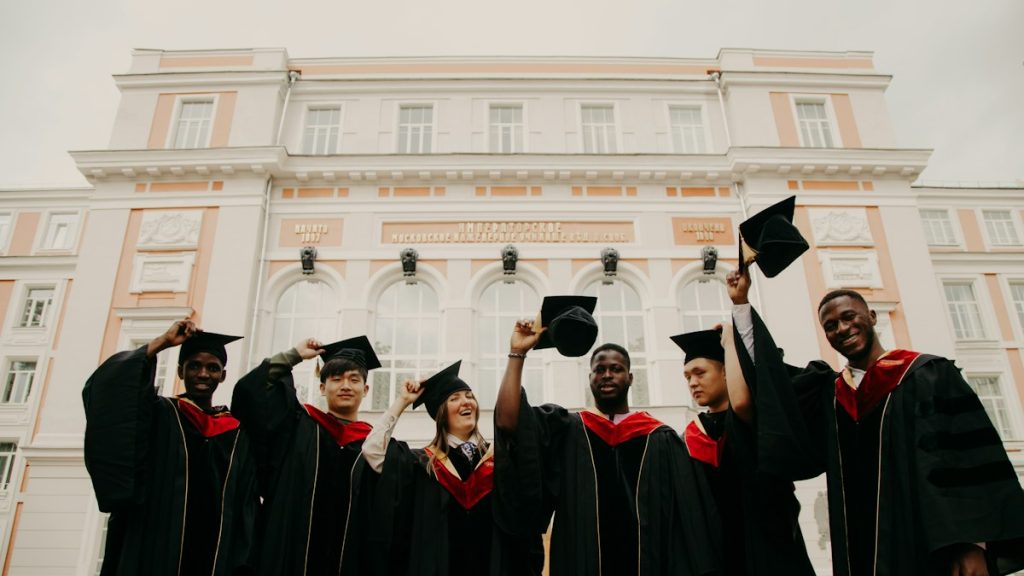
When Owen transferred to community college closer to home and finally completed his degree, I was absurdly proud. He had taken classes while working full-time at a print shop. The graduation felt less like a ceremony and more like the visible end of a long, stubborn climb.
At graduation, one of Owen’s instructors came over before the ceremony.
“You must be James,” she said to me.
Owen groaned. “Professor Lee, please.”
She smiled. “He talks about you all the time.”
Then Owen introduced me to one of his classmates.
“This is James,” he said. “He taught me how to stay when things get hard.”
The sentence hit me harder than I expected.
His mother squeezed my arm. I managed to say, “Good to meet you.”
Professor Lee moved on to greet another family. I wanted to ask what else Owen had said, to collect more evidence while the offer was available. Instead I watched him straighten his borrowed gown and help a classmate find her missing tassel. He looked tired, happy, and entirely himself. For once I could see my pride in him without immediately measuring what his pride in me might be.
When the graduates filed into the hall, I kept turning the program over in my hands. Owen’s name appeared among hundreds of others. I knew exactly how much work had gone into putting it there, and the knowledge was finally enough to hold my attention.
The ceremony itself was hot and badly organized. Families crowded into folding chairs. People shouted names at inappropriate moments. A toddler behind us dropped a metal water bottle repeatedly.
When Owen’s name was called, his mother stood up despite his earlier request that nobody do anything embarrassing.
I stayed seated for almost two seconds.
Then I stood too.
Afterward, we took photographs outside. Owen held his diploma cover while his mother adjusted his collar.
A photographer asked, “Immediate family?”
For years, a question like that would have activated the stupid little alarm inside me.
Owen answered first.
“These two.”
He pulled us both closer.
That evening Owen came by for dinner.
I had not planned to mention what he had said. Then he caught me looking at him across the dinner table.
“Why are you looking at me like that?”
“Because of what you said before the ceremony.”
He frowned. “About James staying?”
“Can I ask you something?”
He looked cautious.
“That’s never a good opening.”
I told him the truth.
Not all of it elegantly.
I said his surname had sometimes made me wonder whether he saw me as temporary, useful, or outside the real definition of family. I told him I knew this was unfair and that I had never wanted him to feel pressured to change it.
Owen listened without rescuing me.
“Why didn’t you ever say that?” he asked.
“Because it was my insecurity, not your responsibility.”
“Mostly true.”
“Mostly?”
“You also made it weird sometimes.”
I frowned.
He reminded me of school forms where I had joked, “I’m the odd name out.” A hotel reservation where I said, “People are going to think we’re strangers.” Christmas cards I had signed THE MILLERS and then added “and Owen” as if he were a visiting exchange student.
I wanted to disappear.
“I thought those were jokes.”
“They were jokes. They were also about the thing you weren’t saying.”
That was fair.
“I should have asked whether those jokes bothered you,” I said.
“You could have,” Owen replied. “But I also could have told you. I used to think being the one with the different name was my problem to manage.”
His mother reached for the serving bowl, then put it down again. “I remember the Christmas card,” she said. “I should have said something too.”
“Don’t make this a committee meeting,” Owen said, but he was smiling.
It occurred to me that we had spent years working around a conversation none of us believed we were allowed to start. His name had been carrying far more of our feelings than any name reasonably could.
“Why did you keep Hart?” I asked.
He leaned back in his chair.
“Grandpa.”
“I knew that part.”
“Not all of it.”
Walter Hart had been the first person on his father’s side who never made Owen feel responsible for Eric’s absence. He never asked Owen to defend his father or excuse him. He simply showed up on Fridays.
After Walter died, Owen felt that changing his name would erase the easiest visible connection he had to him.
“I know that’s symbolic,” he said.
“Names usually are.”
“But keeping Hart never meant you weren’t family.”
“I know that now.”
He looked at me.
“Did you really not know it before graduation?”
I considered lying.
“I knew it in every way except the insecure one.”
He laughed.
“That’s unfortunately relatable.”
After dinner, his mother wanted to frame the diploma.
“Don’t crop the name,” I said when she tried to center it.
Owen looked at me.
“You having a breakthrough?”
“Apparently.”
I bought a frame large enough for the full certificate.
Owen Hart hangs in our hallway now in black letters beneath the college seal.
My surname is nowhere on it.
Beside the diploma is a small photograph of Owen and Walter on a fishing pier, both squinting into the sun. Owen brought it over when we chose where to hang the frame. He held it against the wall and asked if there was room. There was, of course. I found another hook in the kitchen drawer. Neither photograph explains the other. Together they make more sense than the matching names I once imagined our hallway ought to display.
I pass it every morning.
It no longer feels like evidence of anything missing.
Featured photograph: RUT MIIT / Unsplash. Other images: Jan Huber and Odile / Unsplash. Illustrative images do not depict the fictional characters.