My Sister Asked Me to Store One Box—Then I Found Our Mother’s Passport Inside
My sister asked me to store one box.
That was the exact phrase she used.
“Just one box. I’ll pick it up after the renovation.”
Claire lived twenty minutes away in a two-bedroom apartment that was about to become a construction site. The kitchen cabinets were being replaced, the floors refinished, and every surface she owned had apparently been covered in either dust or plastic.
I had a basement.
So I said yes.
The box arrived on a Saturday afternoon.
It was medium-sized, taped shut, and labeled in Claire’s handwriting: MOM — KEEP.
Our mother had died eighteen months earlier.
We had already gone through her house, divided the sentimental things, donated most of the practical things, and spent three months discovering that grief involves an astonishing amount of cardboard.
I assumed the box contained photographs or papers Claire had not finished sorting.
I put it on a shelf beside the camping equipment and forgot about it.
Six weeks later, a pipe under my basement sink leaked.
The bottom of the box got wet.
I carried it upstairs to make sure nothing inside had been damaged.
The tape had loosened from the moisture.
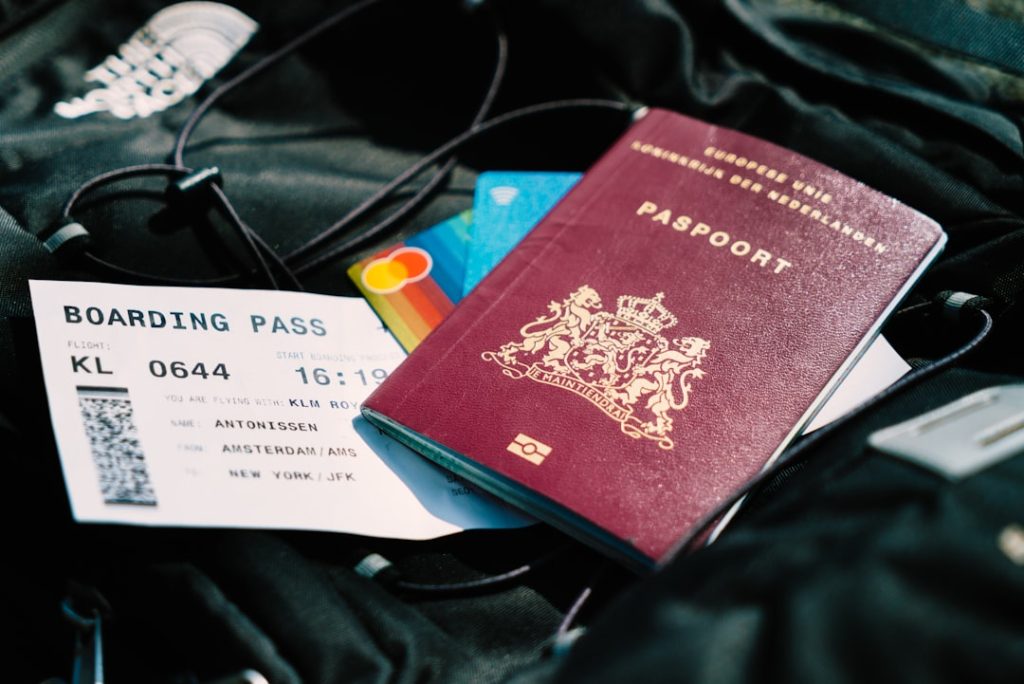
When I lifted the lid, the first thing I saw was our mother’s passport.
That did not seem strange.
Then I noticed the issue date.
It had been renewed four months before she died.
My mother had not traveled internationally in almost twenty years.
At least, that was what I believed.
Under the passport was a small envelope containing eight hundred dollars in euros.
Under that was a printed itinerary.
Lisbon. Porto. Madrid.
Three weeks.
Departure date: October 18.
My mother died on September 29.
I sat on the kitchen floor holding the itinerary in both hands.
She had been planning to leave the country less than three weeks later.
No one in the family had known.
I called Claire immediately.
“What is in this box?”
Silence.
“Which box?”
“The one marked Mom.”
Another silence.
“You opened it?”
“The bottom got wet. Yes, I opened it.”
“Is everything okay?”
“Why does Mom have a plane ticket to Portugal?”
Claire exhaled slowly.
“I was going to tell you.”
That sentence was becoming hereditary in our family.
“Tell me what?”
“I found the box after we sold the house.”
“Where?”
“Behind the winter blankets in the hall closet.”
“And you never mentioned it?”
“I didn’t know what to say.”
“You could have said, ‘Apparently Mom planned an international trip without telling anyone.’”
“I know.”
Claire sounded tired, not defensive.
That should have slowed me down.
It did not.
“Did you know she was going?”
“No.”
“Did Dad?”
Our father had been dead for nine years.
“I don’t know.”
“Who was she going with?”
“I don’t know.”
“Then why did you hide the box?”
“I did not hide it. I kept putting off looking at it.”
That answer made sense in a way I did not want it to.
Grief creates categories.
Things you can deal with.
Things you cannot deal with.
Things you move from one closet to another until time makes the decision for you.
Still, I was angry.
“Come over,” I said.
Claire arrived an hour later with takeout coffee and the expression of someone entering a meeting she had not requested.
We spread the contents of the box across my dining table.
The itinerary was not the only clue.
There was a guidebook with several pages marked.
A small notebook.
Two hotel confirmations.
A list titled Things to do before I go.
Cancel newspaper.
Refill prescriptions.
Ask Linda about plants.
Give Claire extra key.
Call Mark after booking.
I was Mark.
She had planned to tell me.
Apparently after everything was arranged.
“Who is Linda?” Claire asked.
“Book club, I think.”
We both knew our mother had joined a book club after Dad died.
We knew almost nothing about the people in it.
That realization bothered me.
We had spent the last decade treating our mother’s life as though it were primarily organized around being our mother.
She had dinner with us.
She watched grandchildren.
She attended birthdays.
She called on Sundays.
We knew she had friends.
But we did not know them the way we knew each other.
Claire opened the notebook.
Most pages contained practical travel notes.
Walking tours.
Museum hours.
Restaurant names.
Then, halfway through, the tone changed.
My mother had written:
I have spent nine years saying someday as if someday were a real date.
Below that:
Go before I become the reason I cannot go.
Claire stopped reading.
“That sounds like her.”
It did.
My mother was practical to the point of poetry by accident.
I turned the page.
The children will worry. Let them worry after the ticket is nonrefundable.
Claire laughed.
I did too.
Then I felt hurt again.
“She thought we would stop her.”
Claire looked at me.
“Would we have?”
“No.”
She raised an eyebrow.
“We would not have stopped her.”
“Would we have asked whether she should go alone?”
I did not answer.
“Would we have asked about her blood pressure?” Claire continued.
“That is reasonable.”
“Would we have asked whether three weeks was too long?”
“Maybe.”
“Would you have offered to come?”
I looked at the itinerary.
“Probably.”
“And would that have turned her trip into a family management project?”
I hated that question because I knew the answer.
Concern can become control without anyone intending it to, especially when adult children forget that a parent’s independence is not a problem to solve.
The next day, I called Linda.
Her number was easy to find in Mom’s old address book.
She answered cautiously.
“Mark?”
“Yes. I’m sorry to bother you.”
“Is everything all right?”
“I found Mom’s travel plans.”
There was a long pause.
Then Linda said, “Oh.”
Not confusion.
Recognition.
“You knew?”
“Yes.”
I sat down.
“Was she going alone?”
“No.”
That answer changed everything.
For one irrational second, I imagined romance.
A secret companion.
A life none of us knew.
Then Linda said, “She was going with me.”
I closed my eyes.
Of course.
Linda explained that she and Mom had been planning the trip for almost a year.
They met in book club after both lost their husbands.
They discovered they had the same complaint: each had spent decades postponing travel because there was always a practical reason not to go.
Children.
Mortgages.
Caregiving.
Work.
Then widowhood created time neither had wanted.
They decided to use some of it.
“Why didn’t she tell us?” I asked.
Linda laughed softly.
“She loved you very much.”
“That does not answer the question.”
“It does, actually.”
Mom had talked about telling us for months.
Then she would imagine our reactions.
Claire would ask about travel insurance.
I would ask about medications.
My brother David would ask whether she should go for three weeks.
Someone would offer to join.
Someone would create a shared itinerary.
Someone would request copies of her passport.
“She said by the time you were done helping, she would be too tired to go,” Linda said.
I laughed despite myself.
“That is unfair.”
“Probably.”
“Also accurate?”
“A little.”
Linda told me the trip was Mom’s idea.
Portugal because she wanted to see Lisbon.
Spain because Dad had once promised they would go and they never did.
Porto because she read a novel set there and became convinced every street would be beautiful.
“Was she excited?” I asked.
“Terrified,” Linda said. “And very excited.”
That combination sounded more alive than the final months of my mother’s life had felt in my memory.
She died suddenly from a stroke.
There was no long decline.
No warning that gave us permission to ask larger questions.
One morning she was grocery shopping.
Two days later she was gone.
For eighteen months, I had organized my memories around the abruptness of her death.
The box gave me another way to think about those final weeks.
She had not been waiting for life to close.
She had been buying walking shoes.
Reading hotel reviews.
Arguing with Linda about whether they needed checked luggage.
Planning what came next.
Claire and I spent the next weekend going through the box carefully.
We found a printed packing list.
Mom had underlined comfortable shoes three times.
There was a reservation for a small hotel in Lisbon.
A note reminding herself to try custard tarts even if they were “too sweet.”
A page titled Spanish phrases I will probably pronounce badly.
We laughed until Claire cried.
Then I cried too.
Linda had canceled the trip after Mom died.
She received most of the refunds.
The euros in the box were Mom’s spending money.
“What should we do with it?” Claire asked.
Eight hundred euros was enough to matter and not enough to divide without turning it into ordinary money.
We called David.
For the first time, we told him everything.
He reacted exactly as Mom predicted.
“Three weeks? Alone?”
“With Linda.”
“Did she have travel insurance?”
Claire and I started laughing.
“What?” he said.
“Nothing.”
We decided not to exchange the money.
Instead, six months later, the three of us used it toward a trip with Linda.
Not the full itinerary.
Not an attempt to reenact Mom’s plans.
We went to Lisbon for five days.
Linda showed us the hotel they had booked.
We walked one of the routes Mom had marked in her guidebook.
We ate custard tarts.
They were, in fact, very sweet.
On the final afternoon, we sat at an outdoor café overlooking the river.
Linda told us stories about Mom we had never heard.
How she hated discussing books she disliked because she felt guilty.
How she once lied about finishing a novel and was caught because she praised a character who died halfway through.
How she had practiced ordering coffee in Portuguese for two weeks.
“She was worried about getting old,” Linda said.
“She never said that to us,” I replied.
“She did not want to be treated like she was fragile.”
I thought about all the times I had tried to protect her.
Some were necessary.
Some were love.
Some were anxiety wearing love’s clothes.
When we returned home, I put the passport back in the box.
Claire kept the guidebook.
David took the notebook after making copies for us.
The box no longer felt like something hidden.
It felt like an unfinished plan we had finally been allowed to understand.
I still wish Mom had told us.
I wish I could have said, “Go. Have fun. Call when you want to.”
Maybe I would have surprised her.
Maybe she would have surprised me.
We did not get that conversation.
What we got was a box, a passport, and the uncomfortable reminder that parents remain people whose lives extend beyond the roles their children assign them.
That lesson arrived too late for my mother.
It did not arrive too late for me.