Two Versions of My Grandfather’s Famous Speech
My grandfather’s famous speech existed in two versions.
I found them in the same archive box.
The version everyone knew began: When I saw this neighborhood losing its center, I decided we would not let it disappear.
The earlier draft began differently.
When Marian Lee asked me to speak for the committee she had organized, I told her I was the wrong person.
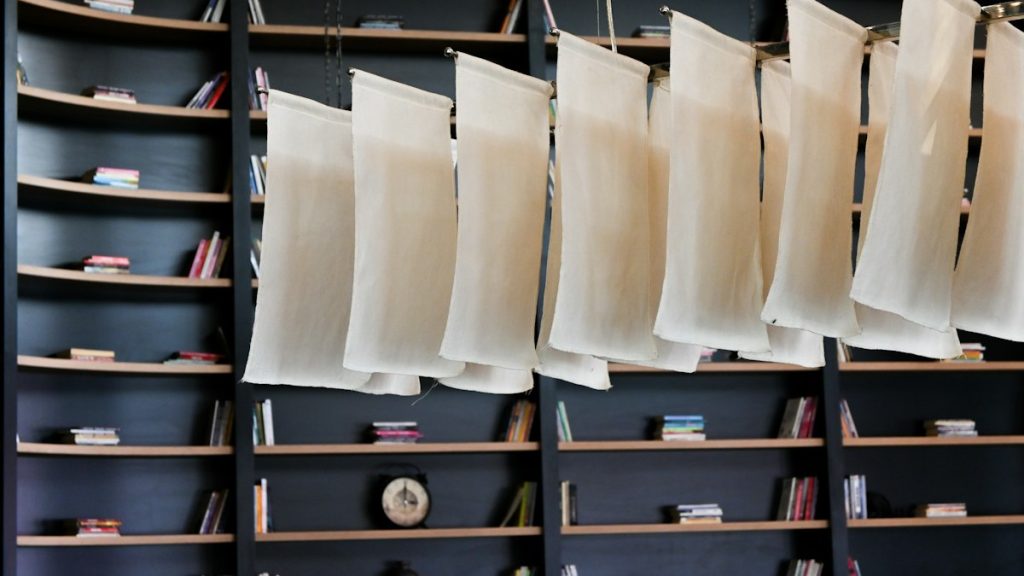
I read both pages standing at a library worktable while the scanner warmed beside me.
My grandfather, Robert Hale, was still alive.
He was eighty-six, opinionated, sharp-minded, and locally famous in the modest way a person can be famous within twelve blocks.
In 1979, the city planned to close the Franklin Community Center. According to the story I had heard since childhood, my grandfather organized petitions, rallied businesses, spoke at council meetings, and led the campaign that kept it open.
A framed photograph of him speaking from the center steps hung in our family hallway.
My mother called the campaign “the year Grandpa saved Franklin.”
I was helping the public library prepare a fiftieth-anniversary neighborhood exhibit when the Hale family donated several boxes of papers.
I had volunteered partly because I knew the history.
That assumption lasted until box four.
Before I opened it, our exhibit coordinator, Talia, had asked me to write a two-hundred-word introduction to the campaign. I drafted it in twenty minutes, with my grandfather’s name in the first sentence and everyone else reduced to “concerned residents.” Talia put a yellow note on the printout: Who are the residents? I told her I would check the records. She nodded, but left the note where I could see it. I remember feeling faintly annoyed that a story so familiar to me required footnotes.
My grandfather had brought me to Franklin when I was six. He showed me the mural in the lobby and let me pull the heavy front door open myself. He was proud of the rooms where children studied and retired neighbors played cards, not just of the plaque with his name on it. I wanted the exhibit to honor that pride. It had never occurred to me that an exhibit could honor a building while telling the wrong story about who saved it.
Alongside the two speeches were meeting agendas, typed minutes, handwritten volunteer lists, and letters from a woman named Marian Lee.
Her name appeared everywhere.
Marian scheduled canvassing teams.
Marian coordinated childcare during meetings.
Marian compiled signatures.
Marian wrote to local churches.
One memo read: ROBERT — PRESS WANTS ONE PERSON FOR INTERVIEW. PLEASE DO IT. THEY KEEP IGNORING COMMITTEE ANSWERS.
Another, weeks later: Good interview. But next time please say committee sooner. People are starting to call this your campaign.
I sat down.
There was no evidence my grandfather had invented the campaign.
There was evidence he benefited from becoming its public face.
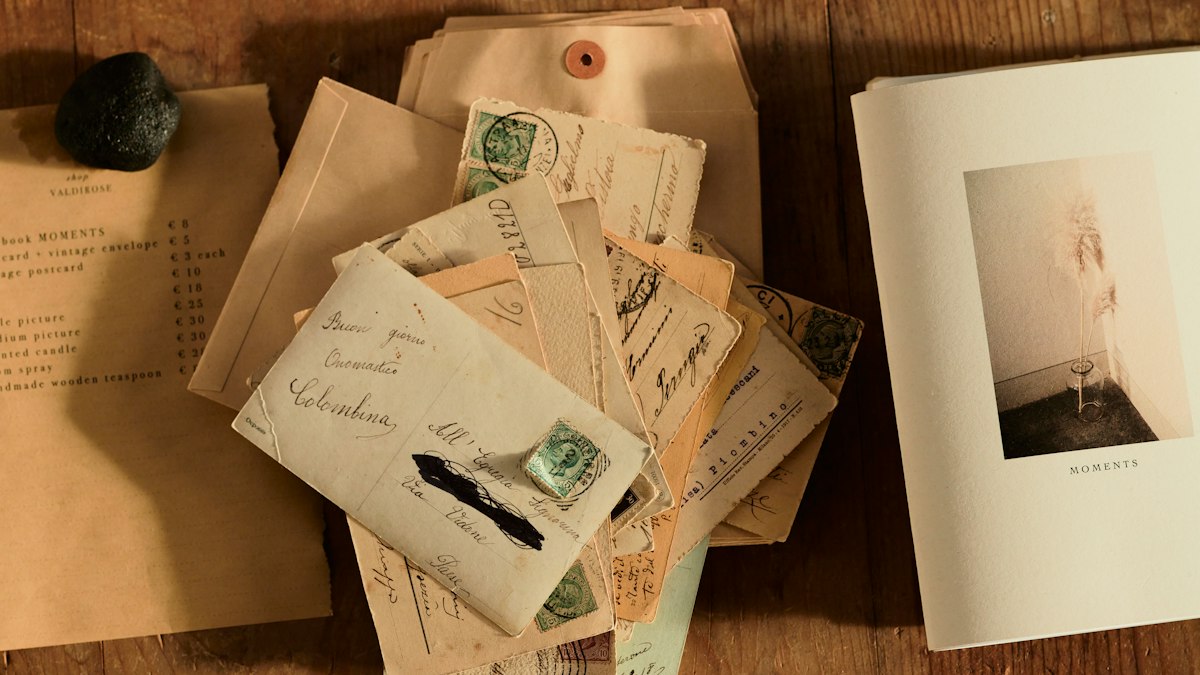
At the scanner I laid the dates out in a column: Marian’s first neighborhood meeting in February, her letter to the council in March, the church petition drive in April, and my grandfather’s photographed speech in June. That chronology did not make his work imaginary. It changed the beginning of the story. I was no longer looking for the speech that started everything. I was looking at months of work that had made a speech possible.
Talia came back from the circulation desk and found me staring at the spread-out papers. I showed her the two versions. She did not act scandalized. “That happens to a lot of history,” she said. “The person who can stand at a microphone becomes the person who did the work.” Then she pulled another box from the shelf. “The useful question is whether we still have the names.” We did. It took me the rest of the afternoon to write them down.
The later speech removed Marian’s name entirely.
That evening I took photocopies to my grandfather’s apartment.
He looked at the first page, then the second.
“Where did you get these?”
“Your archive boxes.”
“I should have burned more things.”
He said it lightly.
I did not laugh.
“Who was Marian Lee?”
He leaned back in his chair.
“The person who actually knew how to organize people.”
The answer came too easily to be a confession.
“Then why does everyone think you ran the campaign?”
“Because reporters liked a hardware-store owner with a loud voice better than a committee of mothers, teachers, retirees, and teenagers.”
“That’s not an answer either.”
He looked at me more carefully.
“No. It isn’t.”
My grandfather explained that Marian had recruited him because local business owners were being ignored by neither reporters nor council members. He spoke publicly because he was good at it. He knew how to make a sentence memorable.
The campaign succeeded.
Then the press kept calling him.
“At first I corrected them,” he said.
“And later?”
“Later I corrected them less.”
“Why?”
He looked toward the framed newspaper clipping on his wall.
“Because being thanked is pleasant.”
I had expected defensiveness. His honesty made the disappointment more complicated.
“Did Marian resent you?”
“Yes.”
“Did you apologize?”
“Not well.”
After the campaign, Marian continued working with the center but stopped serving on committees with him. They remained civil. She died years later.
“So the family story is wrong.”
“The family story is lazy.”
“That’s a generous word for it.”
He frowned.
“I did work, Noah.”
“I know.”
“I spoke at hearings. I raised money. I called every business on Franklin Avenue.”
“I know.”
“You are looking at me like I stole the building.”
I was.
That was my own lazy story taking shape.
It would have been easier if the documents proved he had done nothing and stolen everything. They did not.
He had been important.
He had also accepted a larger share of the credit than he earned.
Both facts fit.
The exhibit draft already contained a panel titled ROBERT HALE AND THE CAMPAIGN TO SAVE FRANKLIN.
The next morning I deleted it.
I replaced it with THE FRANKLIN COMMUNITY CAMPAIGN.
The new panel named Marian Lee as committee coordinator, my grandfather as public spokesman and business liaison, and several other volunteers whose names appeared repeatedly in the records.
I sent the draft to my grandfather.
He called.
“You made me smaller.”
“I made the group bigger.”
Silence.
“That’s an annoying answer,” he said.
“Inherited skill.”
He did not approve the panel that day.
Before we sent it to print, Talia asked whether anyone from Marian’s family had seen the draft. The library had contact information for her niece, Denise, who had helped donate photographs from the old committee. I called expecting gratitude. Denise listened, then said, “Please don’t make my aunt into a saint to correct the other story. She could be impossible to work with. That’s why she got things done.” I crossed out a line calling Marian universally beloved. Denise sent a photograph of a planning meeting, plus the names of two volunteers we had mistaken for anonymous helpers.
When I told Grandpa, he laughed at Denise’s description. “Marian once returned a petition to me because my signature was on the wrong line,” he said. “Made me sign again while she watched.” It was the first memory he had offered that was not about guilt or reputation. I wrote it down because, for once, he sounded like a man remembering a colleague rather than a man defending his legend.
He also did not ask me to change it back.
A week later he called again.
“Do you have room for an oral-history recording?”
“Maybe.”
“I want to do one.”
At the library recording room, my grandfather spent forty minutes describing the campaign.

Before we began, the librarian asked him to state his name and explain why he had agreed to be interviewed. He stared at the red recording light, then at the list of questions I had prepared. “Because my grandson found the long version,” he said. She asked whether he wanted to start again. He shook his head. I kept the first answer in the transcript. So much of our family’s trouble had begun with an answer edited to sound easier.
The first ten sounded like the version I knew.
Then he stopped himself.
“No,” he said into the microphone. “That’s the speech version. Let me tell it properly.”
He described Marian showing up at his store with a clipboard and a list of businesses he had not yet contacted. He described teenagers stapling flyers, parents bringing children to evening meetings, and an elderly man named Mr. Cho who translated petitions for residents who spoke limited English.
“I was the person newspapers photographed,” my grandfather said. “That is not the same as being the person who made the campaign exist.”
He did not turn the recording into self-punishment.
I was glad.
He named what he had done and what he had failed to do.
At the exhibit opening, the famous photograph of him still appeared.
It was just smaller.
Beside it was a meeting photograph showing Marian at a folding table covered in petitions, pointing at a map while six volunteers listened.
My grandfather stood in front of that photograph for a long time.
“She hated that sweater,” he said.
“You remember that?”
“She complained about it every winter.”
A woman beside us turned.
“You knew Marian?”
My grandfather smiled.
“I worked for Marian.”
The sentence was slightly too neat.
I looked at him.
He shrugged.
“Let an old man improve his material.”
I laughed.
Months later, my mother visited the exhibit and called me.
“You know Grandpa didn’t single-handedly save Franklin?” she asked.
“I have recently become aware.”
“Why did nobody tell us?”
I thought about two versions of a speech, both written by the same man.
“They did,” I said. “We just kept repeating the shorter version.”
The family photograph still hangs in our hallway.
We did not take it down.
Now, when someone asks what it shows, I no longer say, “That’s Grandpa saving the community center.”
I say, “That’s Grandpa speaking for the committee that saved it.”
The sentence is only a few words longer.
It makes room for everyone who had disappeared from the first one.
Related reading: Explore independent short stories for adults, more family stories, or Seven Days, One Storage Unit, Two Versions of the Past, another story about whose version of a shared past survives.
Fictional characters and events. Featured photograph: Ahmet Safa Türkyılmaz / Unsplash. Inline photographs: micheile henderson and Robinson Recalde / Unsplash. Images are illustrative and do not depict the fictional characters.