My Grandmother Offered Me a Laundromat for One Dollar
My grandmother slid the lease across the diner table between my birthday pancakes and a bowl of sugar packets.
“One dollar a year,” she said.
I laughed because I thought she was joking.
She was not.
The lease was for Parkview Laundry, the business she had opened with my grandfather thirty-eight years earlier. It had twenty-four washers, twenty dryers, one vending machine that stole quarters, and a neon OPEN sign my grandmother refused to replace because “people know what it means even if the P flickers.”
I had worked there every summer from fourteen to twenty-two. After college I moved into operations for a regional grocery chain, where I learned scheduling, inventory, vendor negotiation, and the modern art of persuading people to adopt software they did not want.
For years Grandma Clara told everyone I was “the one with business sense.”
Now she was seventy-six and tired of opening the laundromat six mornings a week.
At first, it looked like a generous version of family business succession: she would step back, and I would carry Parkview forward.
“You keep the profits,” she said. “Pay the taxes and utilities. One dollar rent. In five years, if we both agree, we talk about transferring ownership.”
I stared at her.
“Grandma, this is enormous.”
“It’s laundry.”
“It’s a business.”
“Exactly.”
I hugged her in the parking lot.
That evening I read the lease.
By page three, the dollar had become expensive.
I could not change prices without written approval. I could not replace equipment costing more than $1,500 without approval. I could not alter opening hours, hire a manager, change detergent suppliers, add card payments, repaint the interior, or sublease any portion of the space without approval.
Grandma retained the right to inspect the books at any time and terminate the lease if I made a “material change to the character of the business.”
That phrase appeared three times.
I called her.
“Who wrote this?”
“Mr. Levin.”
Her attorney had known her almost as long as I had.
“Did you tell him you wanted me to run the business?”
“Yes.”
“This says I need permission to move a chair.”
“Don’t be dramatic.”
“I need permission to change the detergent vendor.”
“Because you don’t know which suppliers are reliable.”
“I negotiate suppliers for a living.”
“Groceries are not laundromats.”
There it was.
The gift was real. So was the lack of trust.
I visited Parkview the next Saturday with different eyes.
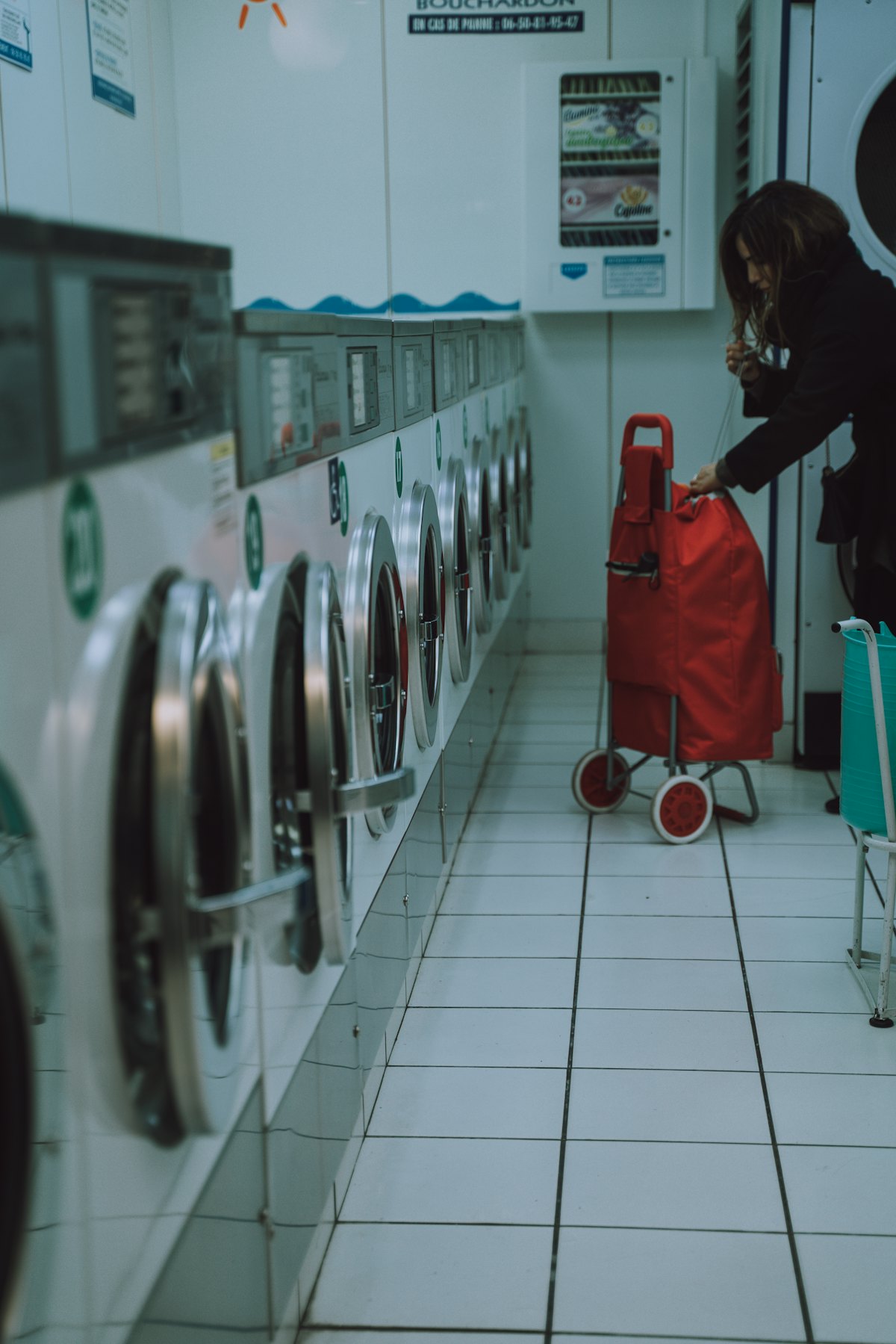
The machines were clean but old. Customers still used quarters, which meant Grandma kept hundreds of dollars in change on-site. The back office held paper ledgers going back to 1992. Two attendants had worked there for more than a decade, but neither had authority to order a replacement mop without calling Grandma.
None of this made her incompetent. The business was profitable. The rent was low because she owned the building. Customers knew her by name.
But she had built Parkview around her own constant presence.
I started making a list of changes I would want to test: card readers on six machines, longer evening hours twice a week, a wash-and-fold pilot, digital bookkeeping, clearer staff responsibilities.
When I showed Grandma, she crossed out three items before I reached the bottom.
“Card fees eat money.”
“So do empty machines when customers don’t carry quarters.”
“Our customers carry quarters.”
“Because they have to.”
She looked offended on behalf of quarters.
For two weeks we argued in circles.
My mother told me to accept the deal and make changes slowly.
“Once Grandma sees you’re doing well, she’ll loosen up.”
“Or I spend five years asking permission to run a business everyone calls mine.”
My uncle said I was ungrateful.
“She’s basically giving you a company.”
“She’s lending me responsibility.”
“For a dollar.”
That was the trap in the conversation. Any objection sounded absurd beside the price.
I nearly signed.
Then one of the dryers broke.
The repair estimate was $1,850.
I found a newer refurbished unit for $2,300 with a warranty and lower energy use. The lease required Grandma’s approval for either option.
“Repair it,” she said.
“The refurbished one makes more sense over three years.”
“Maybe. But the old machines match.”
I thought I had misheard.
“Match?”
“Customers like things looking orderly.”
I looked across the row of beige dryers, each faded to a slightly different shade.
In that moment I could see the next five years with uncomfortable clarity. Every decision would be a referendum on whether I respected the business enough to leave it recognizable.
I returned the unsigned lease.
Grandma did not speak to me for nine days.
On the tenth day she called to ask whether I knew why the new bookkeeping program at her accountant’s office kept asking for a code.
“Probably two-factor authentication.”
“I don’t like it.”
“That is consistent.”
She laughed despite herself.
Then she said, “You really won’t take it?”
“Not like that.”
“What would you take?”
I had prepared an answer.
I proposed a one-year management agreement instead of a symbolic lease. I would be paid a salary for ten hours a week while keeping my current job. We would choose three experiments in advance. Grandma could define the financial limit, but within that limit I would have authority to execute without case-by-case permission. We would review results monthly.
At the end of the year, if she still wanted to step back and I still wanted the business, we would negotiate a real purchase or transfer with independent legal advice for both of us.
“You want me to pay you to practice on my laundromat,” she said.
“You wanted me to run it for a dollar.”
“Different.”
“Exactly.”
She rejected the proposal.
Then, two weeks later, she called and accepted two of the three experiments.
“No wash-and-fold yet,” she said.
“Fine.”
We installed card readers on six machines and extended Thursday hours. We also gave the senior attendant authority to approve routine purchases up to a set amount without calling Grandma.
The first month, card usage was modest.
The second month, it doubled.
The card readers also changed something neither of us had predicted. A nurse who came after night shifts started using Parkview on Thursdays because she no longer had to find a bank for quarters. A college student showed Grandma how he could see whether his wash was nearly finished from the payment app.
Grandma still wrote the processing fees in red ink on her monthly report, but she also began writing the extra Thursday revenue beside them. For the first time, our arguments had numbers on both sides instead of memories on one side and theories on the other.
Grandma remained suspicious of the processing fees. I remained suspicious of her attachment to the coin changer.
But the point of the year became less about proving which of us was right and more about discovering which decisions could survive evidence.
The hardest change was not technical.
It was watching Grandma leave.
At first she stayed during my management hours “just in case.” Then she began going home after lunch. One Thursday she left before noon to meet a friend for a movie.
“Call if the building catches fire,” she told me.
“Only the building?”
“Machines are replaceable.”
Six months earlier she had rejected a dryer because the color did not match.
I did not point this out.
At the end of the year we met with two attorneys, one hers and one mine.
By then, family business succession meant something different to both of us: not preserving every old habit, but transferring real responsibility.
We did not use the one-dollar lease.
We created a purchase agreement based on a proper valuation, with payments spread over time and a narrow set of protections for the building. Operational decisions belonged to me.
Grandma kept one condition.
“The sign stays until it actually dies.”
I looked through the office window at the flickering OPEN sign.
“I can live with that.”
On the first morning after the transfer, I unlocked Parkview alone.
The P in OPEN blinked twice and disappeared.
For a second I considered calling Grandma.
Then it came back on.
I smiled, turned on the lights, and opened the doors.