My Son Sold the Old Piano Without Telling Me—Then the Buyer Called
I knew the piano was gone before anyone told me.
The living room sounded different.
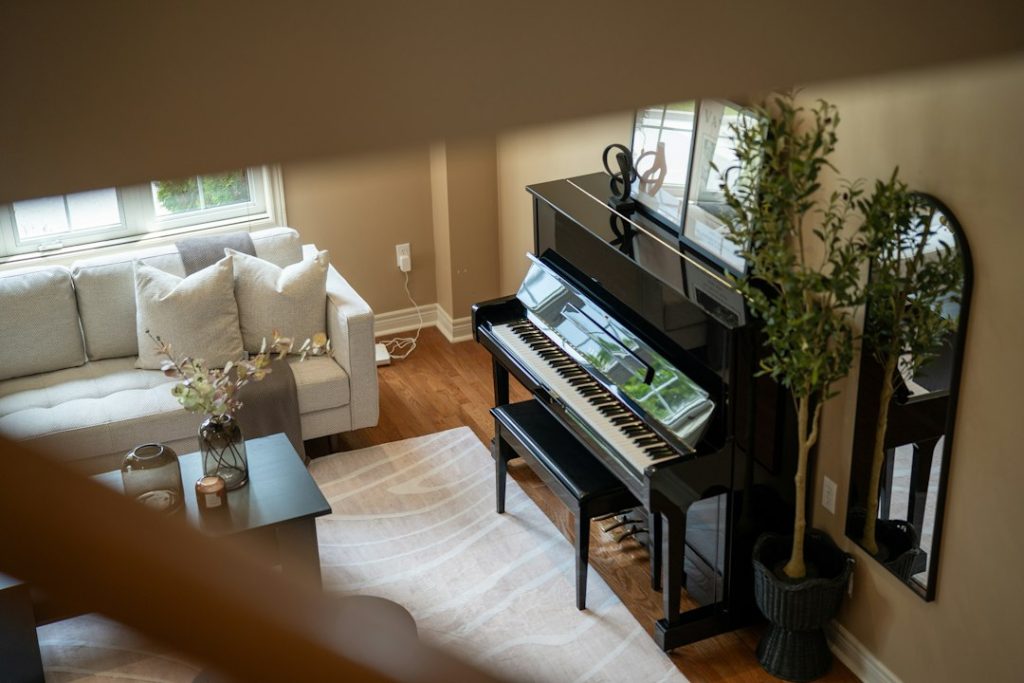
That sounds ridiculous, but a large object has a way of shaping silence. For thirty-two years, an upright walnut piano had occupied the wall beside our front window. Even when no one played it, the room seemed arranged around it.
On Saturday morning, I came downstairs carrying a basket of laundry and saw an empty rectangle on the hardwood floor.
There were four pale marks where the legs had stood.
I called my son.
“Evan, where is the piano?”
He was quiet for half a second too long.
“I was going to tell you.”
That sentence never improves anything.
“Tell me what?”
“I sold it.”
I put the laundry basket down.
“You sold my piano?”
“Mom, you said we needed to clear the house before the move.”
“I said we needed to sort things. I did not say sell the piano.”
The move he meant was mine. After my husband died, I had decided to leave the four-bedroom house where we raised our children and move into a smaller place near my sister. Evan had been helping on weekends: boxes, donation runs, listings for furniture I genuinely wanted to sell.
The piano had never been on the list.
The piano belonged first to my mother. She bought it secondhand in 1968 and paid for it in installments. She could barely afford lessons for herself, but she insisted her children learn.
I was terrible.
My younger brother was worse.
Years later, my husband learned three songs badly enough to make the children laugh. Our daughter, Claire, practiced scales every morning before school for almost a decade. Evan quit lessons at eleven and then, inexplicably, taught himself jazz in college.
After my mother died, the piano came to me.
After my husband died, I stopped opening the fallboard.
That did not mean I wanted it gone.
“Who did you sell it to?” I asked.
“A woman named Michelle. She lives about twenty minutes away.”
“How much?”
“Three hundred.”
I laughed because the number was so insulting it felt unreal.
“Three hundred dollars?”
“Mom, old upright pianos are hard to give away. Moving one costs almost as much as buying one.”
“That was not your decision.”
“I know.”
“Do you?”
He apologized three times. I heard only the fact that the piano was gone.
I told him I needed to get off the phone.
Then I stood in the empty living room staring at the pale leg marks until they blurred.
Grief does strange accounting. It turns ordinary objects into evidence that a life really happened.
For two years after my husband’s death, I had been practical. I canceled subscriptions. Changed accounts. Donated clothes. Sold the second car. I had congratulated myself for not becoming a person who kept everything because everything meant something.
Apparently I had found my limit.
On Monday morning, an unfamiliar number called.
I almost ignored it.
“Is this Margaret?” a woman asked.
“Yes.”
“My name is Michelle Carter. I bought your piano.”
I sat down immediately.
“Did my son give you my number?”
“No. Your name was inside the bench.”
I had forgotten about that.
Years ago, my mother wrote our family name and old address under the hinged seat because she was convinced movers lost furniture.
Michelle sounded nervous.
“I hope this isn’t strange,” she said. “I wanted to ask whether you knew about the writing under the keys.”
“What writing?”
She explained that the piano tuner had removed the front panel. On the wooden rail behind the keys were pencil marks—dates, initials, and little notes.
I knew instantly who had made them.
My mother.
She wrote on everything.
Birthday heights inside closet doors. Recipes in margins. Phone numbers on envelopes she later reused for grocery lists.
“Would you send me a picture?” I asked.
A minute later, my phone buzzed.
The first note said: M. paid in full, June 1971.
Another said: Ruth played Moon River without stopping, 4/12/79.
Ruth was me.
Farther down the rail, in my own handwriting, was: Claire’s first recital, 1998.
Then a line in my husband’s blocky print: Evan finally learned a song I recognize.
I covered my mouth with my hand.
I had not known any of those notes were there.
Michelle waited quietly.
“I’m sorry,” she said. “I didn’t mean to upset you.”
“You didn’t.”
That was not entirely true.
“Why did you buy it?” I asked.
She told me her ten-year-old daughter had started lessons at school. They could not afford a new piano, and most of the free ones they found online needed repairs they could not manage. Mine had been inexpensive and in decent condition.
“She has been playing it constantly,” Michelle said. “Badly. But constantly.”
I laughed despite myself.
“That is how it starts.”
There was a pause.
“If you want it back,” she said, “I think we can figure something out.”
I had spent two days imagining exactly that sentence.
Now that it had arrived, I could not answer.
I pictured movers bringing the piano back, placing it against the wall for three months, and then moving it again to an apartment where it would take up half the dining area.
I pictured paying to store it.
I pictured refusing to let anything happen to it until one day my children had to make the same decision I was avoiding.
Then I pictured a ten-year-old playing badly.
Sometimes preserving a family object means keeping it. Sometimes it means allowing it to become useful again.
“Can I come see it?” I asked.
Michelle said yes.
That evening I drove to a small yellow house on a street I had never visited before.
The piano sat in their dining room beneath a row of family photographs.
A girl with curly hair was practicing the opening of “Let It Be” with the concentration of someone defusing a bomb.
She stopped when I walked in.
“This is Mrs. Lawson,” Michelle said. “The piano used to belong to her family.”
The girl looked alarmed.
“Are you taking it back?”
I looked at the piano.
There was a small scratch near the left pedal that I remembered making with a vacuum cleaner in 2006.
The brass pedals were dull.
It looked exactly like itself.
And, somehow, not like mine anymore.
“No,” I said. “I just came to visit.”
The girl relaxed.
“Do you play?”
“Not anymore.”
“My teacher says everyone can play if they practice.”
“Your teacher has not met everyone.”
She laughed.
Michelle showed me the notes behind the keys. I took photographs of every one.
Then I noticed a blank space at the end of the rail.
“Do you have a pencil?” I asked.
The girl brought me one.
I wrote: New home, September 2026. Keep playing.
On the drive home, I called Evan.
He answered carefully.
“Hi, Mom.”
“I met Michelle.”
“Oh.”
“The piano is staying there.”
He exhaled.
Then I said, “You were still wrong.”
“I know.”
“You don’t get to make decisions because you think I’ll eventually agree.”
“I know that too.”
We talked longer than we had during the argument. He admitted the truth: he had been overwhelmed by the move, worried I would keep postponing decisions, and convinced himself that solving problems quickly was the same thing as helping.
It was not.
I told him I understood why he did it.
That was not the same as saying it was acceptable.
He apologized again, differently this time.
A week later, he came over to help finish packing.
Before we carried boxes to the garage, he knelt beside the pale marks where the piano had stood.
“We should probably refinish this floor before you list the house.”
“No,” I said.
He looked up.
“Why?”
I smiled.
“Leave the marks.”
The next owner could decide what to do with them.
I was learning that not every trace needed to be protected forever.
Some things could leave.
Some marks could fade.
And sometimes, somewhere twenty minutes away, a girl you had never met could sit at your mother’s piano and begin the whole story again.
For more quick fiction, browse our 5 minute short stories for adults.