My Sister Changed the Locks on Our Mother’s House—And Didn’t Tell Me
The first clue was that my key stopped working.
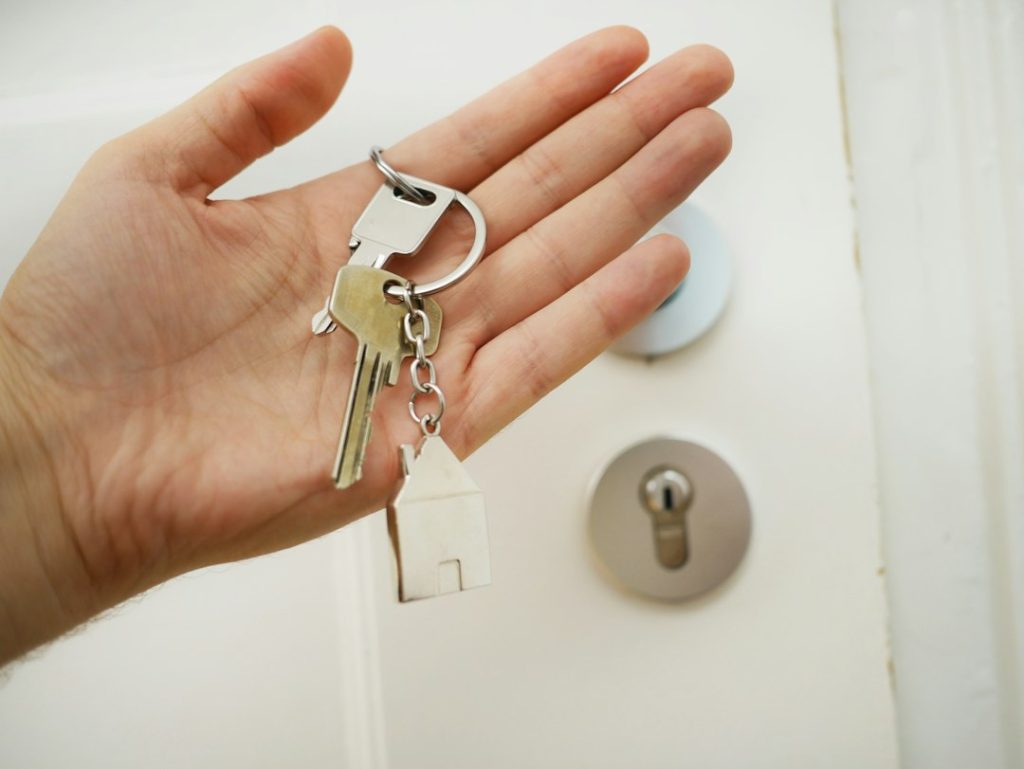
I stood on my mother’s front porch with a canvas grocery bag cutting into my wrist, twisting the brass key hard enough to hurt my fingers. It had opened that lock for twelve years. That Saturday morning, it went halfway in and refused to turn.
I tried the side door. Same thing.
Then I noticed the deadbolt was new.
My sister Claire had changed the locks on our mother’s house without telling me.
Our mother had died seven weeks earlier. Claire and I were supposed to be handling the house together until the estate was settled. We had said that out loud, twice, at the lawyer’s office.
I called her from the porch.
“Why doesn’t my key work?”
There was a pause just long enough to make me suspicious.
“I changed the locks on Thursday,” she said.
“You what?”
“I was going to tell you.”
“When? After you finished taking whatever you wanted?”
She exhaled. “Anna, don’t do this on the phone.”
That sentence made it worse.
For the previous month, Claire had been spending more time at the house than I had. She lived twenty minutes away. I lived almost an hour across town and had two kids, a full-time job, and a husband who worked weekends. Claire was single, worked remotely, and had become the person who met the plumber, forwarded the mail, checked the gutters, and talked to the estate attorney.
I was grateful for that until the day my key stopped working.
Suddenly every practical thing she had done looked different.
The utility bills had been moved into her name. She had made a spreadsheet of the furniture. She had asked me not to remove anything “until we inventory it.” She had taken photos of Mom’s jewelry box and the silverware drawer. She had even bought a pack of bright blue labels and started sticking them on cartons in the dining room.
At the time, I thought she was being organized.
On that porch, I decided she was building a paper trail to prove the house belonged more to her than to me.
I drove home furious and spent the afternoon replaying small moments from the previous seven weeks.
At Mom’s funeral, Claire had quietly collected the spare keys from the bowl by the back door.
Two days later, she had asked our uncle Martin whether he had taken Mom’s old camera. He laughed and said Mom had promised it to him years ago.
Claire had looked at me afterward and said, “No one should be taking things yet.”
I had rolled my eyes. Martin was our mother’s younger brother. He had helped her with the garden, fixed her fence, and driven her to appointments when Claire and I couldn’t. If he wanted an old camera, I didn’t see the problem.
Claire did.
That evening, I texted her: I’m coming tomorrow. I want a key and I want to see what you’ve moved.
She replied: Come at ten.
No apology. No explanation.
That felt like confirmation.
The next morning, Claire was waiting on the porch when I arrived. She held a new silver key between two fingers.
“Here,” she said.
I didn’t take it.
“First tell me why you locked me out.”
Her face tightened. “I didn’t lock you out. I secured the house.”
“Without telling me.”
“Yes.”
“And you don’t see the problem?”
“I see several problems.”
She opened the door.
Inside, the house looked almost exactly as it had the week before. Mom’s coat still hung on the hook by the stairs. Her reading glasses were still beside the lamp. The ceramic bowl she used for loose change was still on the console table.
But there were more boxes now.
Three were lined up against the dining-room wall. Each had one of Claire’s blue labels.
I walked toward them.
“What’s in these?”
“Things that were already removed and brought back.”
I turned around. “Brought back by who?”
Claire unlocked her phone and handed it to me.
There were photos from the previous Wednesday. Our uncle Martin’s pickup truck was parked in Mom’s driveway. In the truck bed were two dining chairs, the small toolbox from the basement, Mom’s brass floor lamp, and a rolled rug from the guest room.
I stared at the screen.
“He said Mom gave him permission,” I said.
“Mom is dead, Anna.”
The sentence landed harder than I expected.
Claire softened her voice. “And there’s no note, no list, nothing in the will about those things.”
I handed the phone back. “So you changed the locks because of Martin?”
“Partly.”
That word caught me.
“What does partly mean?”
She walked into the kitchen and opened a drawer. Inside was a manila folder filled with printed photographs. Every room in the house had been photographed from several angles. There were close-ups of drawers, shelves, cabinets, and closets. Beside each photo was a handwritten number.
“I started documenting everything after the camera disappeared,” she said.
“You think Martin stole it?”
“I think three different people have told me Mom promised them the same things.”
She pulled out another page.
Our cousin Lacey had texted asking for the antique mirror because Mom had supposedly said she could have it. Martin claimed Mom had promised him the camera and tools. A neighbor said Mom had told her she could take the patio set when the house was cleared.
“Maybe she did,” I said.
“Maybe she did,” Claire replied. “That’s the problem. We can’t verify any of it.”
I was still angry, but the shape of my anger was changing.
“You still should have told me.”
“Yes.”
She said it immediately.
No defense. No speech about how busy she was. Just yes.
That took some of the heat out of me.
Then she added, “I didn’t tell you because I thought you’d give Martin another key.”
“Excuse me?”
“You gave him the garage code last month.”
“Because he needed his ladder.”
“The ladder Mom bought.”
“He said it was his.”
Claire looked at me in a way that made me feel twelve years old.
“Exactly.”
Claire had not changed the locks to keep me from the house. She had changed them because too many people believed grief gave them permission to collect whatever they remembered being promised.
I sat down at Mom’s kitchen table.
For the first time, I noticed a stack of receipts beside Claire’s laptop: locksmith, storage bins, postage, a plumber, lawn service. She had paid all of them herself and highlighted the amounts she expected to be reimbursed by the estate.
There was nothing secret about it. In fact, it was almost aggressively documented.
“Why didn’t you just show me this?” I asked.
Claire sat across from me.
“Because every time I brought up inventory, you told me I was making things complicated.”
I opened my mouth, then closed it.
She was right.
I had said that.
More than once.
I had wanted the house to remain emotionally simple. Mom’s things were Mom’s things. Martin was family. Claire was being dramatic. If everyone acted reasonably, there would be no conflict.
But “reasonable” had meant different things to everyone.
To Martin, taking a lamp was honoring a promise.
To Claire, letting anything leave before the estate was documented was irresponsible.
To me, questioning family members felt insulting.
We had all been protecting a different idea of what loyalty looked like.
I had mistaken Claire’s need for a record as evidence that she wanted control. She had mistaken my trust in relatives as proof that I could not be trusted with access.
Neither of us was completely wrong.
That was the uncomfortable part.
Claire admitted she liked being the person who knew where everything was. She admitted she had made decisions too quickly because asking me first usually turned into a twenty-message debate. She admitted changing the locks without warning me was unfair.
I admitted I had been treating her work like a personality flaw instead of work.
Then we made a new system.
We each got a key.
No one else did.
If a relative believed Mom had promised them something, we wrote it down. We did not accuse them of lying, but we also did not let the item leave immediately. We photographed it, checked the will and Mom’s notes, and waited until the estate attorney said it was safe to distribute personal property.
Claire shared the inventory spreadsheet with me.
I took over the utility calls and the weekend house checks.
And because I knew Martin would call me first, I became the person who had to say, “I know you remember Mom saying that. We’re writing everything down before anything leaves.”
He was offended.
Then he got over it.
A week later, we found the missing camera in his truck. He returned it without an argument.
Two months after that, when we finally began dividing the smaller things, something surprising happened.
The objects mattered less than they had at the beginning.
Claire wanted Mom’s recipe cards and the chipped green mixing bowl.
I wanted her old desk and the framed map that had hung above it.
Martin still wanted the brass lamp, and once the paperwork was clear, we gave it to him.
No one wanted the patio set.
We laughed about that for a full minute.
The day we listed the house, I stood on the same porch where my key had failed months earlier. Claire locked the door behind us and handed the key to the real-estate agent.
“Remember when you thought I was stealing the house?” she asked.
“I thought you were preparing a hostile takeover.”
“With color-coded labels?”
“Those labels were very suspicious.”
She laughed.
Then she said, “I really should have told you.”
“Yes,” I said. “You really should have.”
We didn’t turn the whole thing into a lesson about grief or sisterhood. We had spent enough weeks turning ordinary decisions into symbols.
But I did keep the new key.
Not because it opened anything anymore.
Because it reminded me how quickly a locked door can make you invent a story about the person on the other side.
It was replacing assumptions with a shared process: two keys, one inventory, and no private removals. The practical system made room for the relationship to recover.