Why I Put a Gate Back in My New Fence
The orange survey flag appeared six inches inside Emma’s new fence on a Monday morning.
By lunch, she had decided Mr. Bell next door was trying to steal part of her yard.
Emma thought it was a simple property line dispute: six inches, one fence, one neighbor.
It was not a conclusion she was proud of later, but at the time it felt reasonable. Mr. Bell had disliked the fence from the moment the contractors arrived.
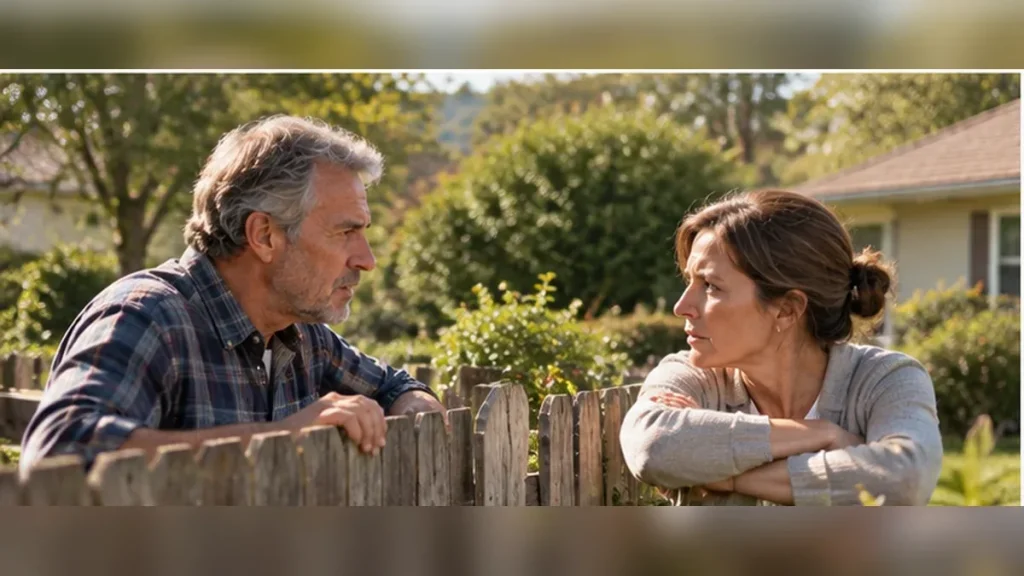
“You’re closing the cut-through,” he had said.
“I’m enclosing my property.”
“Same sentence from different sides.”
Emma had bought the narrow brick house in March. It was her first home after twelve years in apartments, and the backyard—small, uneven, full of weeds—had been part of the reason she chose it. She had a rescue dog named Waffles who treated squirrels as a personal insult. A secure fence was not decorative.
The old fence had gaps large enough for Waffles to leave through without slowing down.
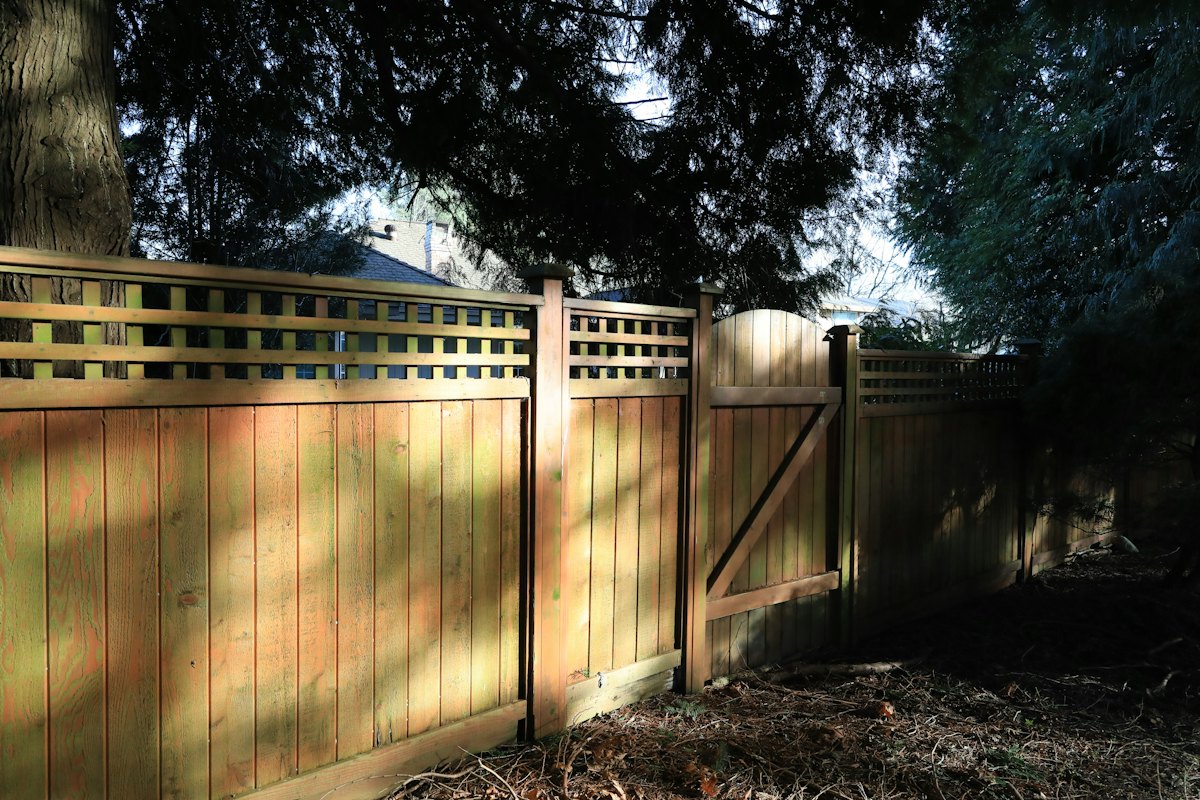
The new cedar fence was supposed to solve that.
Instead, the survey company returned because a corner post appeared to be outside the line shown on the recorded plan.
Mr. Bell watched from his porch while the surveyor measured.
“There,” he said when the surveyor placed the flag.
Emma turned. “There what?”
“That’s where the old line used to run.”
“The old fence was crooked.”
“The old fence had a gate.”
“I know.”
“People used it.”
“I also know.”
That was the issue they had been circling for weeks.
Behind Emma’s property, a steep public stairway connected the upper street to a lower bus stop. The official entrance to the stairs was around the block. But for decades, neighbors had used a narrow strip along the edge of what was now Emma’s yard to reach a side landing halfway down.
The old gate had made the shortcut possible.
No sign identified it. No map Emma had seen showed a public path. It existed because people remembered it and because previous owners had left the gate unlocked.
Emma had closed it.
Children now walked an extra six minutes to the bus stop. Older neighbors complained more loudly because the longer route included a steep hill.
Mr. Bell complained loudest.
“I’m allowed to fence my yard,” Emma said.
“I didn’t say you weren’t.”
“Then what are we arguing about?”
“Whether allowed is the only question worth asking.”
Emma disliked philosophical arguments delivered from lawn chairs.
The survey result did not help Mr. Bell as much as she expected. The fence contractor had indeed placed one corner six inches beyond Emma’s parcel, but the correction moved the post inward only at the rear. The narrow strip used as the shortcut sat entirely on Emma’s property.
The surveyor explained this clearly.
Emma felt relieved. The property line dispute was over, at least on paper.
Mr. Bell looked disappointed but not surprised.
“So that’s it,” Emma said.
“Legally?” he replied. “Looks like it.”
She expected him to keep arguing.
Instead he went inside.
That should have been satisfying.
It wasn’t.
Over the next several days Emma noticed the people who now stopped at the fence before turning around. A boy with a trumpet case. Two middle-school girls. Mrs. Han from three houses down, who used a cane and stood at the corner catching her breath before taking the longer route.
Emma told herself this was not her responsibility.
It was not.
Then the city archives made everything less convenient.
She went there because Mr. Bell had mentioned an old public staircase plan, and Emma wanted proof that his version of neighborhood history was exaggerated.
The archivist found a 1968 planning photograph.
The stairway was visible. So was the side path.
In another photograph from the 1980s, children were walking through a gate in the same location.
“Was this ever a public easement?” Emma asked.
The archivist shrugged. “You’d need a title professional or attorney to answer property-right questions. I’m only showing you photographs.”
That answer was sensible.
The photographs were more interesting anyway.
In one, a young Mr. Bell stood beside the gate holding a bicycle.
Emma took a copy to him.
“You had hair.”
He examined the photo. “Unnecessary observation.”
“Why does this path matter so much to you?”
He took longer to answer than usual.
When the city built the stairs, he explained, the neighborhood had fewer cars. The side path connected children to school buses and older residents to the commercial street below. Emma’s house had belonged to a woman named June Fletcher, who disliked people cutting across the center of her yard but agreed to keep a narrow edge path open.
Over time, the arrangement became habit.
“June wasn’t a saint,” Mr. Bell said. “She yelled if anyone left the gate open.”
“So there were rules.”
“Of course there were rules. Community isn’t the absence of fences.”
That sentence stayed with Emma.
She still did not want strangers walking through her backyard. She did not want Waffles escaping. She did not want to inherit an informal arrangement without choosing it.
So she stopped treating the decision as binary.
Before agreeing to the new path, Emma invited the nearest neighbors to her backyard on a Saturday morning. She expected everyone to support reopening it. They did not.
One neighbor worried teenagers would leave the gate open. Another said the shortcut had always been a courtesy and should stay closed rather than become an expectation. Mrs. Han surprised Emma most.
“I miss the path,” she said, resting both hands on her cane. “But I don’t want you to feel watched every time you sit outside.”
That mattered. Until then Emma had imagined the neighborhood as one voice pressing against her fence. In person, it was a collection of people with different memories and different tolerances for inconvenience.
Mr. Bell said almost nothing during the discussion. When everyone left, he stayed behind long enough to say, “If you open it, make it yours. Don’t do it because we’re making you guilty.”
It was the first thing he had said about the gate that made Emma trust him.
Emma also asked the contractor to make the latch visible from her kitchen window. It was a small design choice, but it reminded everyone that shared access worked only because somebody was still responsible for the boundary.
With the fence contractor, she sketched a narrow path along the far boundary, separated from the main yard by an interior section of fence. The exterior gate would connect the sidewalk to the side stair landing without opening into the space where Waffles played.
Before building anything, she checked with the city about the physical connection and had a local professional review the plan. The details mattered less to her than making the choice deliberately rather than recreating an old arrangement by accident.
The new path cost more than she wanted.
Mr. Bell offered to contribute.
Emma refused at first.
“Then let the block contribute,” he said. “You shouldn’t have to finance everyone’s nostalgia.”
A neighborhood workday covered part of the landscaping. Someone donated gravel. Someone else supplied a self-closing latch. Mr. Bell paid for a light near the upper gate.
The rules were simple: pedestrian access only, gate closed after use, no bikes ridden through, no cutting into Emma’s main yard.
On the first school morning after it reopened, Emma watched from her kitchen window as the boy with the trumpet case used the path.
He closed the gate carefully behind him.
Waffles barked once and returned to destroying a tennis ball.
Mr. Bell appeared on his porch and raised his coffee mug toward Emma.
She raised hers back.
A month later, a delivery driver tried to use the side gate as a shortcut to Emma’s back door. She stopped him and redirected him to the front.
Mr. Bell, who had witnessed the exchange, called across the hedge.
“Protecting the community path?”
“Protecting my yard.”
“Same sentence from different sides?”
Emma smiled.
“Not this time.”
The fence still marked exactly what belonged to her.
The gate marked something different: a thing she had chosen to share without pretending it had never been hers to decide.