Someone Kept Leaving Groceries Outside My Door—and I Thought It Was Pity
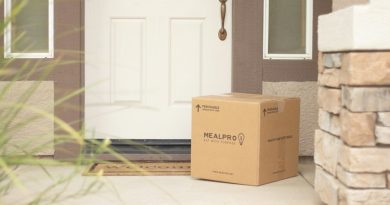
The first grocery bag appeared outside my apartment on a Monday night.
Two cans of soup, a loaf of bread, oranges, tea, and a box of crackers.
No note.
I assumed someone had left it at the wrong door.
I carried it downstairs and placed it beside the mailboxes where a neighbor might see it.
The next evening, another bag appeared.
This one had rice, eggs, coffee, and a small container of strawberries.
Again, no note.
Someone in my building had decided I needed groceries, and I had no idea who—or why.
I was between jobs at the time.
That detail mattered because it made every explanation feel insulting.
I had been laid off eight weeks earlier from a small marketing agency. I was not in immediate danger. I had savings, unemployment benefits, and a freelance project that covered part of my rent.
But I had changed my habits.
I stopped ordering takeout.
I carried groceries instead of taking a rideshare.
I canceled my gym membership.
I spent more time at home.
Apparently, someone had noticed.
My first suspect was Mrs. Alvarez in 3B.
She was seventy-two and monitored the hallway with the dedication of an airport control tower. She knew when packages arrived, which elevator was making noise, and who had left the laundry-room window open.
I knocked on her door.
“Are you leaving food outside my apartment?”
She looked offended.
“No.”
“You’re sure?”
“If I was feeding you, you would know. I would bring actual food.”
Fair point.
I asked my friend Maya, who lived six blocks away.
She laughed.
“If I thought you needed groceries, I would send you money and a lecture.”
Also fair.
The bags kept coming every few days.
Nothing expensive. Nothing dramatic. Practical food.
I started feeling watched.
That reaction embarrassed me.
Someone was doing something kind, and I was turning it into surveillance.
But anonymous kindness has a strange quality: without context, you cannot tell whether the person sees you clearly or has invented a version of you.
I did not want to be the unemployed woman on the fourth floor whom neighbors quietly fed.
So I left a note on my door.
Thank you, but I’m okay. Please give the groceries to someone who needs them more.
The next morning, the note was gone.
That evening, there was no bag.
I felt relieved.
Then, three days later, I found a paper sack containing cat food.
I did not own a cat.
That was the clue.
The bag was not for me.
I checked the apartment number printed on the small delivery sticker: 4C.
I lived in 4G.
I laughed so loudly in the hallway that my neighbor across the hall opened his door.
His name was Jamal. We had exchanged maybe twenty sentences in two years.
“Everything okay?” he asked.
I held up the cat food.
“I think I solved a mystery.”
He looked at the sticker.
“Oh. That’s Ms. Kline.”
“Who?”
“4C. Other end.”
I had seen Ms. Kline before, but I did not know her name. She was an older woman who used a rolling walker and rarely left the building.
Jamal explained that a local volunteer group delivered groceries to her twice a week.
“They get the doors mixed up sometimes,” he said.
“For two months?”
He shrugged. “Our hallway is confusing.”
I stared at him.
“You’re telling me nobody has been secretly feeding me because I lost my job?”
He blinked.
“You lost your job?”
That answer was humiliating in a completely different way.
No one had been watching me.
No one had noticed my grocery habits.
No anonymous neighbor had built a pity narrative around my finances.
I had done that myself.
I had been so sensitive about appearing vulnerable that a delivery mistake felt like evidence the whole building could see my private worries.
We carried the cat food down to 4C.
Ms. Kline opened the door after a long wait.
Her apartment smelled like cinnamon and laundry detergent. A gray cat immediately pushed its head around her walker.
“There you are,” she said to the bag, not to us.
Then she looked at me.
“Have you been getting my food?”
“Apparently.”
“I wondered where the oranges went.”
I apologized.
She waved her hand.
“I reported the missing deliveries. They kept replacing them.”
That explained why new bags continued arriving.
I told her I had returned one to the lobby, eaten the strawberries from another after two days, and given some soup to Maya.
“Good,” Ms. Kline said. “At least it wasn’t wasted.”
I wanted to disappear.
Then she asked whether I could help her with something.
The volunteer service had her old apartment listed as 4G in one part of its system and 4C in another. She had called twice but was not sure the correction had gone through.
I offered to call with her.
It took fourteen minutes.
The woman on the phone found the duplicate record, corrected it, and read the address back to us.
Problem solved.
Except the story did not end there.
The following week, I passed Ms. Kline in the lobby.
She asked, “How’s the job search?”
I stopped.
Jamal had apparently mentioned it.
My first reaction was irritation.
Then I remembered that I had spent two months afraid people knew something that, in reality, I had not told anyone in the building.
Now someone actually knew, and the world did not end.
“Slow,” I said.
“What kind of work?”
“Marketing.”
She nodded as if I had said plumbing.
“My niece runs a bakery. She complains about marketing constantly.”
I smiled politely.
Two days later, Ms. Kline slipped a business card under my door.
I nearly laughed when I saw it.
This time the item really was for me.
Her niece needed help setting up email promotions and cleaning up the bakery’s online listings. It became a small freelance client.
Not enough to replace my salary.
Enough to make that month easier.
I started checking on Ms. Kline’s deliveries when I passed her door. Jamal began bringing packages upstairs when the elevator was unreliable. Mrs. Alvarez, who absolutely had not been feeding me, began sending over containers of lentil soup because, according to her, “now that we are all involved, you should eat properly.”
That was how I learned the difference between being observed and being known.
Observation had existed mostly in my head: strangers noticing my spending, judging my unemployment, deciding I was failing.
Being known was messier and kinder.
It meant Jamal knowing I was job hunting.
It meant Ms. Kline knowing I could help with a phone call.
It meant me knowing which groceries belonged at 4C.
It meant Mrs. Alvarez insisting her soup was better than canned soup and being objectively correct.
I had been protecting my dignity from people who were not judging me. The protection itself was making me more isolated.
Four months later, I found a full-time job.
On my first Friday after getting paid, I bought strawberries on the way home.
I left a container outside Ms. Kline’s door with a note: These are definitely yours.
Ten minutes later, someone knocked.
She stood there with the empty container.
“Too sour,” she said.
“You ate all of them.”
“I had to verify.”
Then she handed me a slice of cake from her niece’s bakery.
The whole thing was ridiculous.
It was also the first time the hallway felt less like a corridor of closed doors and more like a place where people had names.
They showed me how quickly shame can turn coincidence into judgment—and how much easier life becomes when neighbors are allowed to know small, ordinary truths about one another.