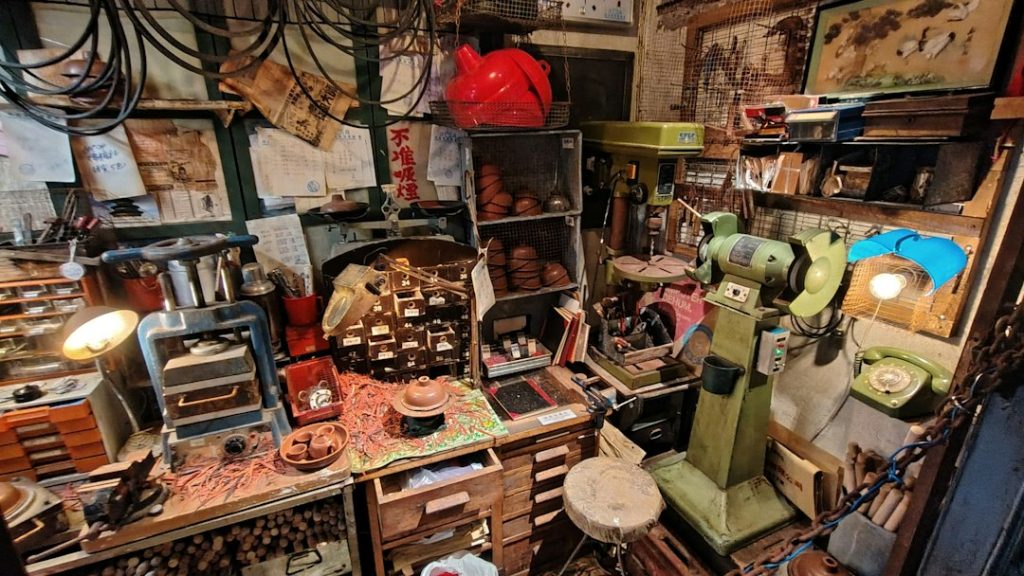
I Found a Second Phone in My Father’s Workshop—It Wasn’t His Secret
I found the phone three days after my father’s funeral.
It was wedged behind a red metal toolbox in his workshop, wrapped in an old shop towel as if someone had hidden it quickly.
My father had owned one phone. A cracked black Android he carried in the same belt case for years.
This one was small, silver, and almost new.
I charged it before I let myself think too much.
There was no passcode.
The call history showed the same number again and again.
Tuesday, 7:12 p.m.
Thursday, 6:48 p.m.
Saturday, 9:03 a.m.
Sometimes the calls lasted two minutes. Sometimes forty.
The contact was saved as “R.”
My mother’s name was Diane.
My brother was Paul.
I knew enough about grief to understand that suspicion can feel like productivity. If you are investigating, you do not have to sit still with the fact that someone is gone.
I called my brother.
“Did Dad have another phone?”
“What?”
“A second phone.”
He laughed at first.
Then I sent him a picture.
He stopped laughing.
We met at the workshop an hour later.
Paul scrolled through the contacts.
There were only six.
A pharmacy. A taxi company. Two hardware stores. “R.” And a number saved as “Clinic.”
“Maybe it’s medical,” he said.
“Then why hide it?”
We both looked at the workbench.
Our father had been married to our mother for forty-three years. He was not romantic in any visible way, but they had a stable kind of loyalty. He made her tea every morning. She pretended not to notice that he still bought the wrong brand.
The idea of a secret relationship felt absurd.
Which did not stop me from imagining one.
I pressed the number marked “R.”
A woman answered.
“Hello?”
I almost hung up.
Instead I said, “My name is Claire. I’m calling from Martin Hayes’s phone.”
There was a long silence.
Then the woman inhaled sharply.
“Oh,” she said. “You must be his daughter.”
My stomach dropped.
She knew who I was.
“Who are you?”
“Rosa Delgado.”
The name meant nothing to me.
“How did you know my father?”
She did not answer immediately.
Then she asked if we could meet in person.
Paul shook his head violently when I repeated the question.
I said yes anyway.
Rosa chose a diner ten minutes from my parents’ house.
She was in her seventies, with gray hair pulled back and a denim jacket folded over one arm.
When she saw us, she started crying.
That was not what I expected.
“I’m sorry,” she said. “Your father talked about you both all the time.”
I sat down but did not touch the menu.
“Why did he have a separate phone for you?”
Rosa looked confused.
“For me?”
Then she understood.
“No. The phone was for several of us.”
She explained slowly.
Five years earlier, my father had volunteered at a community repair program run through a local senior center. At first, he fixed lamps and loose cabinet doors. Then he started helping a small group of older residents who lived alone.
Not with repairs exactly.
With emergencies that were too small for 911 and too large for pride.
A ride home after an outpatient procedure.
A dead car battery.
A broken heater on a Sunday.
A prescription pickup when someone had the flu.
“He called it the boring emergency line,” Rosa said.
Paul and I looked at each other.
That sounded exactly like our father.
“Why didn’t he use his normal phone?” I asked.
“Your mother worried whenever people called at night,” Rosa said. “He didn’t want her thinking every ring was a crisis.”
I felt embarrassed by how quickly my mind had built a betrayal.
But there was still the hiding.
“Why keep it secret from us?”
Rosa smiled sadly.
“Because people kept trying to thank him.”
That answer made no sense until she opened her purse and took out an envelope.
Inside were handwritten notes.
Thank you for fixing the railing.
Thank you for staying until my daughter arrived.
Thank you for not making me feel foolish.
Thank you for changing the tire.
There were dozens.
My father had apparently refused gifts, money, and public recognition. When the senior center tried to feature him in a newsletter, he stopped volunteering through the official program and simply kept helping the people who already had the number.
“He said if people started calling him generous, they would stop noticing how ordinary the help was.”
That sentence hurt more than I expected.
My father had spent his life making useful things look ordinary.
At home, that quality could be frustrating. He fixed faucets without telling anyone what was wrong. He paid bills before they were due. He filled the gas tank in my mother’s car and never mentioned it.
We had mistaken quiet competence for simplicity.
The second phone was not a portal to another life.
It was evidence of the parts of his life that did not require us as an audience.
Rosa asked what would happen to the phone.
I did not know.
Then it rang.
The screen showed “Mr. Bell.”
Rosa looked at us.
“You don’t have to answer.”
Paul picked it up.
“Hello?”
An older man explained that his bathroom light had stopped working and he could not safely reach the fixture.
Paul listened, asked for the address, and said, “We can come by tomorrow morning.”
I stared at him.
After he hung up, I said, “We?”
“You’re better with ladders.”
“You own a construction company.”
“Exactly. I delegate.”
For the first time since the funeral, we laughed without feeling guilty afterward.
We did go to Mr. Bell’s apartment.
The problem was not the light bulb. It was a loose socket. Paul fixed it in fifteen minutes.
Mr. Bell tried to give us twenty dollars.
Paul refused.
He did it using our father’s exact phrase.
“Save it for something less boring.”
We kept the phone active for three months while we contacted everyone on the list and helped them find more reliable support.
Some had family nearby. Some did not. One person needed a social worker more than a handyman. Another just needed the number of a transportation service.
The calls slowly stopped.
Eventually, I turned the phone off.
I still have it in a drawer.
Not because it is mysterious anymore.
Because it reminds me how easily we confuse privacy with deception.
People can have parts of themselves we do not know without betraying us.
Sometimes a hidden thing is hidden because it is shameful.
Sometimes it is hidden because no one involved wanted attention.
I had opened that phone expecting to learn whether my father had lied to us.
I learned something harder.
I had known him well.
I had not known him completely.
Those are not the same thing.