We Hadn’t Spoken in Ten Years—Then He Showed Up at My Father’s Funeral
I saw Eli before he saw me.
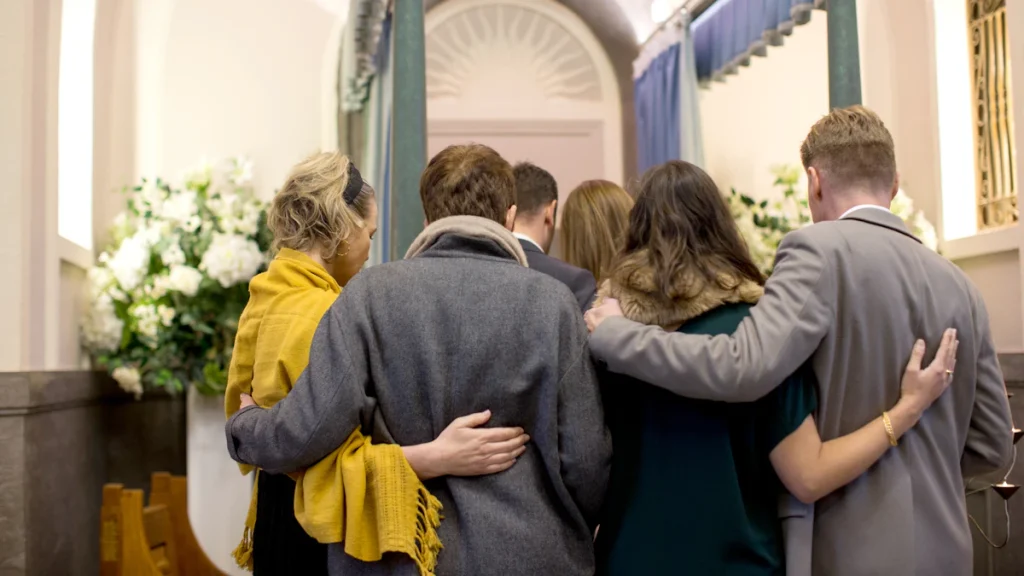
He was standing near the back of the funeral home, beside a table covered with photographs of my father.
For ten years, I had imagined what it would feel like to see him again.
I had pictured airports, weddings, grocery stores, maybe some impossible coincidence in another city.
I had never pictured my father’s funeral.
Eli looked older.
So did I.
His hair was shorter. There was gray at his temples. He wore a dark jacket that looked slightly too warm for the room.
He was holding a paper cup of coffee and staring at a photograph of my father at sixty-three, laughing beside a lake.
For a few seconds, I was too surprised to be angry.
Then the anger arrived exactly where I had left it ten years earlier.
Eli and I had been best friends from fifteen to thirty-two.
We survived college in different states, bad relationships, two cross-country moves, my mother’s cancer scare, his first layoff, and a year when neither of us seemed able to make one good decision.
Then we started a small consulting business together.
It lasted eleven months.
The business failed.
The friendship failed faster.
I blamed Eli for taking on a client we could not serve.
He blamed me for refusing to admit we were underpriced and understaffed.
At the final meeting, I accused him of using our friendship as protection from accountability.
He said I had turned every disagreement into a loyalty test.
We closed the business.
Then we closed everything else.
No calls.
No birthdays.
No accidental social media likes.
Nothing.
Now he was standing ten feet from my father’s casket.
My sister noticed him next.
“You knew he was coming?” I asked.
She looked at me strangely.
“Eli?”
“Yes.”
“I assumed he would.”
That answer made no sense.
“Why?”
She lowered her voice.
“Because Dad saw him all the time.”
I stared at her.
“What?”
“Not all the time. Once a month, maybe.”
The room seemed to rearrange around me.
“For how long?”
She thought about it.
“Years.”
Years.
I looked back at Eli.
He had moved to another photograph.
This one showed my father at seventy, holding a ridiculous birthday cake shaped like a fishing boat.
Eli smiled when he saw it.
Not politely.
Recognizingly.
I approached him during the reception.
He saw me when I was halfway across the room.
For one second, neither of us knew what face to make.
Then he set down his coffee.
“David.”
“Eli.”
He looked toward the casket.
“I’m sorry.”
“Thank you.”
That should have been enough.
I could have let him leave.
Instead I asked, “You were seeing my dad?”
Eli looked at me carefully.
“Your sister told you.”
“Apparently everyone knew except me.”
“Not everyone.”
“How long?”
“Eight years, roughly.”
Eight.
Only two years after our friendship ended.
“Why?”
The word came out sharper than I intended.
Eli did not react.
“Because we liked each other.”
That answer made me angrier than any complicated explanation would have.
“You liked each other.”
“Yes.”
“You just started meeting for coffee?”
“Basically.”
I laughed once.
“That is bizarre.”
“Maybe.”
“Did you talk about me?”
“At first.”
“Of course.”
“You asked.”
I stopped.
Eli took a breath.
“Your dad called me about six months after we stopped speaking.”
I felt another flash of betrayal.
“To fix us?”
“No.”
“Then why?”
“To ask if I was okay.”
I did not answer.
Eli said my father had heard the business closed and knew enough to understand the friendship had ended too.
He called Eli because, in his words, “losing a business partner and a best friend in the same month is still losing two things.”
They talked for twenty minutes.
Then my father invited him to breakfast.
One breakfast became another.
Eventually, the breakfasts happened on the first Saturday of most months.
“What did you talk about?” I asked.
“Everything.”
“Me?”
“Sometimes.”
“What did he say?”
Eli looked at me for a long moment.
“Mostly that he wasn’t going to carry messages between us.”
That sounded exactly like my father.
It also made me feel foolish.
“Your father never treated our friendship ending as permission to stop caring about me.”
I looked across the room at the photographs.
My father with colleagues.
My father with neighbors.
My father with my children.
My father beside people whose names I did not know.
I had spent most of my life thinking of his relationships in categories that revolved around me.
My friend.
My teacher.
My neighbor.
My family.
But my father had his own life inside those categories.
He had known Eli for seventeen years before our falling-out.
They had watched baseball together.
Argued about books.
Fixed a fence badly one summer.
My friendship with Eli had introduced them.
It had not permanently owned their connection.
“Why didn’t Dad tell me?” I asked.
“You’d have to ask him.”
I almost snapped back.
Then I remembered where we were.
Eli’s face changed immediately.
“Sorry.”
“No. You’re right.”
We stood there in an awkward silence that felt both new and ten years old.
Finally, Eli said, “He mentioned you sometimes. He was proud of you.”
“I knew that.”
“Good.”
“Did he ever tell you we should make up?”
“Once.”
I looked at him.
“What did he say?”
Eli smiled.
“He said, ‘You two are old enough to ruin your own relationships without my management.’”
I laughed.
It was the first laugh I had managed all day that did not feel guilty.
“That sounds right.”
“Then he changed the subject.”
After the funeral, Eli helped my sister carry food containers to her car.
No one asked him.
He simply did it.
I watched from the doorway.
It bothered me less now.
Not because I had forgiven everything.
Because I understood I was not watching someone trespass into my family.
I was watching someone who had been part of my father’s life.
Two weeks later, I texted Eli.
Coffee?
He answered twenty minutes later.
Sure.
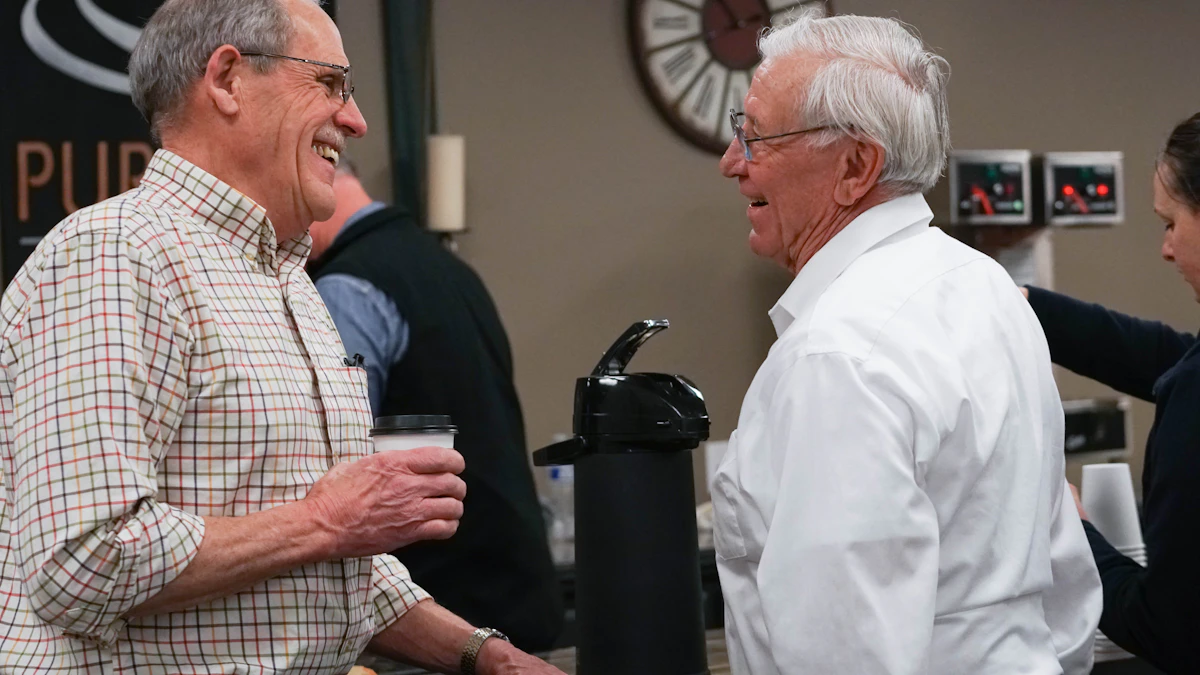
We met at the diner where he and my father used to have breakfast.
I expected nostalgia.
Instead, we talked about the business.
For the first time without trying to win.
I admitted I had blamed him publicly in front of a client because I was terrified the failure would make me look incompetent.
He admitted he had committed us to work we could not deliver because he thought momentum mattered more than caution.
Neither confession made the other person innocent.
That helped.
We were not searching for one villain anymore.
At one point, Eli said, “Your dad thought we were both idiots.”
“He was probably right.”
“Often annoying. Still right.”
We did not decide to become best friends again.
That would have felt theatrical.
We decided to have coffee again the next month.
Then again two months later.
Sometimes old friendships return as something smaller.
That does not make them failures.
The last time we met, Eli brought a photograph my father had kept in his wallet for years.
It showed the three of us at a baseball game when Eli and I were twenty-six.
“He had a copy,” Eli said. “I found it in a book he gave me.”
I looked at the photograph.
For once, I did not wonder why my father had given Eli something connected to me.
I simply took it.
“Thanks.”
Eli nodded.
That was enough.
Read more friendship stories or browse short stories for adults.
This is an original fictional story from Dastan.
Featured photo: The Good Funeral Guide / Unsplash. Inline photos: Wiebrig Krakau and Connor Olson / Unsplash.