She Stopped Inviting Me After I Lost My Job—Then I Saw the Group Photo
I noticed the invitations had stopped before I admitted they had stopped.
For six years, our group met at least twice a month.
Dinner. Trivia night. Someone’s apartment. A birthday that turned into drinks. Nothing formal enough to require a calendar, but regular enough that I always knew I would see them soon.
Then I lost my job.
Two weeks later, Leah canceled dinner because “everyone was slammed.”
The next weekend, no one mentioned plans.
Then another week passed.
The group chat stayed active—memes, complaints, links—but the actual invitations disappeared.
I told myself it was coincidence.
Then I saw the photo.
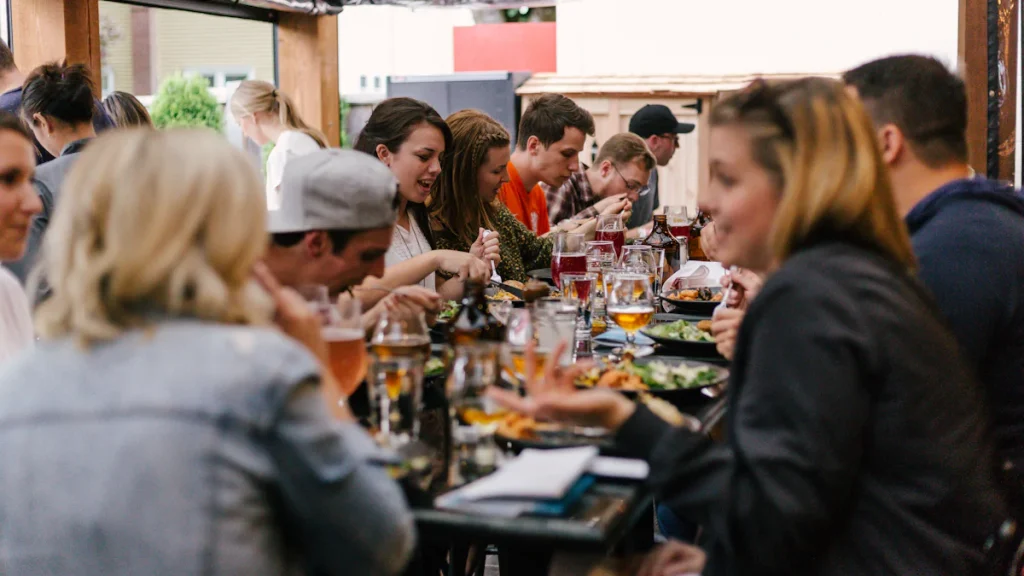
Seven of them around a long restaurant table.
Leah in the center.
Marcus holding up a glass.
Jess leaning into the frame.
Everyone I usually saw.
Except me.
The caption said:
Needed this.
I stared at the image until I could name every empty space where a chair might have been added.
I closed the app.
Then reopened it.
I zoomed in like there might be evidence of an innocent explanation.
There wasn’t.
I texted Leah privately.
Looks like everyone had fun.
She replied three minutes later.
Yeah, it was last minute.
I almost admired the sentence.
It contained no lie I could prove.
I typed:
Were you avoiding inviting me because I lost my job?
I erased it.
Then typed:
Next time let me know.
She reacted with a heart.
That hurt more than no response.

Losing the job had already changed the way I moved through the world.
I had gone from a marketing director with a full calendar to someone who refreshed job boards before breakfast.
I stopped ordering delivery.
I canceled a weekend trip.
I learned how many ordinary decisions become financial calculations when income disappears.
What I had not expected was to become socially expensive.
Dinner meant money.
Drinks meant money.
Parking meant money.
I wondered if my friends had stopped inviting me because they thought I could not afford to come.
That explanation was painful but almost kind.
Then another possibility arrived.
Maybe unemployment made people uncomfortable.
Maybe every conversation with me had become an update they did not want.
Any interviews?
Any leads?
How are you holding up?
I had begun hating those questions too.
Perhaps they hated asking them.
I did not confront anyone.
Instead, I started declining the few smaller invitations that did arrive.
Coffee with Jess.
A walk with Marcus.
Leah asked if I wanted to come over one Sunday.
I said I was busy.
I was not.
There is a point where rejection becomes easier to manage if you can pretend you chose distance first.
By the third month, the group chat had become something I muted.
Then Marcus called me.
“Are you mad at us?”
“Why would I be?”
“Because you’ve disappeared.”
I laughed.
“I disappeared?”
He went quiet.
That was enough.
“Ask Leah,” I said.
“About what?”
“The dinners I stopped being invited to.”
Another pause.
“Oh.”
I hated the sound of recognition.
“So you knew.”
“I knew about some of them.”
“You were in the photo.”
“Rachel—”
“It’s fine.”
“It clearly isn’t.”
He was right.
We met the next day.
Marcus looked uncomfortable before he sat down.
“Leah thought she was helping.”
I laughed.
“Of course she did.”
“She said you seemed stressed about money.”
“So the solution was not telling me people were going out?”
“She didn’t want you to feel pressured.”
“I’m an adult.”
“I know.”
“Did anyone ask me?”
“No.”
There it was.
The thing underneath the anger.
No one had asked.
They had taken information about my life and converted it into decisions for me.
“You all decided what I could afford, then called it kindness because you didn’t make me say no.”
Marcus looked down.
“That’s fair.”
“It’s not only the money.”
“What else?”
I thought about the group photo again.
Then I remembered something I had ignored.
There were seven people in that photo.
Our group had nine.
“Where was Nina?” I asked.
Marcus blinked.
“What?”
“Nina wasn’t there either.”
He looked surprised that I noticed.
“She stopped coming to dinners months ago.”
“Why?”
“She’s taking care of her dad at night.”
I had known her father was ill.
I had not known she had stopped joining us.
Marcus continued.
“Tom misses half of them because of the baby. Jess leaves early now. That photo made it look like the old group. It isn’t.”
I stared at him.
For three months, I had treated the photograph as proof that the group remained intact without me.
It was actually proof that the group had already changed.
That did not excuse Leah.
It changed what I wanted from the conversation.
I did not want back into the old dinners.
I wanted us to stop pretending friendship only counted when everyone could afford the same restaurant, stay out until the same hour, or live on the same schedule.
I called Nina.
She answered from her father’s kitchen.
“I was wondering when you’d resurface,” she said.
“Apparently I have been very busy being offended.”
She laughed.
I told her about the photo.
“Leah did that to you too?”
“Too?”
“She stopped inviting me because she thought I felt guilty saying no.”
“Did you?”
“Yes.”
“Did it help?”
“No. I just felt forgotten without the inconvenience of declining.”
That sentence stayed with me.

A week later, I asked Leah to meet me.
She apologized before I finished explaining.
Not perfectly.
At first she defended herself.
She said she had watched me calculate the price of a restaurant the last time we went out.
She said I looked embarrassed when Marcus offered to cover part of my bill.
She thought fewer invitations would reduce the pressure.
“You could have invited me to things that didn’t cost sixty dollars,” I said.
She stopped.
“I know.”
“Or asked what I wanted.”
“I know.”
That was enough.
We changed the group slowly.
Not with a dramatic agreement.
Someone suggested Sunday walks.
Nina started joining by video while making dinner for her father.
Marcus hosted potluck nights.
Sometimes people still went to expensive restaurants.
I was invited.
Sometimes I said no.
That mattered.
I wanted the no to belong to me.
That was the part Leah had missed. Money had changed what I could comfortably say yes to, but it had not taken away my ability to choose. An invitation was not a demand to spend; it was information. Once someone else removed the invitation for my own good, they also removed the chance for me to suggest a cheaper plan, leave early, or simply decline without shame.
Two months later, I got a new job.
Leah immediately texted:
Celebration dinner?
I said yes.
Then added:
Somewhere cheap.
She replied:
Obviously.
At dinner, we took another group photo.
Only six of us were there.
Nina was home with her father.
Tom had a sick toddler.
Jess was traveling.
The picture was incomplete.
That no longer bothered me.
I had finally stopped confusing a photograph of who could attend with evidence of who still belonged.
Read more friendship stories or browse short stories for adults.
This is an original fictional story from Dastan.
Featured photo: Priscilla Du Preez / Unsplash. Inline photos: Thought Catalog and Brooke Cagle / Unsplash.