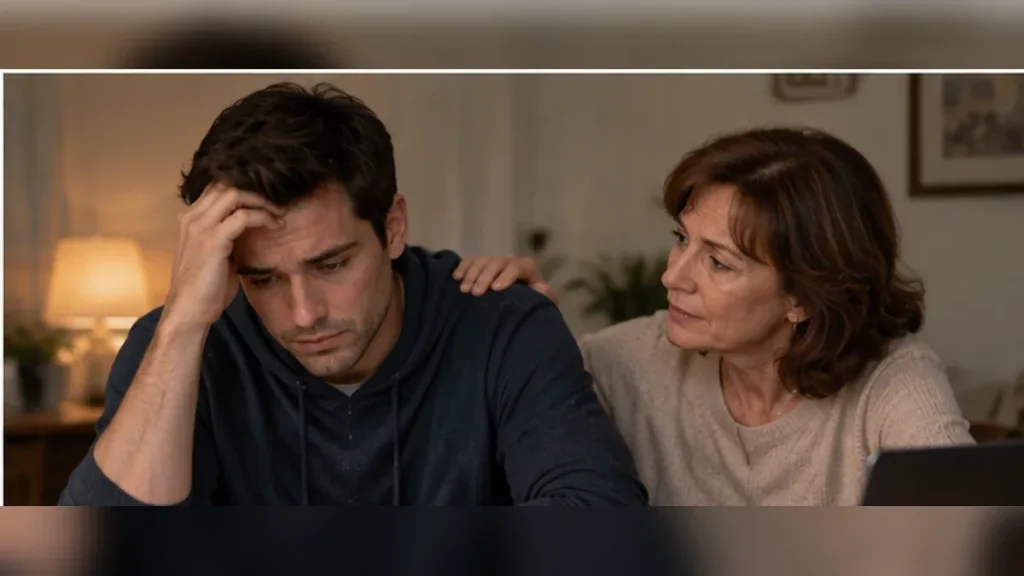
I Paid My Niece’s Orchestra Fee Without Telling Her
My niece called from rehearsal and asked why her conductor had just thanked me for paying her orchestra fees.
Until that call, I had thought helping family financially was simple if you could afford to solve the problem.
By the time my brother called five minutes later, Maya’s anger had already reached him.
“She knows,” he said.
“I know. She called me.”
Silence.
Neither of us had planned for her to learn that way.
Three months earlier, my brother Aaron had lost his warehouse job after the company consolidated operations. His daughter, Maya, was sixteen and played violin in a regional youth orchestra that charged participation fees for rehearsals, music, and performances.
Aaron never asked me for money.
He did something worse: he mentioned casually that Maya might take “a break” for the semester.
I knew Maya. A break would have meant losing her chair and probably not auditioning again.
So I called the orchestra office.
I told them I wanted to cover the semester anonymously.
The administrator hesitated.
“We normally prefer families know who is paying.”
“Her father knows.”
That was technically true after I called Aaron and told him.
“Don’t tell Maya,” he said.
“Why?”
“She’s already worried about money. Let her have one thing that’s normal.”
I agreed.
At the time, agreement felt compassionate.
The secrecy lasted until rehearsal.
Her conductor mentioned the payment while reminding her about the summer workshop. Maya asked who had paid. He thanked me by name, assuming she already knew.
Two friends were standing beside her.
That made the private decision public.
She stepped into the hallway and called me.
“How long?”
“Maya—”
“How long have you been paying?”
“Just this semester.”
“Why didn’t anyone tell me?”
“Your dad didn’t want you worrying.”
“So everybody discussed whether I could afford orchestra except me?”
That sentence removed every defense I had prepared.
“We were trying to keep you in the program.”
“You made me look stupid.”
“Nobody thinks you’re stupid.”
“I told Jenna my dad had already paid. I told my conductor I might do the summer workshop. I was making plans with money I didn’t even know we didn’t have.”
Her voice broke on the last sentence.
I wanted to tell her she was sixteen, that adults were supposed to protect teenagers from financial stress. I wanted to say the fee was small for me and enormous for Aaron that month, so the obvious solution was simply to pay it.
But the problem was no longer the amount.
Maya skipped rehearsal the following week.
Aaron blamed himself.
Then he blamed me.
“I should never have let you pay it,” he said.
“You were the one who told me not to tell her.”
“I know.”
We were both reaching for the cleaner role in the story.
Neither of us deserved it.
I went to their house on Sunday.
Maya was at the kitchen table doing homework. Her violin case stood by the stairs.
“Can we talk?” I asked.
“Are you going to explain why this was good for me?”
“No.”
That got her attention.
I sat across from her.
“I thought keeping you in orchestra was the most important thing. I decided that because I could solve the money problem, I didn’t have to involve you in the decision.”
She said nothing.
“That was wrong.”

“Dad says I shouldn’t have to worry about bills.”
“He’s right about some bills. But this affected your plans and your choices. We should have found a way to tell you without making you responsible for fixing everything.”
She looked toward the stairs.
“I would have quit.”
“Maybe.”
“Then you would have stopped me.”
“I would have tried to persuade you.”
“That’s different.”
It was.
Aaron joined us ten minutes later. The three of us made the conversation more practical.
His unemployment benefits covered rent and groceries but not much beyond that. He expected to find work soon, but there were no guarantees. Maya wanted to stay in orchestra and attend the summer workshop. She also did not want her father cutting essentials to pay for music.
I offered to cover the rest of the semester openly.
“As a gift,” I said. “Not a loan. No future obligation.”
Maya asked for time to think.
That was new too. I did not fill the silence with persuasion.
Two days later she accepted the semester fee but not the summer workshop.
“I want to apply for the orchestra’s aid fund,” she said.
I had not known there was one.
Neither had Aaron.
The application required a short financial form from him and a statement from Maya about her participation. She completed her part herself.
She received partial aid.
For the remaining amount, she used money she had saved from tutoring younger students in math. I offered again. She declined.
“I want this part to be mine.”
So I let it be hers.
Later, Maya explained what had bothered her most. It was not that I had paid. It was that I had been allowed to know something important about her life before she was.
“Everyone keeps saying you protected me from stress,” she said. “But I still felt the stress. I just didn’t know what it was.”
She told us she had noticed her father buying cheaper groceries and delaying a car repair. She had heard him taking phone calls in the bedroom. She already knew money was tight; our secrecy had not preserved normal life. It had only made her doubt her own reading of it.
Aaron looked exhausted when she said that.
“I didn’t want you feeling responsible for me,” he said.
“I’m not asking to be responsible for you. I’m asking not to be the only person in the house pretending nothing changed.”
That distinction became the center of the conversation.
We agreed on what Maya did and did not need to know. She did not need balances, overdue notices, or the fear behind every adult decision. But she did need to know when money would affect an activity she had committed to, especially before adults made choices in her name.
It sounded obvious once she said it. Most useful boundaries do.
A week later, the orchestra administrator emailed Aaron about a payment deadline. He forwarded it to Maya instead of quietly handling it. The three of us discussed the options in one group chat. No one solved anything immediately.
That pause felt inefficient to me. It was also the first time Maya was included before the answer had already been chosen.
Maya did not suddenly become relaxed about money. Neither did Aaron. The difference was that uncertainty no longer had to be disguised as certainty before she was allowed into the conversation.
Helping family financially had become less about solving things quietly and more about asking what kind of help was actually wanted.
The change between us was subtle.
Before, when Maya mentioned something expensive, I often responded with solutions. A used laptop? I knew someone selling one. Competition travel? I could use points. New bow? Let me research it.
After the orchestra argument, I began asking a question first.
“Do you want ideas, money, or just an audience?”
She found this extremely annoying.
“Normal people don’t label support categories,” she told me.
“Normal people created this problem.”
Eventually the question became a joke between us.
Aaron found another job in the fall, with fewer hours but steadier pay. He and Maya started having a monthly money conversation. Not every bill, not every worry. Enough that she understood what affected her without becoming the household accountant.
Months later, I attended the orchestra’s winter concert.
Afterward Maya came through the lobby carrying her violin case.
“I have something for you,” she said.
She handed me a ticket for the spring concert.
“You didn’t have to buy my ticket.”
“I know.”
“How much was it?”
She narrowed her eyes.
“Wrong question.”
I laughed.
“Right. Thank you.”
She tucked the receipt into her own wallet before I could see it.
This time, the secrecy belonged exactly where it should: inside a gift she had chosen to give.